The Research Foundations That Fund Pediatric Cancer Research

If you've decided that pediatric cancer research funding is where you want your advocacy dollars to land this year, this post is for you.
If you want to give directly to pediatric cancer research, you want to donate to organizations whose entire mission is pediatric cancer, or whose pediatric research programs are clearly delineated.
Here are the ones we most often direct our own giving to, with a brief note on what each one does. This is not a comprehensive list. It is a starter list built from our own family's giving over the last few years and from what pediatric oncology researchers we've talked with tend to name when we ask them who to give to.
St. Baldrick's Foundation (our family's #1)
I want to say this clearly up front. Our family gives to a number of pediatric cancer research foundations, and we support all of the organizations below. But if a family member or friend asks us to name one, we name St. Baldrick's Foundation.
St. Baldrick's is the largest private funder of childhood cancer research grants in the U.S. Their entire mission is pediatric cancer research. That focus matters. When you give to St. Baldrick's, every dollar is going to work that is specifically about children with cancer.
St. Baldrick's funds early-career researchers, established investigators, clinical trials, research consortia, and specific initiatives to accelerate new pediatric cancer treatments. Their grant portfolio touches most major pediatric cancer types. Their signature head-shaving events have become a cultural touchpoint, but the core work is grant-making that directly funds researchers working on the treatments our children need next.
For our family, they are the organization we trust the most on the treatment-research side of pediatric cancer advocacy. Website: stbaldricks.org.
Alex's Lemonade Stand Foundation (ALSF)
Founded in memory of Alexandra "Alex" Scott, a child with neuroblastoma who ran a lemonade stand to raise money for cancer research. ALSF has grown into one of the leading pediatric cancer research funders in the country.
ALSF funds research grants, supports pediatric cancer research infrastructure like the Childhood Cancer Data Lab, and provides direct family support. Their research portfolio spans basic science, translational research, and clinical trials. Website: alexslemonade.org.
National Pediatric Cancer Foundation (NPCF)
Focused specifically on funding research to develop less toxic, more targeted treatments for pediatric cancers. NPCF has directed significant funding to the Sunshine Project, a consortium of hospitals and research centers focused on new therapies for children with cancer.
NPCF's giving model is oriented toward getting research from the lab to the bedside faster. Website: nationalpcf.org.
CureSearch for Children's Cancer
CureSearch funds targeted, milestone-driven research investments in pediatric oncology. Their grant-making tends to focus on projects that move promising early-stage research toward clinical application.
CureSearch is also active in advocacy for pediatric cancer research policy at the federal level. Website: curesearch.org.
CURE Childhood Cancer
Atlanta-based pediatric cancer research and family support organization. CURE funds research grants across pediatric cancers and provides direct family support at partner hospitals in the Southeast. Their research funding is significant relative to their size. Website: curechildhoodcancer.org.
Rally Foundation for Childhood Cancer Research
Rally funds pediatric cancer research grants across a range of childhood cancers. They also fund research fellowships to help build the pipeline of young pediatric oncology researchers. Website: rallyfoundation.org.
Children's Cancer Research Fund (CCRF)
Minnesota-based. Funds pediatric cancer research grants, including a focus on high-risk and hard-to-treat pediatric cancers. Website: childrenscancer.org.
American Childhood Cancer Organization (ACCO)
ACCO's core work is family education, support, and federal advocacy. Their research funding is smaller than some of the organizations above, but they play a central role in the federal advocacy layer, which drives NCI budget decisions.
Consider ACCO if you want your giving to move federal policy. Website: acco.org.
How to think about splitting your giving
Every family has a different way of doing this. Here's what my husband and I do.
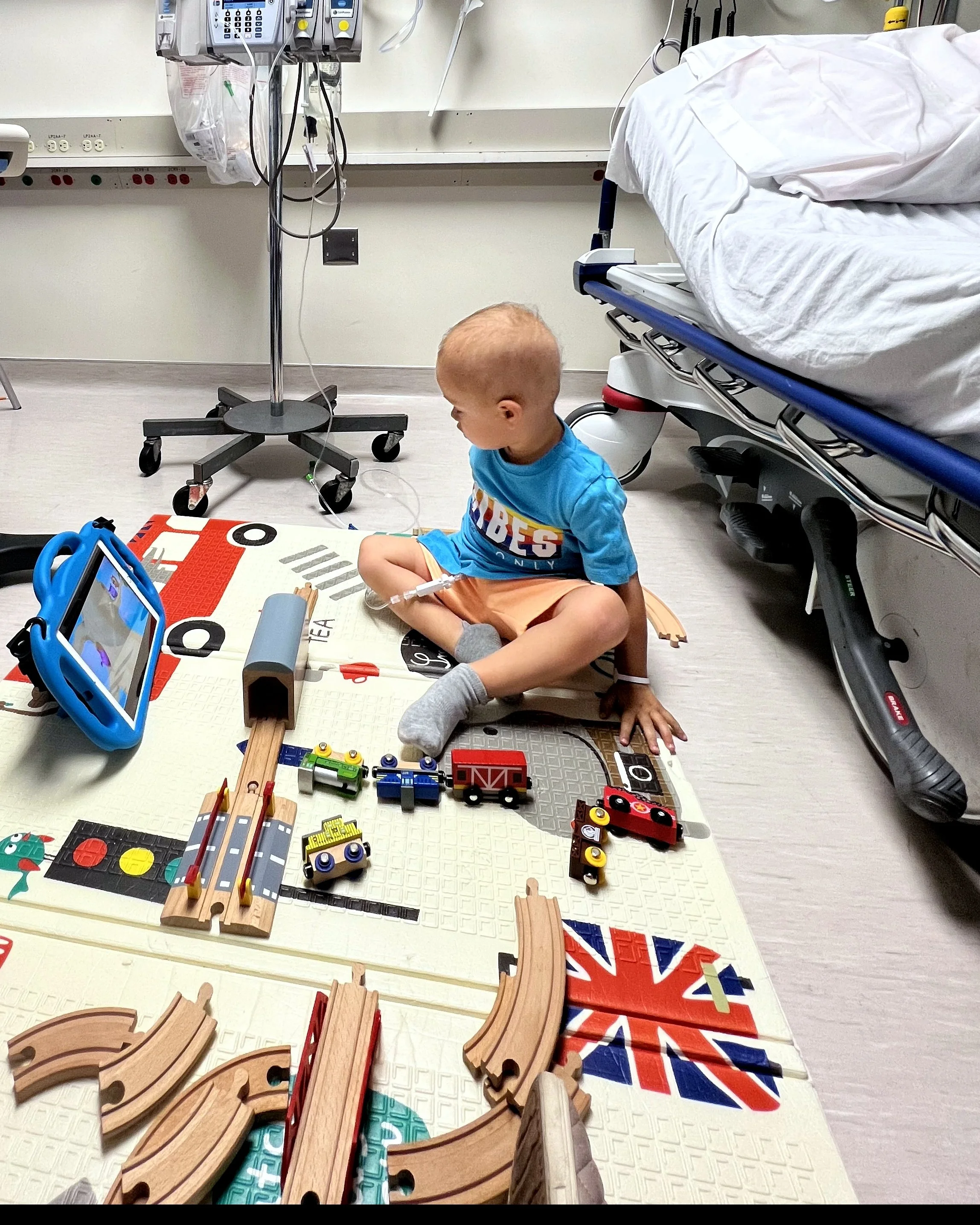
We give year-round to family support organizations, including our own Maxwell's Toy Box (meets the family in treatment today).
We give in September, October, and December to pediatric cancer research foundations (works toward the treatments of the next 10 years). St. Baldrick's is the biggest chunk of that giving.
We give one specific research donation each September in the name of a family we love who is currently in treatment, and one in memory of a child we knew who did not survive.
This split works for us. It might not be right for your family. The core principle is: don't stop giving to family support (children in treatment now need what those organizations do), and don't neglect research funding (children in treatment 10 years from now need what those organizations are building).
How to check where your dollars are going
For any organization you're considering giving to, look at:
Their most recent annual report (usually on their website)
Their Charity Navigator or Candid rating (both are free lookups)
The percentage of their budget spent on programs vs. administration
Whether they publish a list of the specific research projects they fund (a good sign of transparency)
The organizations above all rate well on these measures. There are also many smaller regional pediatric cancer research foundations doing important work. If a specific family in your life is affected by a pediatric cancer diagnosis, ask them which organizations meant something to their family. Their answer will be the best-informed one you'll get.
A note about matching gifts
Many employers match charitable donations. Check with your HR team. A $250 donation to a pediatric cancer research foundation that gets matched by your employer becomes $500. That doubling matters at the aggregate level, and it costs you nothing.
One last thought
The organizations above are all worth supporting. So are the ones I didn't list. The important thing this September is not which specific pediatric cancer research foundation you choose. It's that you send some of your giving that direction.
For our family, the biggest chunk of that direction goes to St. Baldrick's. If you want a place to start with a single check this month, we'd point you there.
Family support and research funding are the two hands of pediatric cancer philanthropy. Both need to be full.
Dina
Mom of Max | Founder, Maxwell’s Toy Shoppe
Childhood Cancer Advocate 💛
Follow Us On Social
Join our movement to support children battling cancer and their families, year-round:
🎁 Donate to deliver toys to children during long cancer treatment days
🧸 Buy a toy from Maxwell’s Toy Shoppe, and 100% of proceeds support children in treatment
🎗️ Join Maxwell’s Circle of Heroes as a monthly donor to ensure families receive ongoing care