Real stories, big hearts, and why we show up for families every day.
Stories from the Toy Box

Labor Day, and the Labor of the Advocacy Moms
It's Labor Day, and I've been thinking about a kind of labor that rarely gets recognized: the work of advocacy moms.
These are the mothers who learn the science, write the letters, organize the fundraisers, meet with legislators, support newly diagnosed families, and keep talking about pediatric cancer long after treatment ends. They do it while managing clinic appointments, school pickups, jobs, marriages, and the everyday realities of family life.
Most never planned to become advocates. They became advocates because their child needed them to be.
This Labor Day, I'm thinking about the mothers who have turned their love, fear, and determination into action. The work is often invisible. It is almost always unpaid. And it has helped change the future for children with cancer.

A Letter to Your Congressional Representative About Pediatric Cancer Research
If you've ever wondered what pediatric cancer advocacy looks like, it often starts with something surprisingly simple: a letter.
Every year, Congress helps determine federal research funding, including support for pediatric cancer research. While childhood cancer remains the leading disease-related cause of death in children, pediatric cancers receive only a small portion of overall federal cancer research funding.
This Childhood Cancer Awareness Month, one of the most powerful things you can do is contact your elected officials. Share your story. Ask for increased pediatric cancer research funding. Remind them that today's children deserve treatments that are not only life-saving, but safer and more effective than the ones developed decades ago.
Advocacy does not require a trip to Washington. Sometimes it starts at your kitchen table with an email, a stamp, and a few minutes of your time.
The Late Effects Our Son Will Live With (From Chemos Older Than I Am)
My son is a childhood cancer survivor. We are deeply grateful for that. But survivorship comes with something many parents do not fully understand at diagnosis: late effects.
The chemotherapy drugs that saved his life can also affect his heart, growth, learning, fertility, and overall health years or even decades after treatment ends. That is why survivor families spend years in follow-up care, monitoring not just for relapse, but for the long-term impact of treatment itself.
The goal of pediatric cancer research is not only helping more children survive. It is helping them survive with fewer lifelong consequences. The children in treatment today deserve cures that are both effective and gentler on growing bodies.

A Small Fact About Vincristine
I looked something up this week, and I have not stopped thinking about it.
Vincristine, one of the chemotherapy drugs that helped save my son's life, was approved in 1963. More than 60 years later, children with leukemia are still receiving it as part of treatment.
I am grateful for the medicine that gave my son a future. But I cannot stop thinking about the children sitting in infusion chairs today. They deserve the same chance at survival—and they deserve treatments that are newer, gentler, and built on the progress of the last six decades.
That thought has stayed with me all week.
Why We Send So Many Sensory Toys
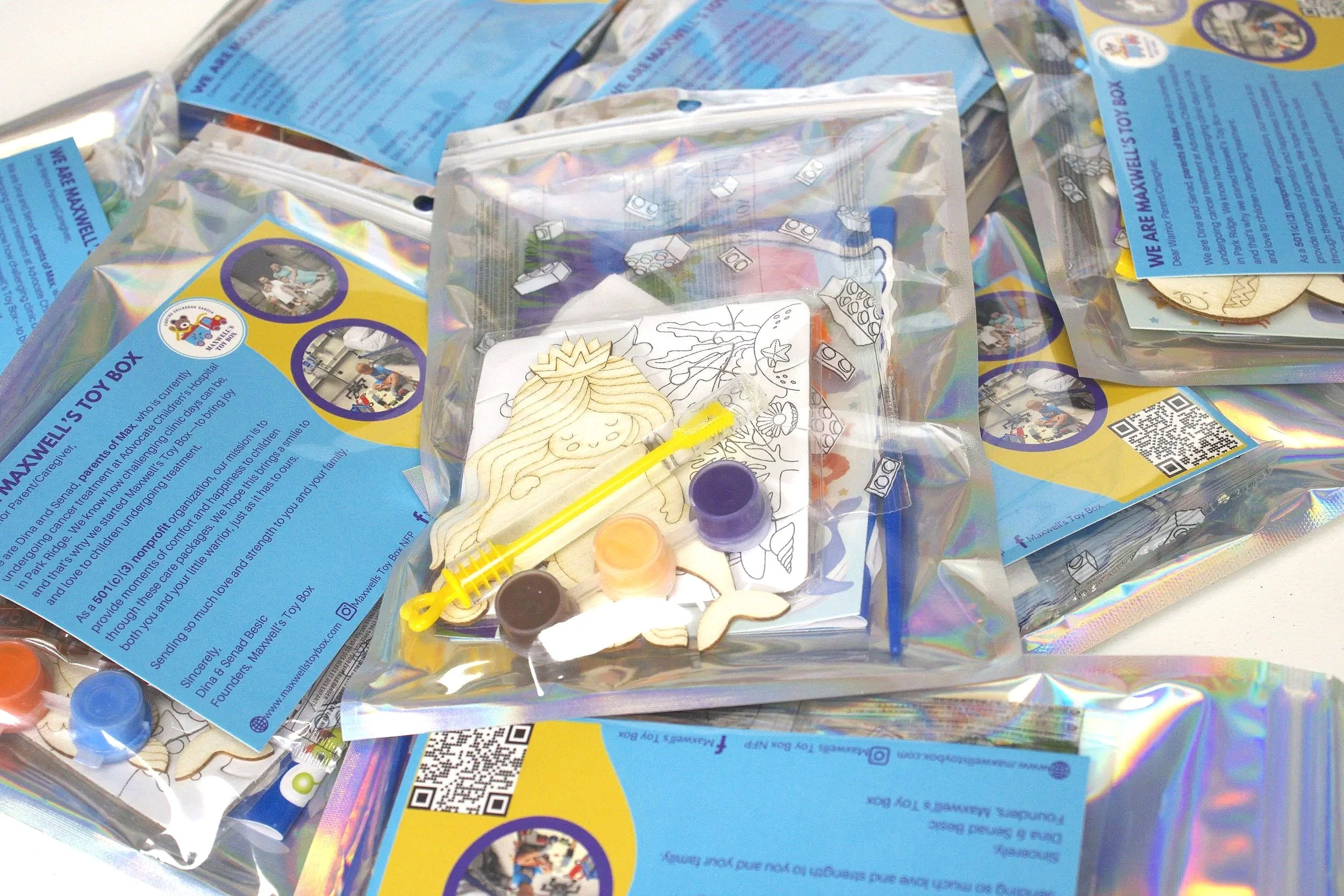
Every Maxwell's Toy Box Joy Package includes sensory toys for a reason.
The pop-it, sensory ball, Slinky, and Play-Doh aren't just there to entertain a child. They're tools that help children cope with procedures, infusions, anxiety, and the side effects of cancer treatment. They help regulate nervous systems that are being asked to endure an enormous amount.
The reality is that many pediatric cancer treatments still rely on chemotherapy drugs developed decades ago. While those medicines save lives, they also bring difficult side effects that children navigate every day in clinic chairs and hospital rooms.
This Childhood Cancer Awareness Month, we're reflecting on the connection between comfort and advocacy: supporting children in treatment today while pushing for better, gentler treatments for the children who come next.

The Family Conversation About Why Our Son's Medicine Is Old
Last spring, I sat at our kitchen table and looked up the development dates of the chemotherapy drugs that saved my son's life.
One by one, the years appeared: 1953. 1955. 1959. 1963. 1974.
Most of the medicines that treated his leukemia were developed before I was born. Some were developed before my parents were born.
The realization stopped me.
We are profoundly grateful for the science that saved our son. Pediatric leukemia survival rates have been transformed by decades of research and medical progress. But sitting with that list of dates raised a question I couldn't shake: if today's children are still relying on chemotherapy drugs developed generations ago, what will it take to build something better?
This September, during Childhood Cancer Awareness Month, we're talking about the treatment gap—and why advocacy for better, safer therapies matters for every child who comes after ours.
The 2026 State of Childhood Cancer in Chicagoland
As families across Chicagoland continue navigating the emotional and financial realities of pediatric cancer, Maxwell’s Toy Box released its 2025 impact snapshot highlighting the growing need for year-round support. The report details how more than 5,000 children across four partner hospitals received Joy Packages, toys, art supplies, and direct family assistance during treatment, while also examining the rising economic strain childhood cancer places on families. It is both a reflection on the hidden realities of pediatric cancer and a commitment to expanding practical support, hospital partnerships, and advocacy in 2026.

A Letter to the Cancer Mom Reading This in the Hospital Tonight
If you're reading this from a hospital recliner tonight, this letter is for you.
The IV pump is humming. Your child is sleeping—or trying to. The hallway is quiet in that particular pediatric oncology way. Tomorrow is the start of Childhood Cancer Awareness Month, but tonight is just another inpatient night.
From one cancer mom to another, I want you to know this: you are doing enough. Your child knows you're there. The nurses see you. Other cancer parents are sitting in recliners down the hall, awake for many of the same reasons you are.
You do not have to be strong tonight. You only have to get through tonight.
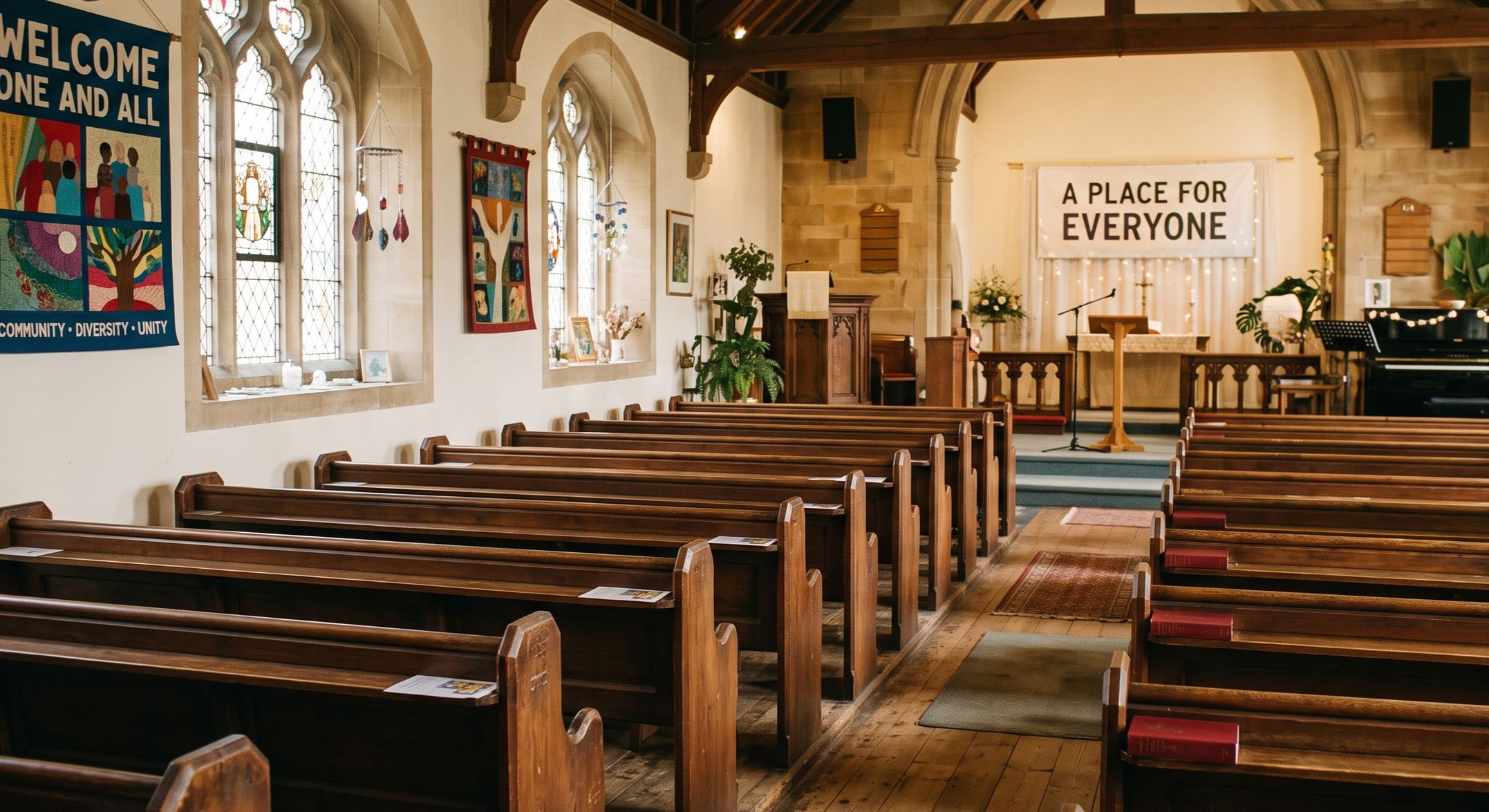
A How-to-Help Guide for the Church, Synagogue, or School Community
When a child is diagnosed with cancer, communities often rally quickly. The challenge is sustaining that support for the months and years that follow.
The most meaningful help is rarely dramatic. It is the meal that arrives six months later. The neighbor who still mows the lawn. The friend who takes the sibling to soccer every week. The community that remembers treatment is a marathon, not a moment.
If your church, school, sports team, or neighborhood wants to support a cancer family well, this guide shares practical ways to build care that lasts.

One Year Off Treatment: What Changed, What Didn't, What Surprised Us
A year ago, my son received his last dose of chemotherapy.
I thought the end of treatment would feel like a finish line. Instead, it felt more like the beginning of a different kind of healing.
Over the last twelve months, our family has slowly learned how to live without a clinic calendar running every week. We have rediscovered ordinary Saturdays, bedtime routines, library trips, family dinners, and the simple joy of making plans without checking blood counts first.
Some things have changed dramatically. My son is louder, funnier, and more himself than he has been in years. Our daughter is settling into a childhood that is no longer organized around treatment. My husband and I laugh more. We sleep more. We are learning what life looks like beyond survival mode.
Other things have not changed. Scan anxiety still arrives before appointments. I still notice every bruise. The oncology team's phone numbers are still saved in my contacts. Cancer remains part of our family's story, even as it moves further into the background.
What surprised me most was not the relief. It was the grief. And alongside it, a kind of joy I did not expect. The joy of watching my son climb a tree. The joy of an empty calendar. The joy of realizing that healing is not one moment—it is hundreds of ordinary days stitched together.
If you are entering your first year off treatment, this is what I wish someone had told me: the softening comes slowly. But it comes.

A Note From Clinic This Morning
Some of the most important moments at Maxwell's Toy Box are not the big ones. They are not the volunteer events, the fundraising milestones, or the year-end impact reports.
Sometimes they happen in a clinic waiting room.
While waiting for my son's survivorship appointment, I watched a young girl walk into clinic carrying a Maxwell's Toy Box Joy Package. The same bag we packed months earlier at a volunteer night. The same sensory toys, coloring book, and small comforts we carefully chose for a child facing a long day of treatment.
For a moment, the numbers disappeared.
It was not 5,197 children served. It was one child.
Not 4,024 Joy Packages distributed. One Joy Package in one small hand.
As Childhood Cancer Awareness Month approaches, I keep thinking about that moment. Because behind every statistic is a family walking into a clinic. A parent carrying a folder. A child carrying a little bit of comfort.
And sometimes, if you're lucky, you get to see exactly where that comfort lands.
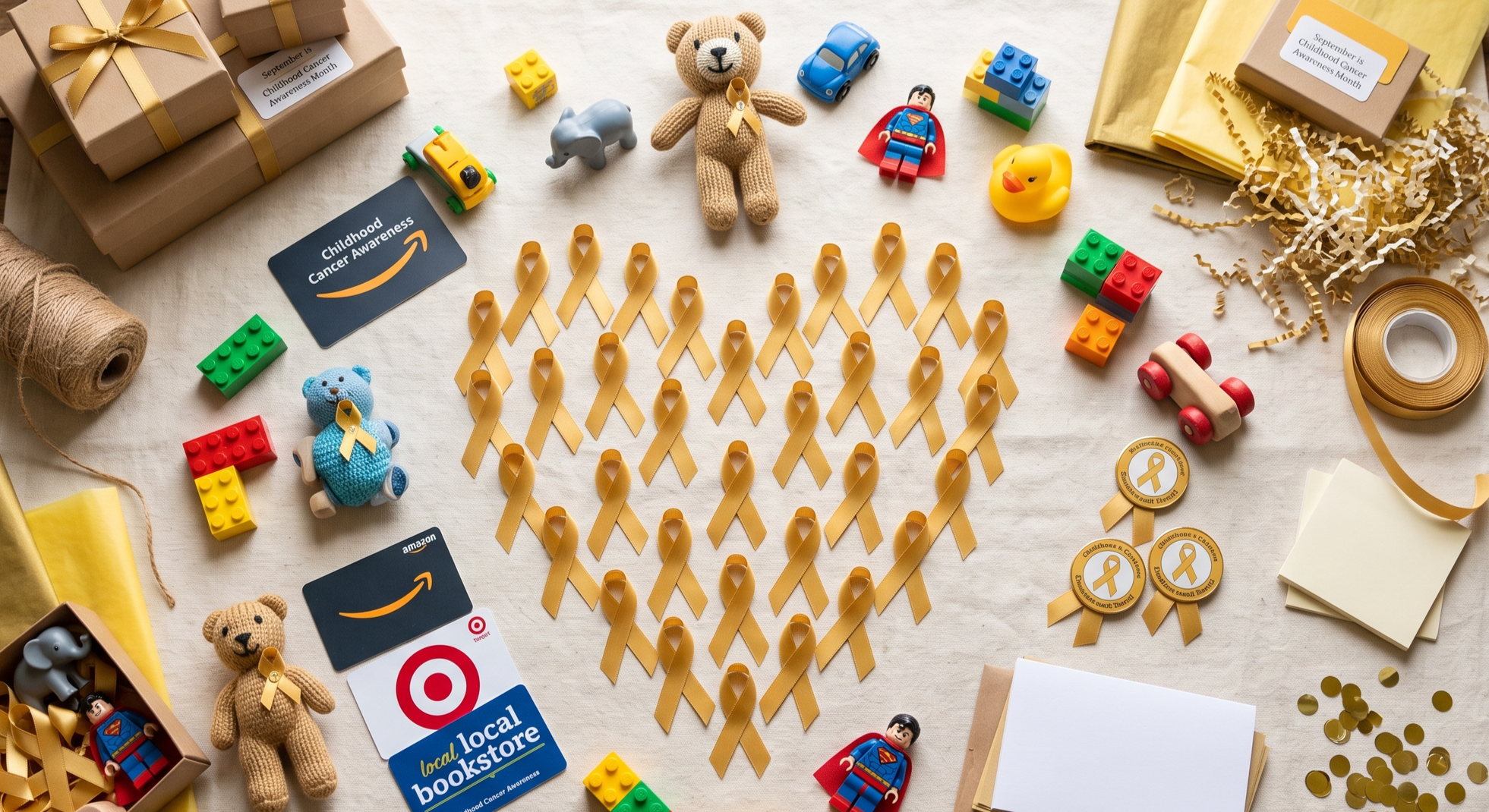
The Gold Ribbon Gift Guide: 15 Ways to Support Children in Cancer Treatment During CCAM
September is Childhood Cancer Awareness Month (CCAM), a time when the gold ribbon helps shine a brighter light on the realities facing children in cancer treatment and the families who walk beside them.
Awareness matters. Action matters even more.
If you've ever wondered how to help children with cancer in a meaningful way, this guide shares 15 practical ways to make a real impact—from sponsoring a Joy Package or gas card to hosting a toy drive, volunteering, or supporting a hospital toy closet.
Every idea on this list connects directly to children in treatment. No vague awareness campaigns. No abstract gestures. Just tangible ways to bring comfort, play, and support to families navigating pediatric cancer.
Whether your budget is $5, $25, or more, there is a way to help.
And while September is a wonderful month to start, the needs of cancer families continue long after Childhood Cancer Awareness Month ends.

The Friend Who Became Family
Cancer has a way of revealing who will stay.
Not in a dramatic movie-scene kind of way. More often, it happens through ordinary acts repeated over and over again. A friend who keeps showing up. A friend who remembers the dates. A friend who takes the sibling to the park, waters the plants during an inpatient stay, or sends a simple text that says, "Thinking of you today."
For our family, that person is K.
She was our friend before cancer. Somewhere along the way, she became family.
This post is a thank-you letter to the friend who sat in our kitchen on diagnosis day, loved our children as her own, carried pieces of our life when we could not carry them ourselves, and never once asked for recognition. It is also a tribute to the people who quietly become part of a cancer family's survival story—not because of one grand gesture, but because of a thousand small, faithful ones.
If your family has a person like this, you already know: sometimes the people who aren't related by blood become the family you lean on most.

The Diagnosis Week Playbook: What to Pack, Who to Call, What to Stop Doing
After my two-year-old son was diagnosed with acute lymphoblastic leukemia, I realized how overwhelming and disorienting the first days of pediatric cancer can be for families. This practical and deeply personal guide walks parents through what to pack, who to call, what to prioritize, and how to survive the emotional and logistical shock of a childhood cancer diagnosis. It was written to help newly diagnosed families feel less alone during the hardest first week of treatment.
The Questions My Son Asks Now That He Is Older
My son is five years old now, and for the first time, he is starting to ask questions about his cancer treatment.
Not all at once. Not in a formal conversation. The questions arrive in the way children's questions often do—while driving to the grocery store, during bath time, in the middle of folding laundry, or halfway through dinner.
Each question catches me off guard. Each one reminds me that surviving cancer is not just a medical process. It is a developmental one. As children grow, they revisit their experience with new understanding, new vocabulary, and new curiosity.
In this post, I share some of the questions my survivor child has asked, the age-appropriate answers we've given, and what I've learned about talking honestly with a child who is beginning to make sense of their own cancer story.
Because for many survivor families, treatment may end—but the conversations continue.
How to Talk to a Child Who Has Cancer (Without It Feeling Awkward)
When a child is diagnosed with cancer, many adults suddenly become unsure of what to say. They worry about saying the wrong thing, bringing up the diagnosis, or making the child uncomfortable.
The good news is that most children in treatment do not need perfect words. They need familiar people who show up.
The most helpful thing you can do is surprisingly simple: treat the child like a child, not like a patient.
Ask about their favorite video game. Compliment their new shoes. Let them tell you about their pet, their book, their toy, or the funny thing that happened this week. Follow their lead. If they want to talk about cancer, listen. If they want to talk about dinosaurs, talk about dinosaurs.
In this guide, we share what cancer families wish visitors knew—including helpful conversation starters, common phrases to avoid, and small ways to help a child feel seen as a person rather than a diagnosis.
Because the adults who make the biggest difference are rarely the ones with the perfect words. They are the ones who keep showing up.
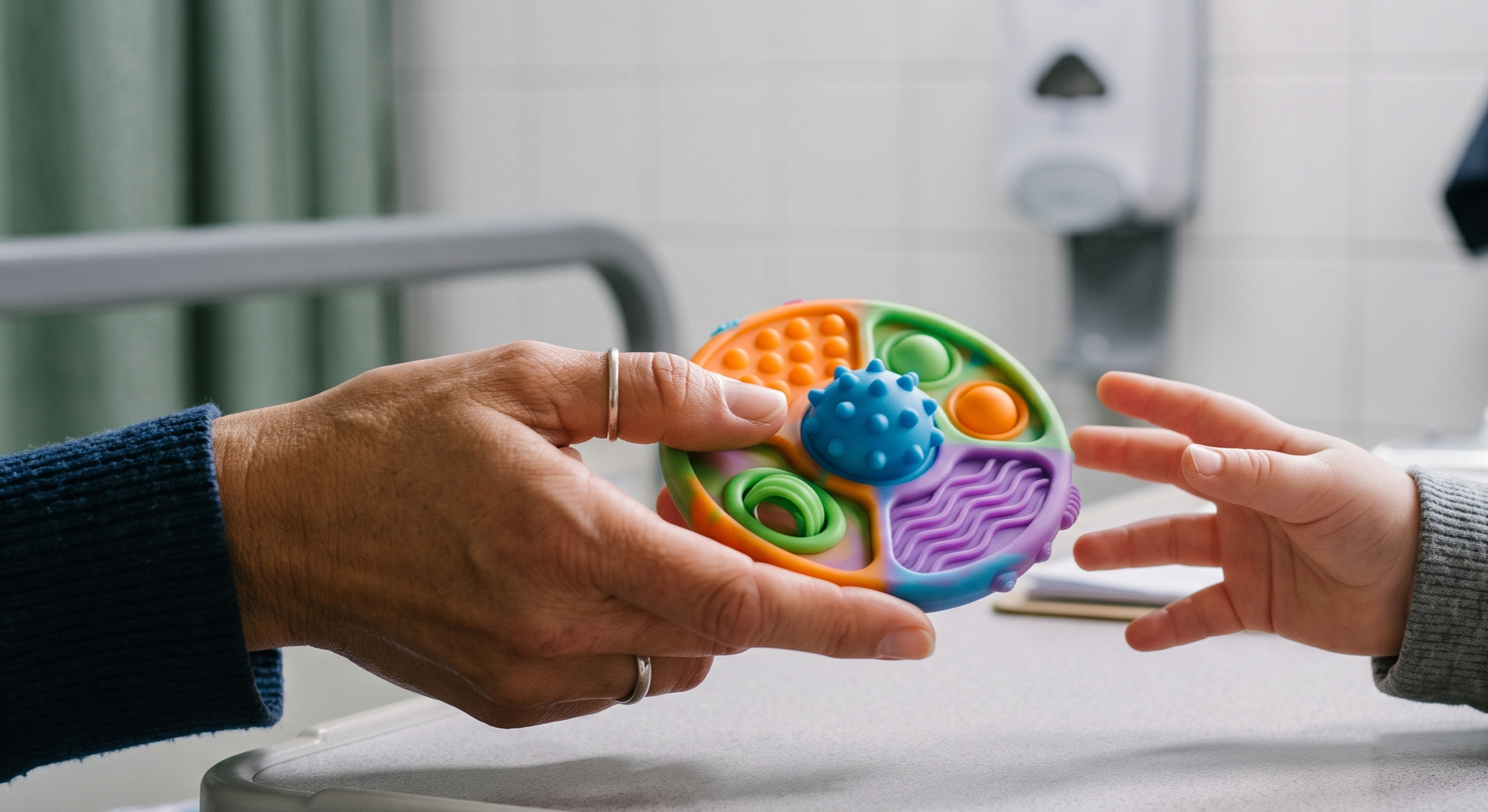
The Child Life Specialist Who Carried Us Through Our First Day
The day after my son was diagnosed with leukemia, a woman walked into our hospital room carrying something small: a yellow Cocomelon school bus.
At the time, our world had narrowed to lab results, treatment plans, and words we had never heard before. She was not a doctor. She was not a nurse. She was a child life specialist.
And she changed everything.
For four years, she helped my son navigate procedures, fear, anxiety, long clinic days, and countless moments that could have felt overwhelming. She prepared him for port accesses. She sat with him during hard procedures. She made sure his sister felt seen. She brought play into a place that often felt consumed by medicine.
This post is a thank-you letter to the child life specialists who quietly help children preserve their childhood during cancer treatment. It is also an introduction for anyone who has never heard of this profession and doesn't realize just how much these remarkable people do.
Because when pediatric cancer enters a family's life, child life specialists are often the ones who remind everyone that the child is still a child.
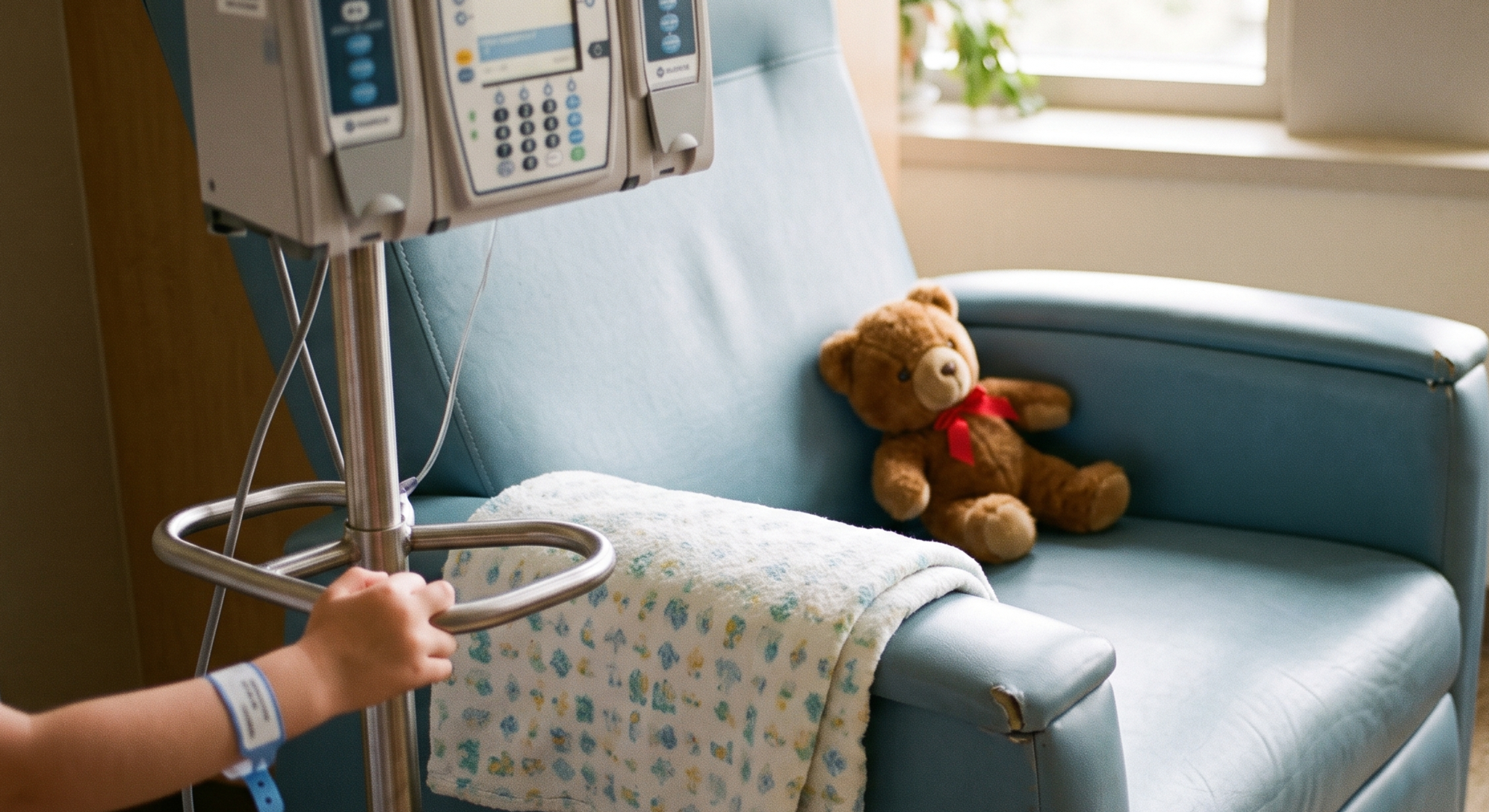
A Small Joy From the Infusion Chair
There are moments from cancer treatment that stay with you because they were dramatic. The diagnosis. The first chemo. The bell-ringing day.
And then there are moments that stay because they were small.
This is one of those moments.
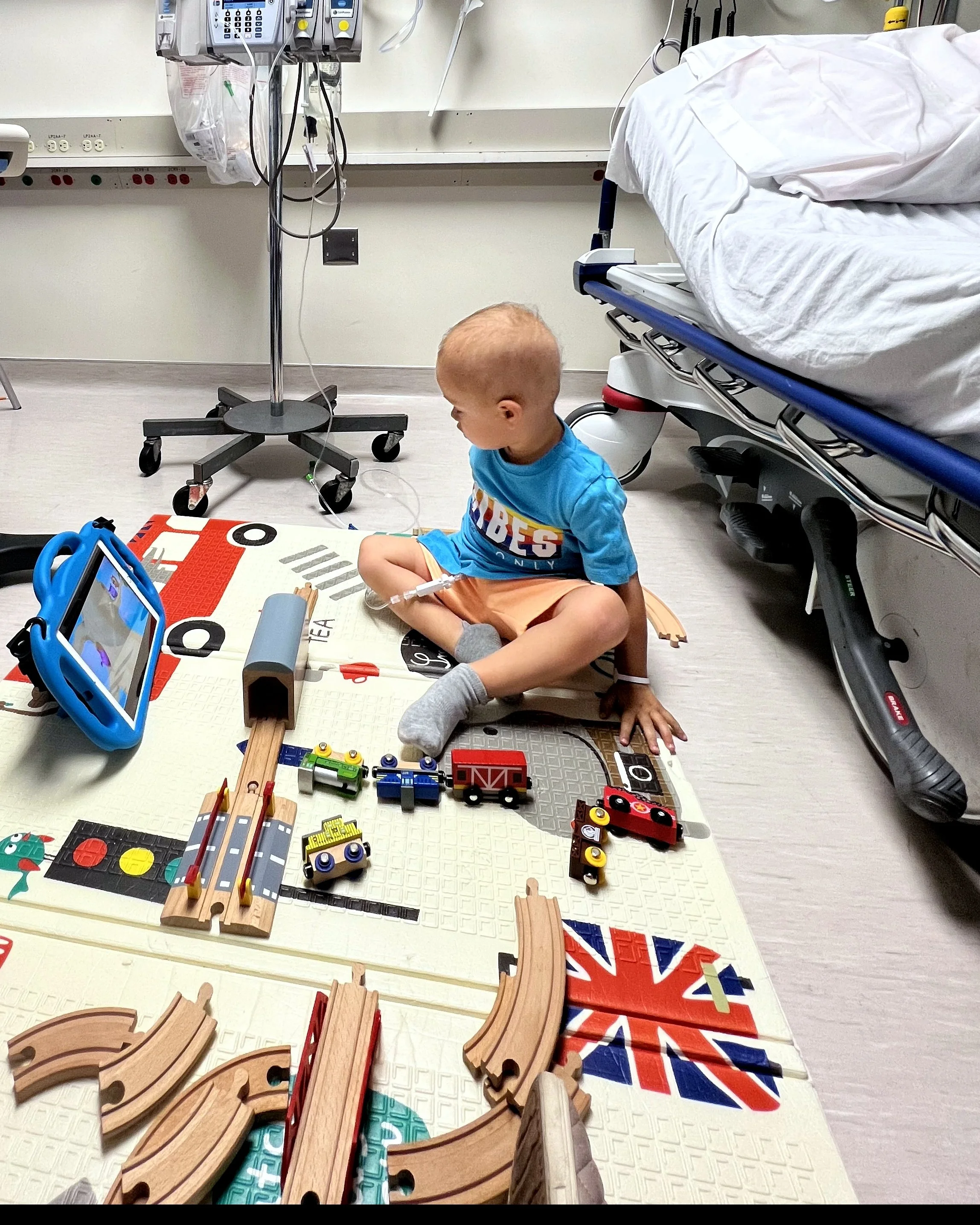
My son was three years old, sitting through a long chemotherapy infusion, focused on a tiny Lego car he had built and rebuilt all afternoon. When his nurse stopped to ask where the car went, his answer was simple: "It goes to the hospital. And home."
It was a thirty-second conversation. A passing exchange between a nurse and a little boy. But years later, I still think about it.
Because pediatric cancer treatment is built from thousands of moments like these. Tiny acts of imagination. Familiar nurses. Toys that travel back and forth between clinic and home. Children who somehow make room for both hard things and ordinary play.
This is the story of a small Lego car, a thoughtful nurse, and the reminder that even during treatment, childhood keeps finding a way forward.
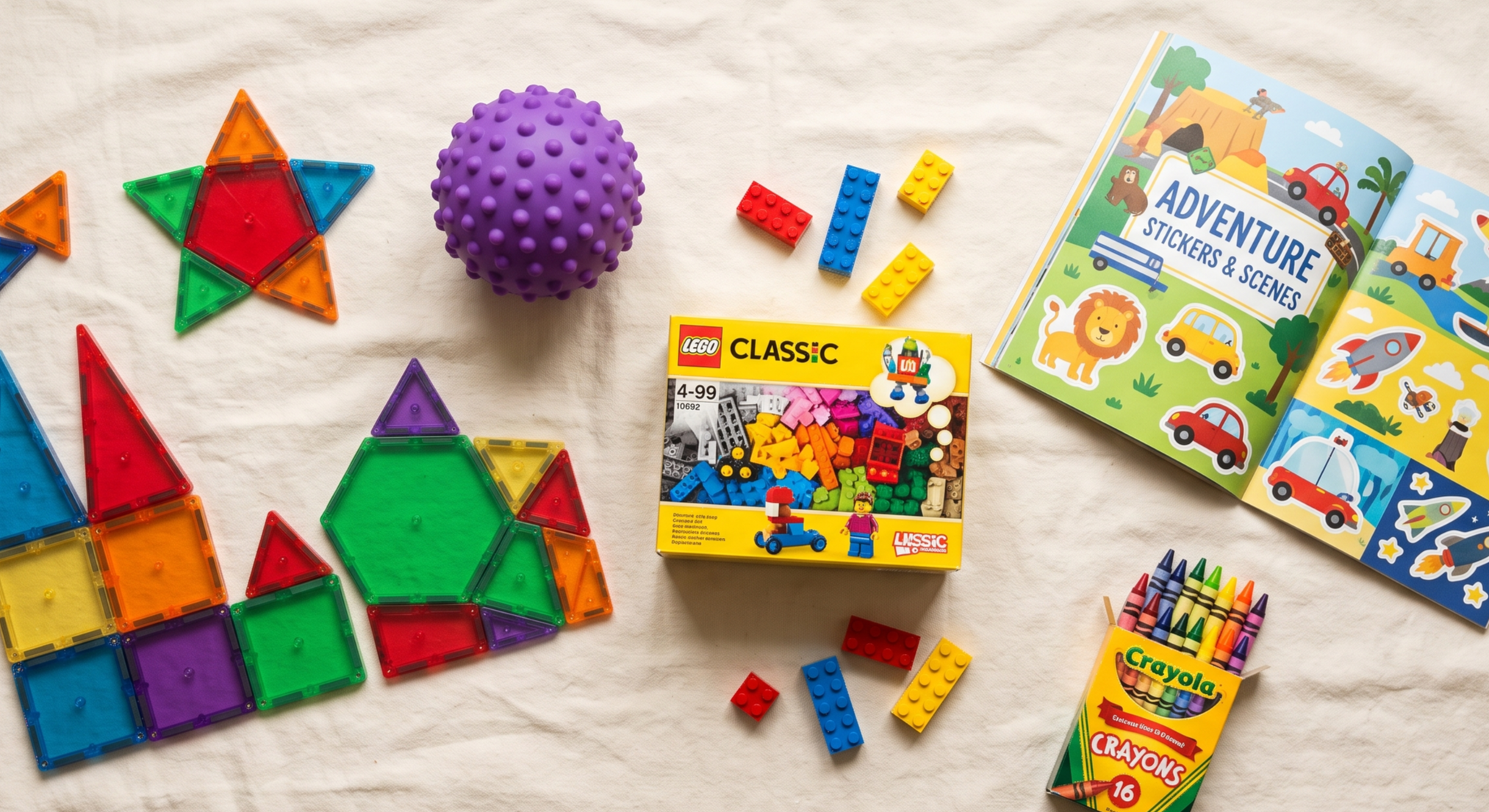
The Best Toys for a 5-Year-Old in Cancer Treatment
Five-year-olds occupy a unique space in childhood. They are imaginative, curious, increasingly independent, and eager to direct their own play. For children navigating pediatric cancer treatment, the right toys can do much more than pass the time—they can provide comfort, support emotional regulation, encourage creativity, and help process experiences that are difficult to put into words.
From Magna-Tiles and Lego sets to sensory tools, art supplies, and pretend-play favorites, certain toys consistently rise to the top for families in treatment. These are the toys that travel well between home and hospital, survive repeated sanitizing, and hold a child's attention during long clinic days and recovery periods. This guide highlights 15 of the best toys for 5-year-olds in pediatric cancer treatment, based on feedback from cancer parents, child life specialists, and our partner hospitals.

How We Built One-on-One Time With Our Daughter During Treatment
One of the hardest truths of pediatric cancer parenting is that siblings often receive less of their parents' time and attention during treatment. The patient needs more, appointments take over the calendar, and family life begins to revolve around medical care. No amount of good intentions can completely change that reality.
What can help is creating small, consistent moments of one-on-one connection. A weekly walk, a bedtime book, Saturday pancakes, or fifteen uninterrupted minutes together can become powerful reminders that a sibling is seen, valued, and deeply loved. These rituals do not erase the challenges of treatment, but they help build security and belonging during a season when so much feels uncertain.
This post shares the one-on-one traditions that helped our daughter during her brother's cancer treatment and why these simple routines may be one of the most important investments families can make in their cancer siblings.