A Letter to Your Congressional Representative About Pediatric Cancer Research

If you've been wondering what advocacy for pediatric cancer research funding looks like at the federal level, the honest answer is: it starts with a letter.
Your U.S. Senator and your U.S. House Representative each hold a vote on the federal budget every year. That budget determines how much money the National Cancer Institute (NCI) receives. NCI, in turn, decides how much of its budget goes to pediatric cancer research. Right now, that number is about 8 percent of the total federal cancer research budget. Approximately $576 million per year for all pediatric cancers combined.
Advocacy groups have been organizing around this number for years. The hashtag advocacy for increased pediatric cancer research funding exists for a reason. If you'd like to be part of moving that number, one of the highest-leverage things you can do this September is send a letter.
Here is a template you can adapt. Send by email through your representative's website. Or print it and mail it. Both work.
The template
(Copy the text below. Add specifics from your family, then send.)
Dear [Senator / Representative Last Name],
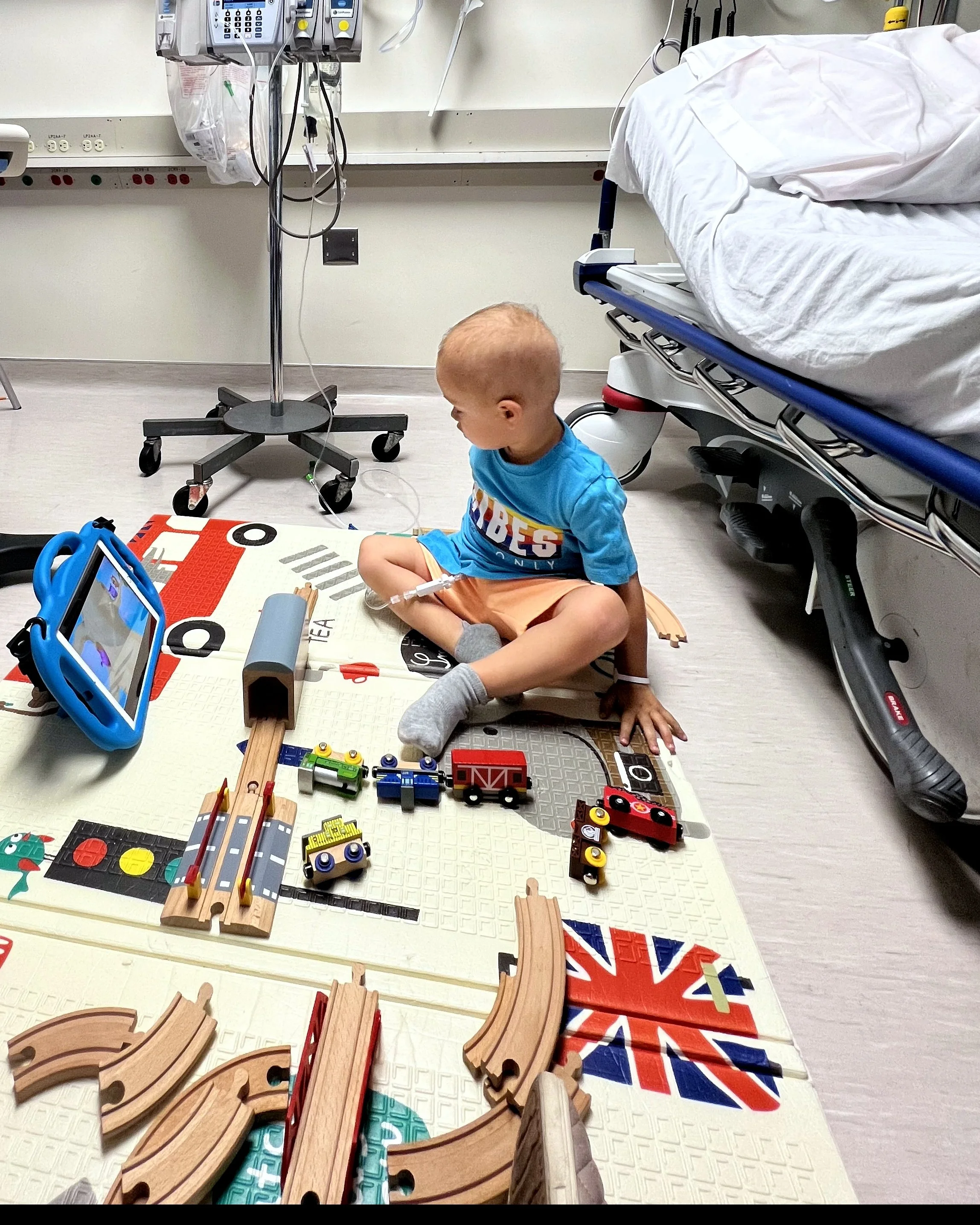
I'm writing as a constituent from [City, State] and as a parent of a child who has been treated for pediatric cancer.
September is Childhood Cancer Awareness Month. Every year, approximately 15,000 children in the United States are diagnosed with cancer. Cancer remains the leading disease-related cause of death in children in this country.
The federal research investment in pediatric cancer does not match the scale of the problem. The National Cancer Institute allocates roughly 8 percent of its cancer research funding to pediatric cancers, which is why the advocacy community has been calling for more than 8 percent for years now.
The drugs currently used to treat many pediatric cancers were developed decades ago. My child was treated with chemotherapy drugs approved between 1948 and 1974. These drugs saved my child's life. They also come with long-term late effects that survivors will live with for decades. Between 60 and 90 percent of childhood cancer survivors develop at least one long-term health condition traceable to their treatment.
New research holds real promise. The CAR-T therapy Kymriah, approved in 2017 for pediatric relapsed leukemia, was the first FDA-approved gene therapy and has produced remission rates of over 80 percent in children who had relapsed on standard chemo. This is what dedicated pediatric cancer research can produce. We need more of it.
I'm asking you to:
1. Support increased federal funding for pediatric cancer research through the National Cancer Institute.
2. Support full implementation and enforcement of the RACE for Children Act, which requires certain adult cancer drugs to be studied in pediatric populations.
3. Co-sponsor and support any pending legislation that expands pediatric cancer research funding or drug development incentives.
The children in treatment today deserve better options. The families waiting for the next diagnosis deserve better tools. This is a nonpartisan issue. Pediatric cancer does not care about political affiliation. Neither should our response to it.
Thank you for your time. I'd appreciate a response about your position on pediatric cancer research funding.
Sincerely,
[Your name]
[Your city, state, zip]
[Your email or phone if you'd like a response]
How to find your representatives
For your two U.S. Senators: senate.gov, then click 'Senators' in the top nav
For your U.S. House Representative: house.gov, then use the 'Find Your Representative' tool
Both senate.gov and house.gov have contact forms for constituent letters
A few tips on sending
Personalize the opening
The letter above is a template. Add one or two specific sentences about your family, your child's diagnosis, and why this issue matters to you personally. Personal letters land differently than form letters.
Send to all three
You have two Senators and one Representative. Send to all three. The addresses are different. The letter can be the same.
Follow up
If you get a response, save it. Send another letter 3 months later. Persistent constituent contact moves the needle more than one-time letters.
Ask friends and family to send too
Copy this post. Share it in your community. If ten friends of yours send letters, you have moved from being one constituent to being a small movement. Congressional offices notice pattern letters from a district. It matters.
A note on other advocacy channels
Letters are not the only advocacy path. If you have time and energy for more, you can also:
Attend your senator or representative's town hall and ask a pediatric cancer research question in public
Set up a district office meeting with a legislative aide (all offices take these)
Join advocacy days organized by groups like the Alliance for Childhood Cancer or CureSearch, where families travel to Washington to meet with congressional offices in person
Support the American Childhood Cancer Organization, which has an active federal advocacy program
Any of these are useful. All of them start with the same basic act: telling your representatives, in your own voice, that pediatric cancer research funding matters to you and your family.
What this letter can do
One letter, on its own, does not change a budget. Ten thousand letters, arriving in September from every congressional district, does.
This is why September matters. This is the month when the political calendar and the advocacy calendar overlap. Congressional offices are back from summer recess. They are working on budget conversations. They are hearing from constituents on all sides of every issue.
Make sure they hear from you on this one.
Dina
Mom of Max | Founder, Maxwell’s Toy Shoppe
Childhood Cancer Advocate 💛
Follow Us On Social
Join our movement to support children battling cancer and their families, year-round:
🎁 Donate to deliver toys to children during long cancer treatment days
🧸 Buy a toy from Maxwell’s Toy Shoppe, and 100% of proceeds support children in treatment
🎗️ Join Maxwell’s Circle of Heroes as a monthly donor to ensure families receive ongoing care