The Best Toys for a 5-Year-Old in Cancer Treatment
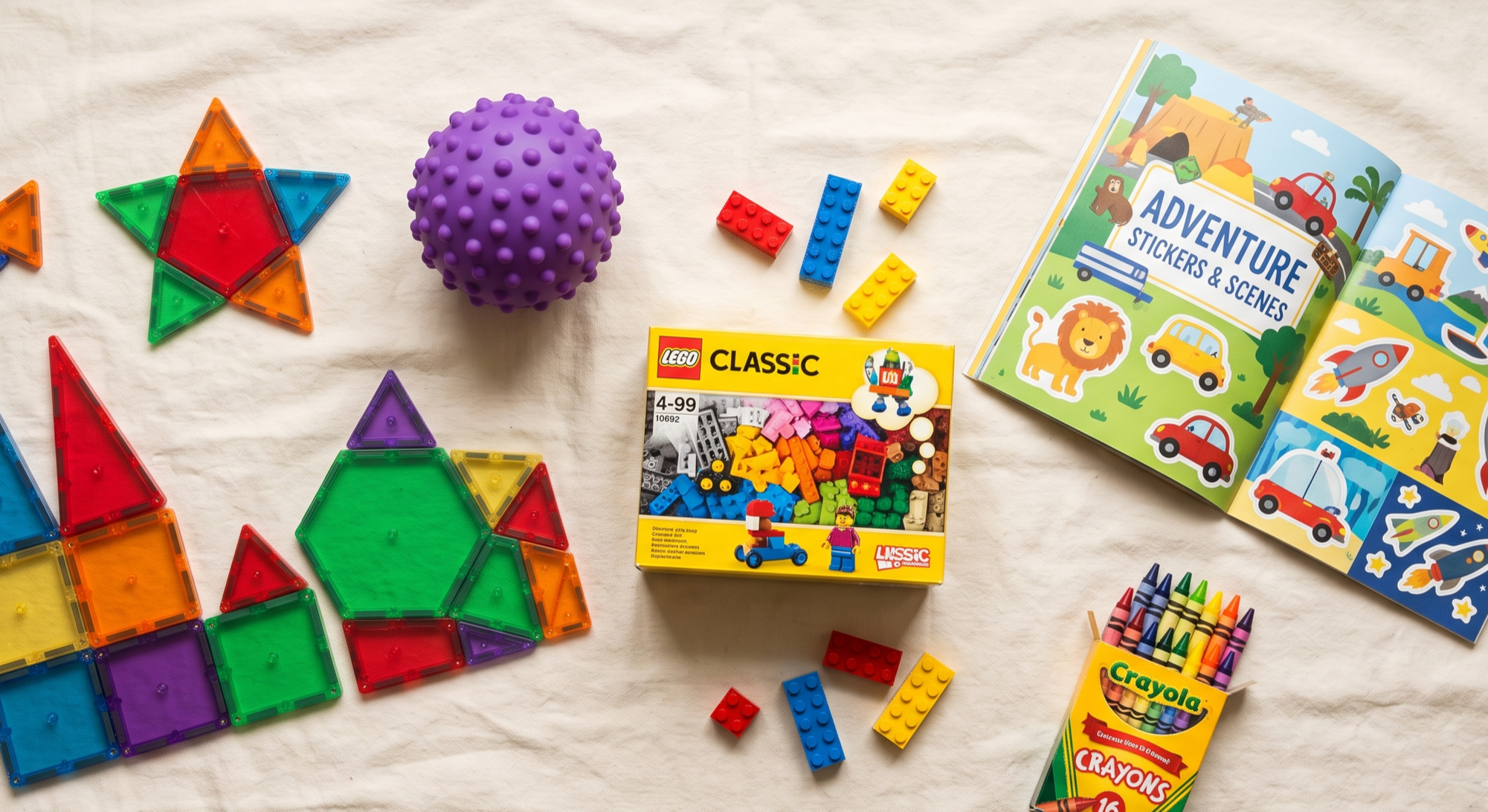
5-year-olds in cancer treatment are at a specific developmental stage. They are old enough to want agency in their play. They are young enough to still love sensory exploration. They are starting to do open-ended pretend play. They are also navigating treatment days that require regulation tools.
Here are the toys that work best for a 5-year-old in pediatric cancer treatment, based on what we have seen at our partner hospitals and what cancer parents have told us their 5-year-olds reach for.
What a 5-year-old needs
Sensory tools for procedural moments
Open-ended building toys for long stretches
Quiet activities for clinic chairs and hospital beds
Pretend play items for working through experiences
Art supplies for self-expression and recovery time
Something that can travel between home and hospital easily
The list
1. A Magna-Tile starter set (32 to 100 pieces)
The king of 5-year-old building. Open-ended. Magnetic so pieces stay together. Encourages spatial reasoning. Survives sanitizer. Lasts years.
2. A small Lego or Duplo set
A 1- to 3-hour build kit. Choose a theme your child loves (animals, vehicles, princesses, dinosaurs). The build itself is a focused activity. The finished piece becomes a play object.
3. A pop-it toy
The procedural tool. Quiet enough for clinic. Self-regulating. Fits in a backpack.
4. A sensory ball (small, squishy)
For the hand that is not occupied. For port access days. For the long wait. For anxious moments.
5. A small sticker book or sticker activity book
5-year-olds love stickers. A reusable sticker scene book lets them create worlds. A sticker-by-number book gives them a structured project.
6. A travel-sized magnetic drawing pad
Drawing without the cleanup. Great for clinic chairs. Great for the lap during long appointments. Great for the car ride home.
7. A small play kitchen or doctor kit
Pretend play helps 5-year-olds process the medical world. A doctor kit lets them be the doctor instead of the patient. A play kitchen lets them control food in a way they cannot during treatment.
8. A set of small wooden cars or animal figures
Open-ended pretend play. Travels well. Sets up worlds on a tray table. Quiet.
9. A water-wow book
Brush filled with water, reusable pages, no mess. The clinic-day favorite.
10. A small art kit (washable markers, crayons, blank paper)
Self-led creation. 5-year-olds love making things. Keep it small and portable for clinic use, larger and at-home for recovery days.
11. A book of their choice
Reading with a parent. Reading alone. Listening to a story on an audio player. Books at this age are some of the most comforting items in the toy bag.
12. A small fidget cube
Multiple surfaces, one small object. Quiet. School-friendly for the next year. Discrete in the hand.
13. A small puzzle (24 to 50 pieces)
Open-ended. Quiet. Engaging for 20 to 40 minutes. Choose a puzzle with a tray for easy at-home storage.
14. A weighted plush (small enough to travel)
Regulating. Soft. The named friend that goes to every appointment.
15. A small Etch A Sketch or scribbler
Drawing forever, no cleanup. Familiar. Great for the bedside.
What we do not recommend at this age (for cancer treatment specifically)
Battery-operated toys with sounds (often not clinic-appropriate)
Toys with very small parts (siblings may be around)
Anything that requires elaborate cleanup
Toys that need a fully clean environment to use (clay, slime, paint)
How to rotate
Keep two clinic bags' worth of toys in rotation. Refresh weekly. Add one new item every month or two, retire one for a while. Novelty matters when your child sees the same toys often.
Where to buy
Maxwell's Toy Shoppe (curated for pediatric cancer treatment, every purchase funds Joy Packages)
Target and Amazon for breadth and price
Local toy stores for one-of-a-kind sensory items
Maxwell's Toy Box Joy Package Amazon wishlist for items that go to children in active treatment
A note for the parent shopping for a 5-year-old in treatment
The toys at this age that hold up are the ones that grow with the child. A Magna-Tile set you buy now will be loved at age 6, 7, and 8. A small wooden car that comes home from clinic at 5 will be in the toy drawer at 8.
Choose items that travel. Choose items that survive sanitizer. Choose items that let your child be the one doing the play.
Dina
Mom of Max | Founder, Maxwell’s Toy Shoppe
Childhood Cancer Advocate 💛
Follow Us On Social
Join our movement to support children battling cancer and their families, year-round:
🎁 Donate to deliver toys to children during long cancer treatment days
🧸 Buy a toy from Maxwell’s Toy Shoppe, and 100% of proceeds support children in treatment
🎗️ Join Maxwell’s Circle of Heroes as a monthly donor to ensure families receive ongoing care