Toys That Survive Sanitizer (And the Ones That Don't)
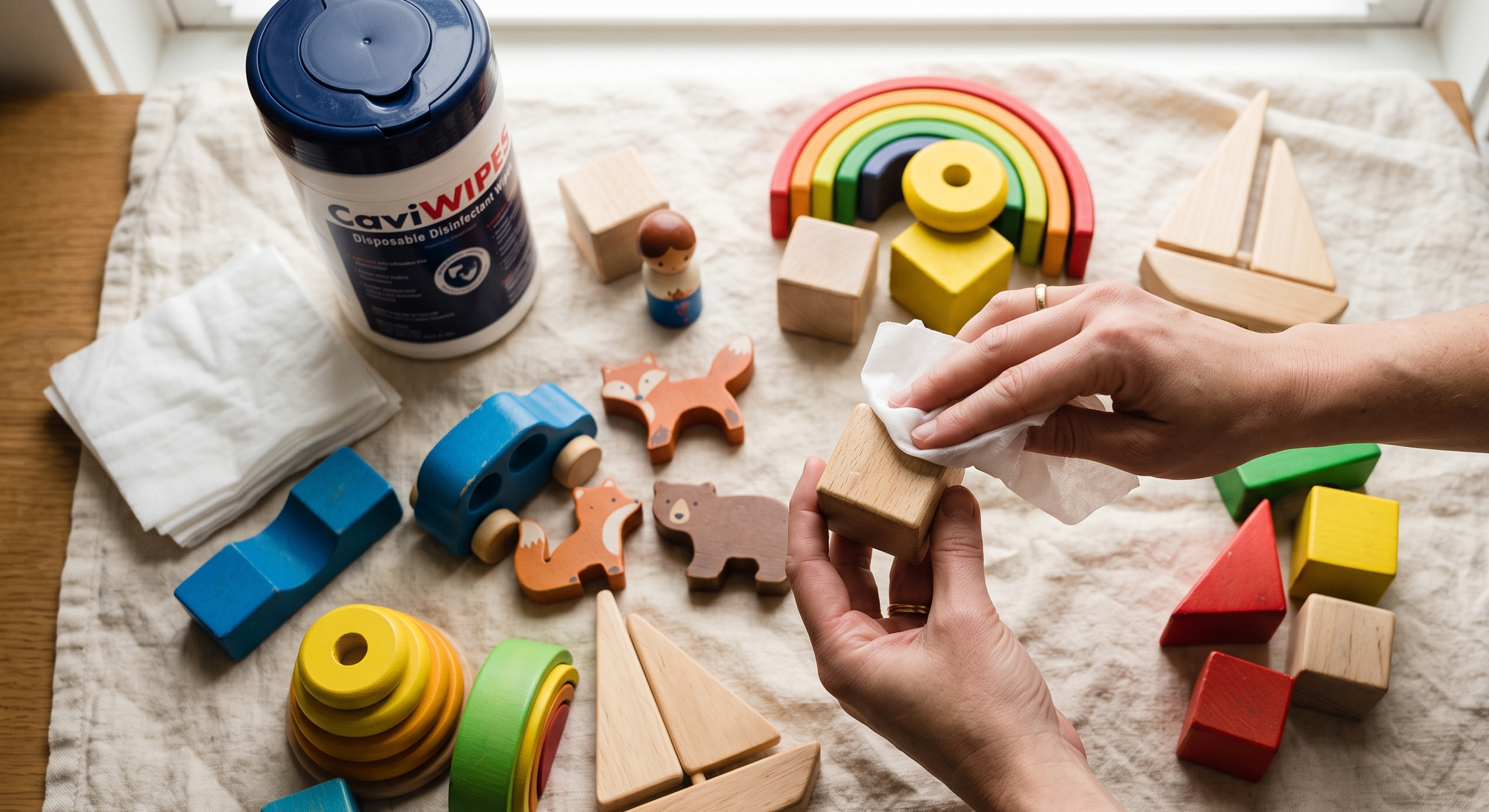
Pediatric cancer families sanitize a lot. Hand sanitizer. Surface wipes. Hot wash. The whole household runs on a slightly elevated cleaning protocol.
Toys are part of the cleaning routine. A toy that comes home from the hospital, gets used during a neutropenic week, or sits in the clinic bag during multiple visits, has to hold up to repeated sanitizing.
Here is what we have learned about which toys survive, and which toys do not.
The toys that survive
Wooden toys with a smooth finish
A wooden car, a wooden block, a wooden puzzle piece, a wooden teether for younger kids. They wipe down easily. They do not absorb. They last years.
Hard plastic toys
Magna-Tiles, Duplo, hard plastic figures, sensory balls, hard plastic puzzles, plastic fidget toys. Wipeable with a hospital-safe wipe. Durable.
Silicone toys
Pop-its, silicone fidgets, silicone teethers, silicone chew necklaces. Dishwasher safe in many cases. Wipeable. Excellent for hospital life.
Machine-washable plush
Plush animals that are explicitly labeled machine-washable. Some plush animals can be washed on hot, which kills any concerning bacteria. Always check the label before buying for a cancer family.
Paper-based art supplies (used once, then replaced)
Coloring books, sticker books, watercolor pads. They are not exactly sanitizable, but they are inexpensive and replaceable. We rotate through them often.
Crayons and washable markers
Crayons can be wiped down. Washable markers (Crayola, Mr. Sketch) are exactly what they say. Both hold up to clinic life.
Magnetic drawing pads
The whole pad is plastic. Wipes down easily. Lasts years.
Hard-cover board books
Wipeable with a damp cloth or a hospital wipe. Survive a lot of clinic days.
The toys that do not survive
Stuffed animals with non-removable parts
Glued-on eyes, plastic decorations sewn into the fabric, bows that fall off. If the parts cannot be removed for washing, the stuffed animal cannot be safely sanitized.
Battery-operated toys with seams
Hard to wipe into the crevices. Often have small openings that water cannot enter. We have lost many battery-operated toys to clinic life over the years.
Fabric-based toys without a wash protocol
Fabric blocks, fabric quiet books, fabric playsets that are too elaborate to wash. Lovely toys. Not always practical for cancer life.
Wood toys with painted finishes that flake
Most quality wooden toys are finished well. Some cheap wooden toys have painted finishes that flake under repeated wiping. Check before buying for a cancer family.
Cardboard-based games
The board often falls apart with repeated wiping. Card games are usually fine if they are coated. Game boards usually are not.
Toys with porous textures
Slime, kinetic sand, certain Play-Doh varieties in open containers, anything that holds onto bacteria. Most clinics ask families not to bring these in unless they are sealed and single-use.
Sanitizing best practices we use at home
Hospital wipes for daily cleaning
Bleach-based wipes designed for medical settings. We keep them by the door. Anything coming home from clinic gets a wipe-down before it enters our regular toy area.
Hot wash for plush and fabric
Plush animals get a wash on hot at least once a week during heavy treatment phases. We dry on hot too.
Dishwasher for silicone and hard plastic
Pop-its, silicone fidgets, hard plastic blocks. A weekly run through the dishwasher on a sanitizing cycle.
Rotating supplies
We rotate paper supplies (coloring books, stickers) so we are not using the same physical book through an entire neutropenic stretch. Fresh is easier than sanitized for paper goods.
Boundaries on what comes home
Some items that lived at the hospital, stayed at the hospital. The Joy Package bag came home. The plush from the toy closet came home. Loose items from the playroom did not.
What this means for gift-givers
If you are buying a toy for a child in pediatric cancer treatment, the sanitize-ability of the toy is part of the buying decision.
Look for:
Wooden, hard plastic, or silicone construction
Machine-washable plush (check the label)
Smooth surfaces without flaking finishes
Few seams or crevices
Replaceable if it gets ruined (a $10 toy that survives is better than a $40 toy that does not)
What we curate at Maxwell's Toy Shoppe
Our retail selection skews heavily toward wooden, hard plastic, and silicone toys. We choose pieces that hold up to cancer life because we know who is buying them, and we know what they need.
Dina
Mom of Max | Founder, Maxwell’s Toy Shoppe
Childhood Cancer Advocate 💛
Follow Us On Social
Join our movement to support children battling cancer and their families, year-round:
🎁 Donate to deliver toys to children during long cancer treatment days
🧸 Buy a toy from Maxwell’s Toy Shoppe, and 100% of proceeds support children in treatment
🎗️ Join Maxwell’s Circle of Heroes as a monthly donor to ensure families receive ongoing care