What My Daughter Keeps Asking About Her Brother's Hospital Visits
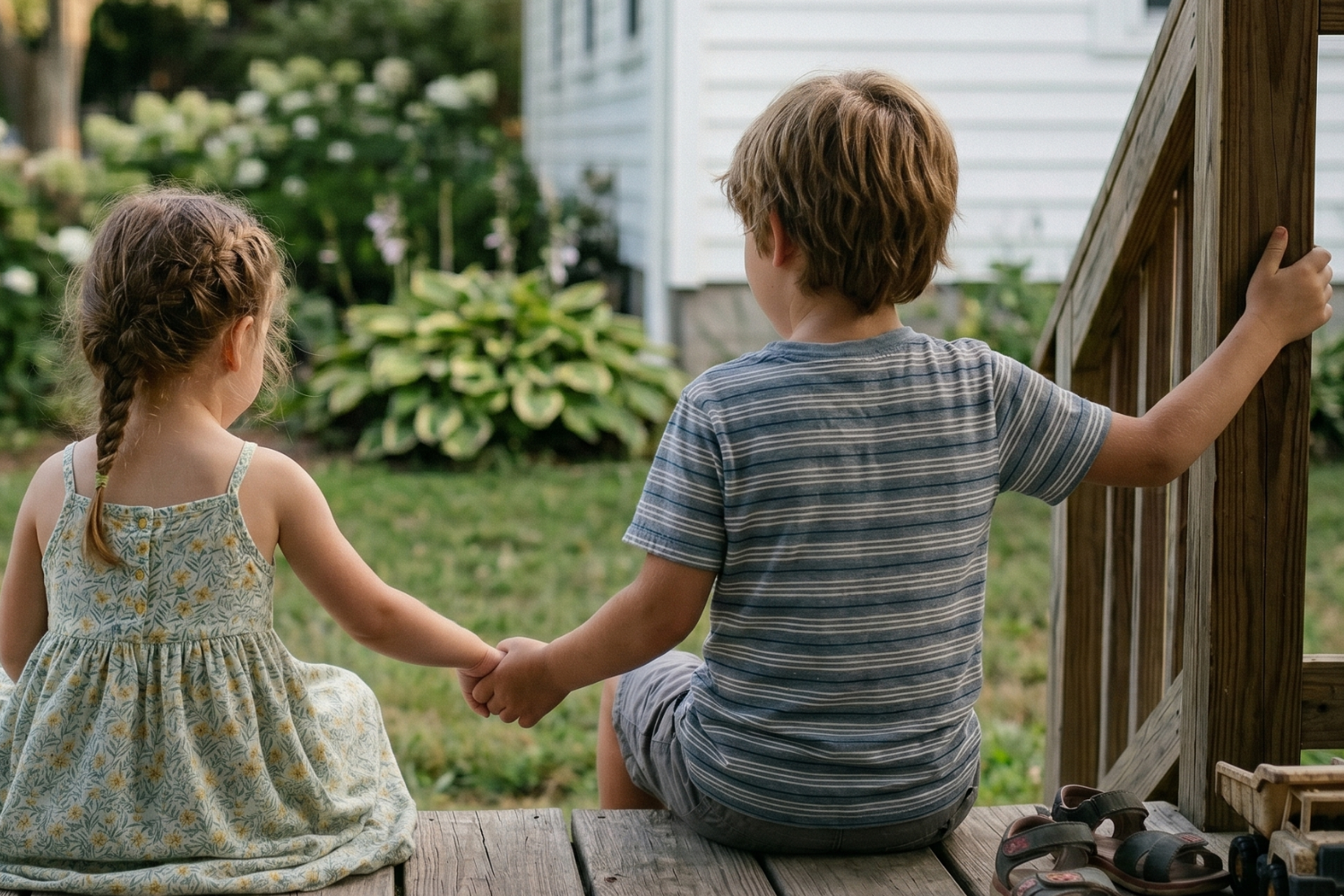
She asked it again on a Wednesday.
We were in the car. My son was in his car seat behind me. My daughter was in her seat next to him. I was driving us to the pediatrician for what is now a fairly routine post-treatment appointment, a sentence I could not have written two years ago without crying.
She said, “Mommy, why does my brother have to go to the hospital so much?”
She is three. She has been a sibling to a child with cancer for her entire conscious life. She is also, right now, in the middle of becoming a person who can ask the question out loud.
She was six months old when her brother was diagnosed.
When my son got sick, my daughter could not sit up on her own yet. She did not know what a hospital was. She did not know what a brother was, not in the way she does now. She knew the people in her family by smell and warmth and the sound of our voices, and that was enough.
So when the world changed, she did not know it had.
She watched. That is what babies do. She watched us pack the hospital bag. She watched us hand her to whoever was watching her that day. She watched her brother come home with a port and a bald head and a tired body, and she put her hand on his face and did not know what to call any of it.
That is how she spent her infancy. Watching.
By the time she could talk, the hospital was already a place that existed in her vocabulary. By the time she could form full sentences, the routine of treatment was just part of what our family did. She did not have a before to compare it to.
And then she turned three. And the question started coming.
The question is changing because she is changing.
Here is what nobody warns you about the sibling of a child in pediatric cancer treatment. The diagnosis happens once. The conversation happens forever. It changes shape as the sibling does.
Right now, at three, she wants a category. She wants to know what to call the thing she has been a witness to for her entire life. She wants a word, and she wants me to say it without my voice getting funny.
I tell her her brother had a sickness called leukemia. I tell her the doctors gave him medicine to make the sickness go away. I tell her he is better now, and the appointments are how the doctors keep checking that the better is staying. She nods. She turns it over. She holds it.
She is too young for how. She is too young for what happens if. But the questions are coming. I can see them building. The grammar is going to get cleaner. The questions are not.
I know, eventually, she will ask things I do not yet have answers for. She will want to understand the medicine, the port, the bald head she remembers but did not have words for at the time. She will ask if she could have caught it. She will ask, one day, if her brother could get sick again. And someday she will ask the question every sibling of a child with cancer eventually asks, in some form, whether out loud or in her head: was it ever close to me too.
I do not have those answers ready. I will. Slowly. The way you build any conversation with a child who is becoming a person in real time.
Treatment ends. The questions do not.
This is the part I want other cancer moms to know, especially the ones whose siblings are still very small.
When my son finished active treatment, I thought the sibling conversation would taper off. I was wrong. It got louder, because she was older, and her brain was bigger, and the things she had been processing quietly for her whole life started coming up.
She is three. We are at the very beginning of this. That is the truth.
If you have a sibling who is one, or two, or barely old enough to use the word hospital correctly, your sibling work is not behind. It is ahead. The conversations are coming. Stay close. Watch for the first time the question takes a real shape. Do not try to answer a future question with the words you have today. Answer the question they are actually asking, right now, in the size they can hold.
There is no right script. There is only practice.
I do not have a clean answer for what she is starting to ask. What I have is a way I have learned to answer.
I get on her level. I do not say it from across the room. I sit down on the floor, or I kneel next to her car seat. I make my body small enough that the conversation is between two people, not between a parent and a small person.
I tell her the truth, in the size she can hold. Not the part that would scare her. Not the part that would lie. The piece of the truth that fits where she is right now, which at three is a sentence or two, repeated softly, with no extra weight on it.
I tell her she is not alone in wondering. I tell her that not all of her friends have brothers who went to the hospital. Some do. Most do not. The ones who do will understand. The ones who do not will need her to be patient with them as she grows up.
And I tell her she is not invisible. I tell her this often. Cancer can make a sibling invisible in a way that takes years to undo, and I am going to spend those years saying her name first in conversations, taking her picture too, asking her how she is and waiting for the real answer.
What I want other parents to know.
If you are a cancer parent reading this and your sibling is starting to ask questions she did not used to ask, you are not behind. You are not failing at sibling support. You are right where the science of childhood development says you should be.
Your child is growing. Their questions are growing. The work is to grow your answers alongside them.
You will not get every conversation right. I have given my daughter answers I have second-guessed by bedtime. I have given her answers I had to come back to and revise the next morning. She has been gracious about it, the way young children are when they trust the parent on the other side of the question.
The conversation is not one conversation. It is a thousand conversations, spread across years, and you do not have to be perfect in any single one of them. You just have to keep showing up to the next one.
She still asks.
We pulled into the pediatrician's parking lot. I turned the car off. I sat there for a second.
I told her this. I told her her brother has to keep going to the hospital because his doctors want to make sure his body is still okay after the treatment. I told her his treatment was big and his body is small and the doctors want to check on the body sometimes. I told her this is good news. The appointments are not because something is wrong. The appointments are because we want to keep something from being wrong.
She thought about it.
She said, “Okay. Can I have a snack?”
That is sibling parenting in the cancer after-era. You give the answer carefully. You watch them turn it over in their hand. They put it in their pocket. They ask for goldfish.
Then you walk into the next appointment, and you wait for the next question, and you start again.
Dina
Mom of Max | Founder, Maxwell’s Toy Shoppe
Childhood Cancer Advocate 💛
Follow Us On Social
Join our movement to support children battling cancer and their families, year-round:
🎁 Donate to deliver toys to children during long cancer treatment days
🧸 Buy a toy from Maxwell’s Toy Shoppe, and 100% of proceeds support children in treatment
🎗️ Join Maxwell’s Circle of Heroes as a monthly donor to ensure families receive ongoing care