The Gas Card Math: What Three Trips a Week to Advocate Actually Costs
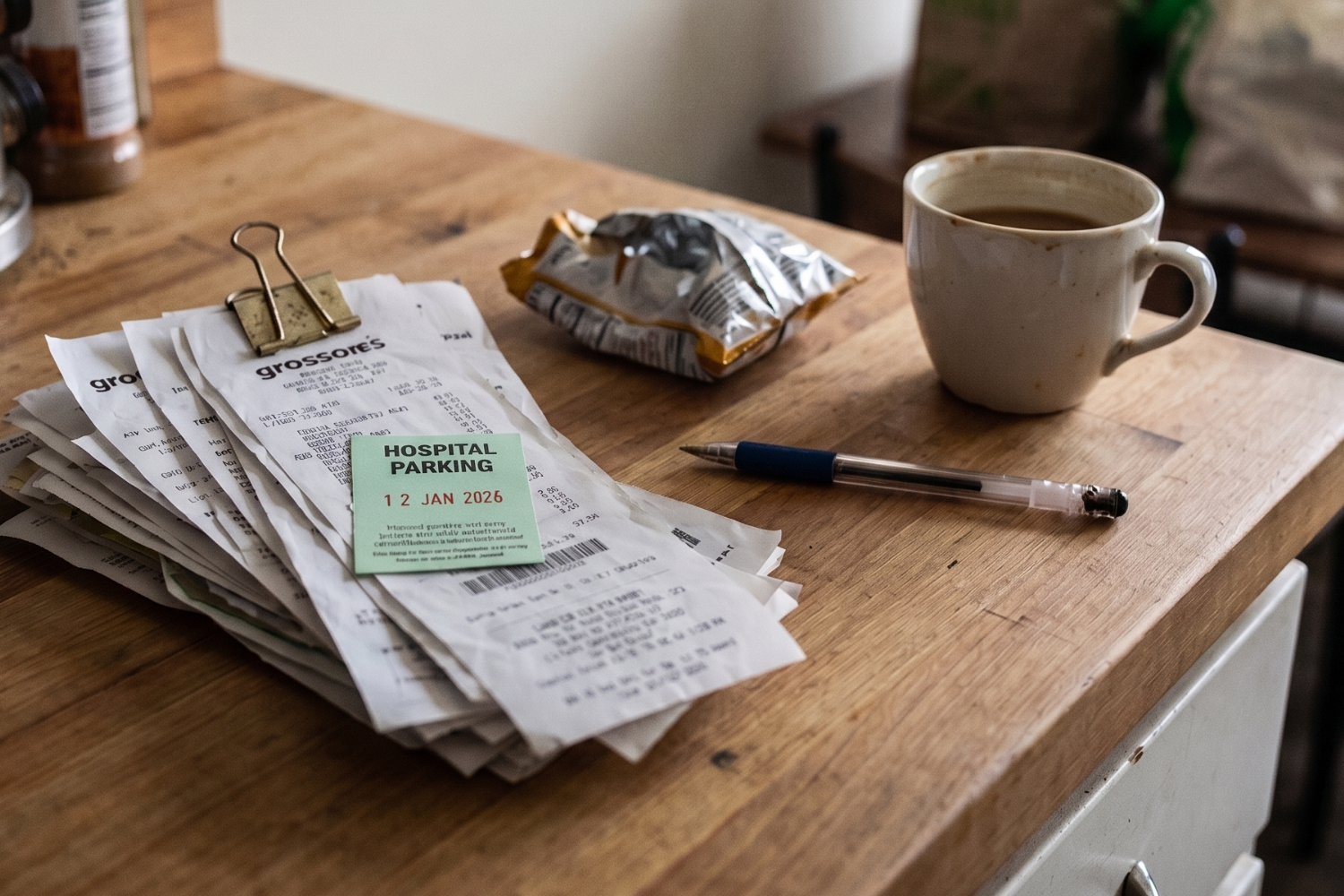
The pump clicked off at $52.18.
I remember because I had stopped looking at the total most weeks. By month four of treatment, I had developed a way of filling up the car that did not involve thinking about money. I would swipe the card. I would put my forehead against the cool metal of the pump while it ran. I would not look.
This time I looked.
We were six months into my son's chemotherapy. We were driving to Advocate Children's Hospital three times a week, sometimes four. My husband and I were both still working our day jobs because we could not afford to stop. We were running our household, our jobs, the nonprofit, the treatment plan, and two small children on whatever sleep was left after the drives.
And the pump said $52.18.
Let me show you the math nobody hands you at diagnosis.
The trip itself.
Round trip to Advocate Park Ridge from our house is forty-three miles. Twenty-one each way. Our car runs around twenty-three miles to the gallon, which means just under two gallons per visit. At Chicagoland gas prices, that is about seven dollars in gas per trip.
Three trips a week. Twenty-one dollars in gas, weekly. Roughly eleven hundred dollars a year, just to put the car in the lane that gets us to chemo.
Two and a half years of treatment. About twenty-seven hundred dollars in gas alone.
That is one line item.
The other line items.
Parking. We got lucky here. Advocate Children's Hospital does not charge families for parking, and that single fact probably saved us four to five thousand dollars over the course of treatment. Most hospitals are not set up that way. Families at other children's hospitals in this country pay ten to twenty dollars a visit, sometimes more, almost never reimbursed. The same three-trips-a-week math that costs us nothing in parking costs another family three to five thousand dollars across treatment, on top of everything else.
Food. The cafeteria at a children's hospital is not expensive on purpose, but a sandwich and a coffee is fifteen dollars, and you are there long enough on infusion days to eat twice. Forty-five dollars a week, on average. Roughly twenty-three hundred a year. Pack lunch if you can. Many days you cannot.
Lost income. This is the line item that makes the others look small. Childhood cancer families consistently experience twenty to forty percent household income loss during treatment. We did not, and I want to be honest about why. My husband and I both kept our day jobs because we could not afford not to. We answered emails in the infusion room. We took meetings from the hospital parking lot. We worked through inpatient stays. That is one version of what families do because treatment is too expensive to also lose your paycheck. Other families lose income because they cannot hold a job and three medical appointments a week at the same time. Some give up work. Some leave the workforce entirely. None of it is a failure. The cost finds a way to come out. We paid in sleep, in marriages tested, in every reserve we had. Plenty of families pay in both.
Co-pays and prescriptions. Even with good insurance, you are paying twenty to fifty dollars per appointment in co-pays, plus prescription fills, plus the over-the-counter items the oncology team recommends and insurance does not cover.
Childcare for the sibling. We did not have school pickup logistics. Neither of our children was in school yet. What we had was a constant search for someone to watch our younger child every time we left for the hospital, which was three to four times a week, for almost three years. Sometimes a grandparent. Sometimes a friend. Sometimes a paid sitter. Always something.
I have not added wear and tear on the car. I have not added tolls on the I-294. I have not added the times we had to call an Uber because both cars were committed to other emergencies. I have not added the way grocery shopping starts costing more when you have no time to compare prices.
Why we built the gas card.
When you add it up honestly, transportation alone costs a cancer family two to five thousand dollars over the course of treatment, more if parking is not validated, before you start counting income that is no longer coming in.
A fifty-dollar gas card from Maxwell's Toy Box buys a family roughly two weeks of trips to Advocate. Two weeks where the gas line item is somebody else's problem.
That is what the program does. It does not solve the math. It carries a piece of it for a family for two weeks.
In 2025, Maxwell's Toy Box delivered $9,103 in direct family assistance, almost all of it in fifty-dollar gas cards and one-hundred-dollar grocery cards, distributed through hospital social workers at our four partner hospitals. The amount is not life-changing on paper. On the kitchen counter of a family in the middle of treatment, on the morning of an infusion visit they did not have the gas money for, it is the thing that makes the day happen.
What I want you to know.
If you are a parent in treatment reading this, the math is not in your head. It is real. The number you are carrying is not a feeling. Your exhaustion has a balance sheet attached to it. You are not failing at money. You are paying for treatment with a hundred small bills that nobody told you were coming.
If you are a donor, here is the most honest case I can make. Every fifty dollars Maxwell's Toy Box puts in a family's hands is two weeks of fuel for the lane that gets a child to chemo. The math is not abstract. It is gallons of gas, parking validation that did not stick, and the small relief of one fewer thing to account for on the morning of an infusion.
The pump clicked off at $52.18.
I think about that number every time we send a gas card to a family at Advocate, Lurie, or Comer.
It is not the whole math.
But it is two weeks of it, carried by somebody else.
Dina
Mom of Max | Founder, Maxwell’s Toy Shoppe
Childhood Cancer Advocate 💛
Follow Us On Social
Join our movement to support children battling cancer and their families, year-round:
🎁 Donate to deliver toys to children during long cancer treatment days
🧸 Buy a toy from Maxwell’s Toy Shoppe, and 100% of proceeds support children in treatment
🎗️ Join Maxwell’s Circle of Heroes as a monthly donor to ensure families receive ongoing care