The 10 Toys Our Son Came Back to Again and Again
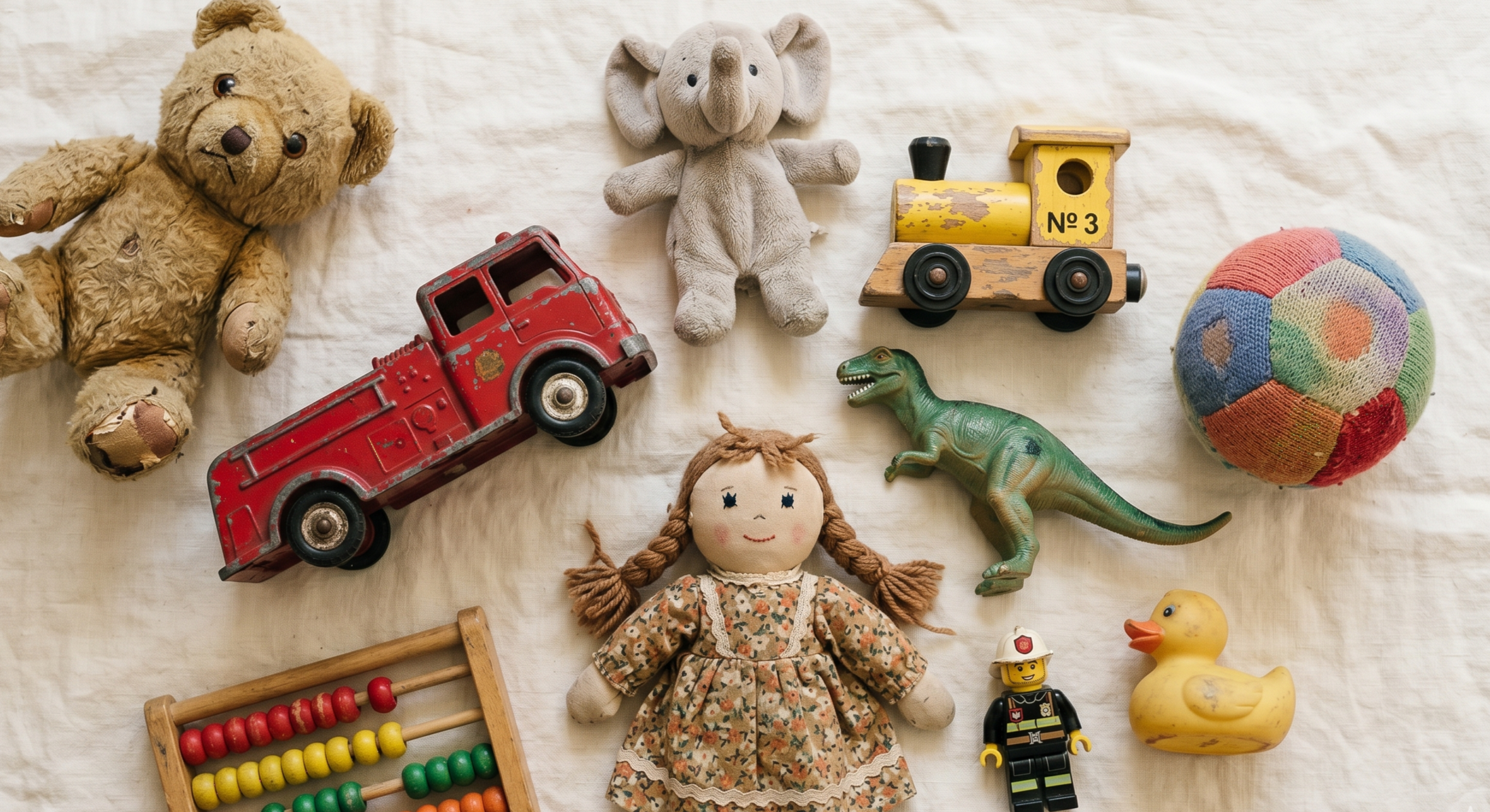
Over three years of treatment, our son had access to many toys. Hospital toy closets. Joy Packages. Gifts from family. Donations from friends. New favorites. Old favorites. Brief obsessions. Forgotten ones.
A small handful of toys became the ones he came back to over and over. They lived in the hospital bag. They came on every clinic day. They survived steroid weeks, neutropenic months, inpatient stays. They are still in our house, slightly worn-in, and he still reaches for some of them now that he is off treatment.
Here are the 10 toys our son came back to again and again, and why each one mattered.
1. A small weighted plush dog
The first toy a child life specialist handed him. He named it. He brought it to every appointment for two years. The weight calmed him. The familiarity calmed me.
2. The yellow Cocomelon bus
I wrote a whole piece about this one. It was the first toy he was handed at diagnosis. It made it through the entire treatment. He still has it.
3. A small set of wooden cars
Five tiny wooden cars in a cloth bag. He drove them on the tray table during chemo. He drove them on the hospital floor on inpatient days. He drove them in the car on the way home. Cars do not need batteries. They go with you everywhere.
4. A pop-it toy in the shape of a strawberry
The pop-it was his port-access toy. He held it in his non-access hand. He pressed the bumps in a specific order. The pressing became a ritual that helped him through the access.
5. A magnetic drawing pad
Reusable. Quiet. He drew the same shapes over and over. We have hundreds of photos of his drawings on this pad. None of them are saved on paper. They were ephemeral. That was part of why he loved it.
6. A small box of Magna-Tiles (20 pieces)
He built castles. He built cars. He built tunnels for the wooden cars to drive through. The Magna-Tiles came home from the hospital on inpatient discharge days, slightly sanitized, slightly sticky from juice, and went straight back into his play bin.
7. A Slinky
Quiet. Hypnotic. He passed it back and forth between his hands during long waits. He passed it back and forth between his hands and my hands during longer waits.
8. A small finger puppet of a bunny
A child life specialist gave it to him in month two. It became the puppet that conducted small conversations on the IV pole. The bunny was occasionally a doctor. The bunny was occasionally him. The bunny was a way for him to talk about what was happening to him without having to talk about himself directly.
9. A simple counting book
We read the same book hundreds of times. Hundreds. He memorized it. He read it back to us. We can still recite it. It was a small ritual that did not change when everything else was changing.
10. A small flashlight
He shined it on the ceiling of every hospital room we ever sat in. He pointed it at his sister. He pointed it at the IV pole. The flashlight gave him a small amount of agency in a room where almost everything was happening to him.
What this list taught us
The toys that hold up through years of treatment are not the expensive ones. They are not the ones that did the best on the gift list. They are the simple, durable, open-ended, sensory, slightly worn-in toys that a child can carry with them, return to, and make their own.
When we build Joy Packages, we choose toys that have the same qualities. Not the loudest toys. The most reachable ones.
A note for the parent shopping for a child in treatment
If you are shopping for a child in cancer treatment, here is a small piece of advice from our family. Choose one or two simple, sensory, durable toys instead of a big haul. Choose toys that can be cleaned. Choose toys that do not need batteries. Choose toys that the child can carry to clinic.
The toys that become the favorites are almost never the toys you would have predicted.
Dina
Mom of Max | Founder, Maxwell’s Toy Shoppe
Childhood Cancer Advocate 💛
Follow Us On Social
Join our movement to support children battling cancer and their families, year-round:
🎁 Donate to deliver toys to children during long cancer treatment days
🧸 Buy a toy from Maxwell’s Toy Shoppe, and 100% of proceeds support children in treatment
🎗️ Join Maxwell’s Circle of Heroes as a monthly donor to ensure families receive ongoing care