Open-Ended vs. Battery-Operated Toys: What We Learned Over 100+ Clinic Visits
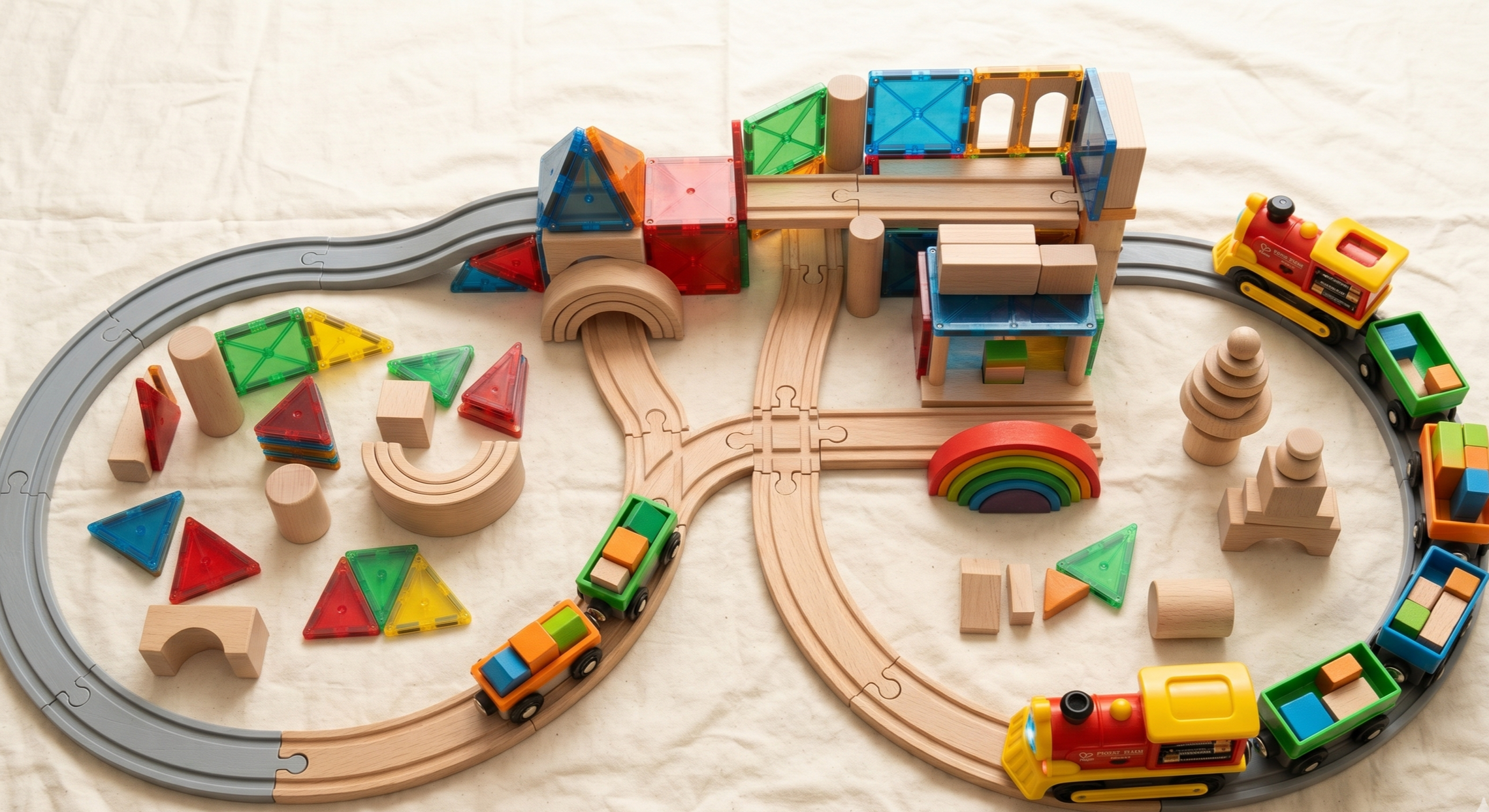
Over four years of pediatric cancer treatment, we packed a lot of bags. Hospital bags. Clinic bags. Car bags. Bedside-table bags.
We learned, almost by accident, that the toys that survived the bag-and-pack cycle of pediatric cancer life were, almost always, the open-ended ones. The battery-operated ones, with a few exceptions, stayed home.
Here is what we learned about why.
The definitions
Open-ended toys
Toys that do not have a single right way to be used. The child decides what happens with the toy. Examples: wooden blocks, Magna-Tiles, Play-Doh, art supplies, lacing beads, small wooden cars, finger puppets, Slinkies, sensory balls, a stack of books.
Battery-operated toys
Toys that perform a specific action when activated. The toy is the source of the entertainment. Examples: light-up toys, talking dolls, toy phones with songs, motion-activated cars, electronic learning tablets, animatronic plush.
Why open-ended toys won at clinic
1. They engaged the child more deeply
An open-ended toy requires the child to bring something to the interaction. They are designing, building, imagining, narrating. That cognitive engagement is more absorbing, especially during a hard moment like a port access or a long infusion.
Battery-operated toys, by contrast, often perform for the child. The child watches. The watching gets old.
2. They were quiet
Pediatric oncology clinics are shared spaces. Battery-operated toys with sound effects are not welcome at most clinics. Open-ended toys are silent by default.
3. They did not run out of batteries at the worst moments
A battery-operated toy that dies during a long infusion is one more thing the parent has to manage. We learned to avoid the dependency.
4. They survived sanitizing
Wipeable plastic, wood, and cloth toys held up to the constant cleaning of pediatric cancer life. Battery-operated toys with crevices and electronics were harder to clean and more likely to break.
5. They grew with him
The Magna-Tiles he played with at age two became the Magna-Tile castles he built at age four. Open-ended toys have multi-year shelf life. Battery-operated toys often become obsolete (or annoying) within months.
6. They preserved his agency
Pediatric cancer treatment involves a lot of things happening to a child. The IV. The poke. The procedure. Open-ended toys gave him moments where he was the driver. He decided what the wooden cars did. He decided what the Play-Doh became. That agency mattered.
The battery-operated toys that did make the cut
A few battery-operated toys earned a permanent spot in our clinic bag.
· A small audio player (Yoto, Tonies) with familiar songs and stories. Engaged him without performing for him. Headphones meant it stayed quiet.
· A small flashlight. Battery-operated, but used as a creative tool for shadow play. Open-ended in spirit.
· A handheld games console for the older child phase. Used sparingly. Helpful during long inpatient stretches.
Notice the pattern. These battery-operated toys still gave the child something to direct, not just something to watch.
How we now think about toy selection
For Joy Packages
We almost exclusively select open-ended toys. Sensory balls. Pop-it toys. Slinkies. Crayons. Play-Doh. Stickers. Small puzzles. The Joy Package is built to engage a child's hands and imagination for a long clinical day.
For hospital toy closets
Hospital toy closets ask for the same. Open-ended, durable, easy to sanitize, no batteries. These are the toys that get reordered.
For Maxwell's Toy Shoppe
Our curated retail selection leans heavily open-ended. Wooden, sensory, imagination-driven. We try to stock toys that hold up over years, not weeks.
A small note about screens
Screens are part of modern pediatric cancer life. Tablets, phones, streaming. We are not anti-screen. Screens have a real role in long inpatient stays and for older kids.
What we have observed is that screens, like battery-operated toys, perform for the child. They are useful in measured doses. They are less useful than the open-ended alternatives when the goal is engagement, regulation, or coping.
A note for the parent shopping for a child in treatment
If you are wondering what to put in a hospital bag or send to a friend's child in treatment, lean open-ended. Wooden cars. Magna-Tiles. Play-Doh. A small art kit. A book. A sensory ball.
These toys do not look impressive on a gift table. They look like the toys a kid actually plays with.
Dina
Mom of Max | Founder, Maxwell’s Toy Shoppe
Childhood Cancer Advocate 💛
Follow Us On Social
Join our movement to support children battling cancer and their families, year-round:
🎁 Donate to deliver toys to children during long cancer treatment days
🧸 Buy a toy from Maxwell’s Toy Shoppe, and 100% of proceeds support children in treatment
🎗️ Join Maxwell’s Circle of Heroes as a monthly donor to ensure families receive ongoing care