What Child Life Specialists Know About the Science of Toys in Pediatric Cancer
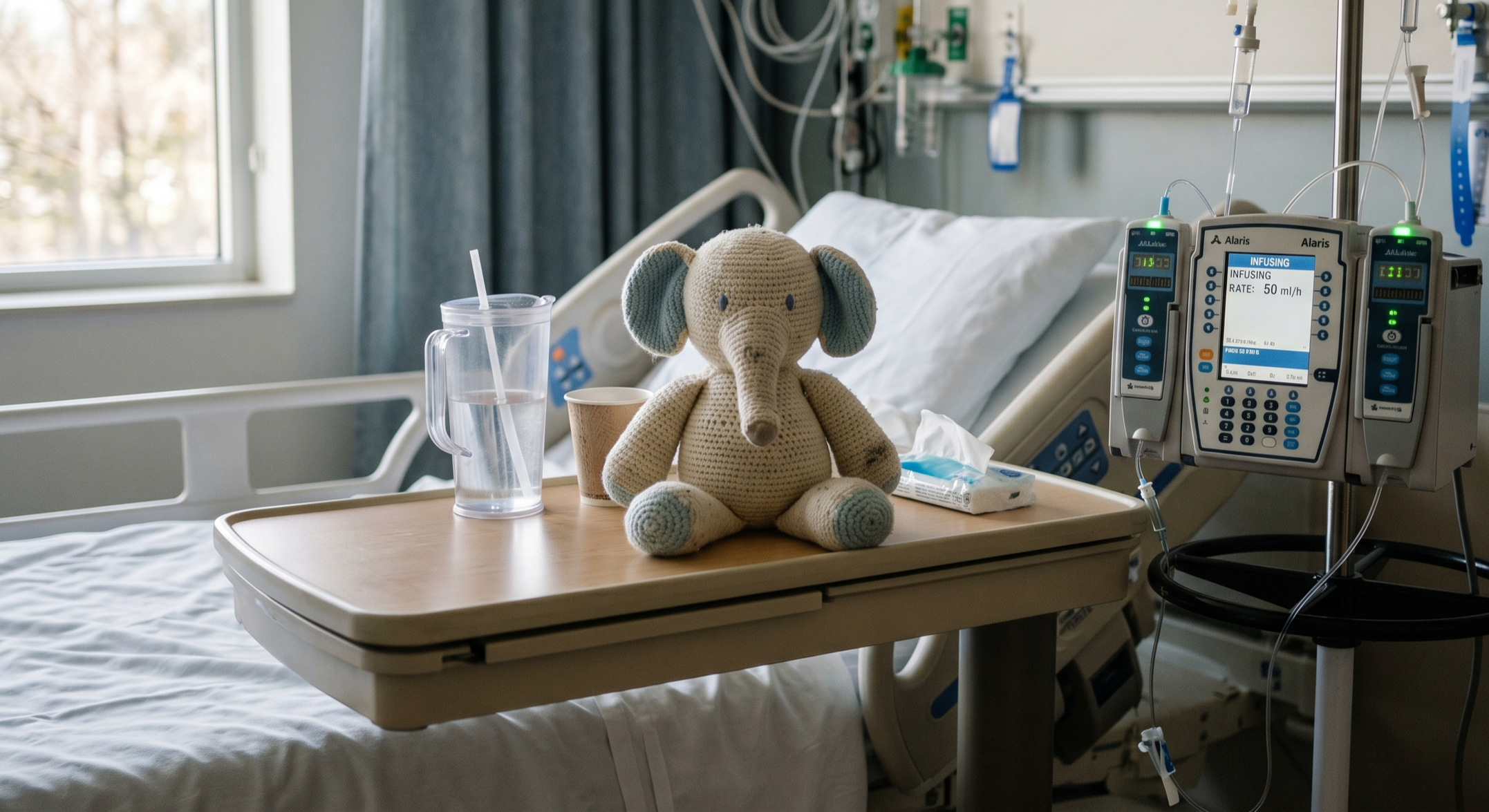
If you have ever wondered why a child life specialist hands a child a toy in a moment of medical procedure, the answer is not that toys are a nice distraction. The answer is that play is a clinical tool with a substantial research base behind it.
This post is about what the research says about toys and play in pediatric cancer treatment. It is also about what child life specialists know that the rest of us are only starting to talk about publicly.
Why this matters
Maxwell's Toy Box is built on a single conviction. Toys are not extras. Toys are tools during cancer treatment.
We did not invent this idea. Child life specialists have been operating from this principle for decades. The research community has been building the evidence base for nearly as long. We have spent four years translating this into a year-round operational practice across four Chicagoland hospitals because the data, the lived experience, and the hospital reality all point in the same direction.
What the research shows
Active distraction reduces pain and anxiety during procedures
Multiple studies, including a randomized controlled trial published in 2021 in Palliative & Supportive Care, have demonstrated that play-based distraction during pediatric IV procedures significantly reduces self-reported pain and observable anxiety in children. The mechanism is not magic. It is attention. A child whose mind is fully engaged in a toy is processing less of the pain signal at the moment of the procedure.
Multisensory engagement is more effective than passive viewing
Research on distraction techniques in pediatric oncology, including work on tools like the My Special Aflac Duck (a sensory toy specifically designed for children with cancer), shows that toys involving touch, sound, and motor engagement produce better outcomes than purely visual distractions like a tablet screen.
This is part of why we prioritize sensory toys in our Joy Packages. A pop-it, a sensory ball, a Slinky, and a textured fidget cube engage the body in a way that pulls attention more completely than a screen.
Play supports the development of medical coping skills
Children who have access to therapeutic play during treatment develop better coping skills for future medical procedures. A child who has worked through a port access using a teaching doll with a child life specialist comes into the next port access with a frame of reference for what is happening.
This is one of the reasons child life specialists use medical play kits and dolls. The play is preparation.
Play preserves developmental milestones
Pediatric cancer treatment can last two to three years. For a young child, that is most or all of an early developmental window. Without intentional access to age-appropriate play, children in long treatment can fall behind on motor, language, and social milestones.
Toys are part of how we keep treatment from stealing the developmental time of a childhood.
Play reduces parental stress, too
There is a less-discussed body of research on the secondary benefit of pediatric play in clinical settings. When a child is happily engaged in play, the parent in the chair next to them is also more regulated. The parent's nervous system softens. The clinical day becomes more bearable for everyone in the room.
What child life specialists actually do with toys
Child life specialists, who are credentialed professionals trained specifically to support children through medical experiences, use toys in several distinct ways.
Preparation
Before a procedure, a child life specialist may use a teaching doll, a model of a port, or a small replica of a CT scanner to walk a child through what is about to happen. The play creates a script the child can follow on the actual day.
Procedural support
During a procedure, the child life specialist uses active distraction. This may be a sensory toy, a bubble wand for breath-focused distraction, a kaleidoscope for visual engagement, a song or a story, or a fidget cube the child squeezes during a finger poke.
Post-procedural processing
After a difficult procedure, child life specialists use play to help children process what just happened. A child may want to act out the procedure on a doll, or talk about it through a puppet, or simply work the experience through their hands using clay or a sensory ball.
Sibling support
Many child life specialists also work with siblings, helping the brothers and sisters of the patient understand what is happening to their family member in age-appropriate ways. This often happens through dolls, drawings, and books.
The toys that show up in the research and the clinic
The toys that appear most consistently in both the research literature and in working pediatric oncology clinics share a few characteristics.
Open-ended (the child decides what to do with it)
Multisensory (something for the hands, sometimes for the eyes or ears)
Quiet (works in a shared clinical space)
Cleanable (meets infection-control standards)
Age-appropriate (matches the child's developmental window)
Repeatable (a child can come back to it many times)
Examples: sensory balls, Slinkies, Magna-Tiles, Play-Doh, finger puppets, water-wow books, lacing cards, building blocks, magnetic drawing pads, bubble wands, kaleidoscopes, picture books.
These are also, not coincidentally, the items we prioritize in Joy Packages and toy closet stocking across our partner hospitals.
What we want the medical community, the funding community, and the public to understand
Toys are not the soft side of cancer treatment. They are part of the treatment. A pediatric oncology clinic without play tools is missing a clinical asset.
When a hospital runs out of toys, the loss is not aesthetic. The loss is functional. Children take longer to settle into procedures. Children are harder to access. Children show more behavioral distress. The clinical day becomes harder for the patient, the parent, the nurse, and the doctor.
When a hospital is well-stocked, the opposite is true. Children walk in, sit down, and reach for a familiar tool. The day goes more smoothly. Outcomes are better.
This is what Maxwell's Toy Box delivers. Not toys. Tools.
A thank-you to the field
If you are a child life specialist reading this, thank you. The work you do is some of the most under-resourced, under-named, under-celebrated clinical work in pediatric medicine. We see you. The children you have worked with see you. The parents whose children you have walked through a hard moment see you. The Maxwell's Toy Box team is proud to partner with your clinics.
Dina
Mom of Max | Founder, Maxwell’s Toy Shoppe
Childhood Cancer Advocate 💛
Follow Us On Social
Join our movement to support children battling cancer and their families, year-round:
🎁 Donate to deliver toys to children during long cancer treatment days
🧸 Buy a toy from Maxwell’s Toy Shoppe, and 100% of proceeds support children in treatment
🎗️ Join Maxwell’s Circle of Heroes as a monthly donor to ensure families receive ongoing care