The Yellow Cocomelon Bus Wasn't a Gift. It Was Medicine.
The room was quiet.
My son had been in the hospital for less than a day. The diagnosis was acute lymphoblastic leukemia. Beyond that, I did not have words. I do not think I had thoughts. I was sitting next to him with my hand on his foot, which is something I had started doing in the ER and could not stop.
A woman walked in. She was not in scrubs. She had a name badge and a soft voice and she asked if she could come in.
She was a child life specialist.
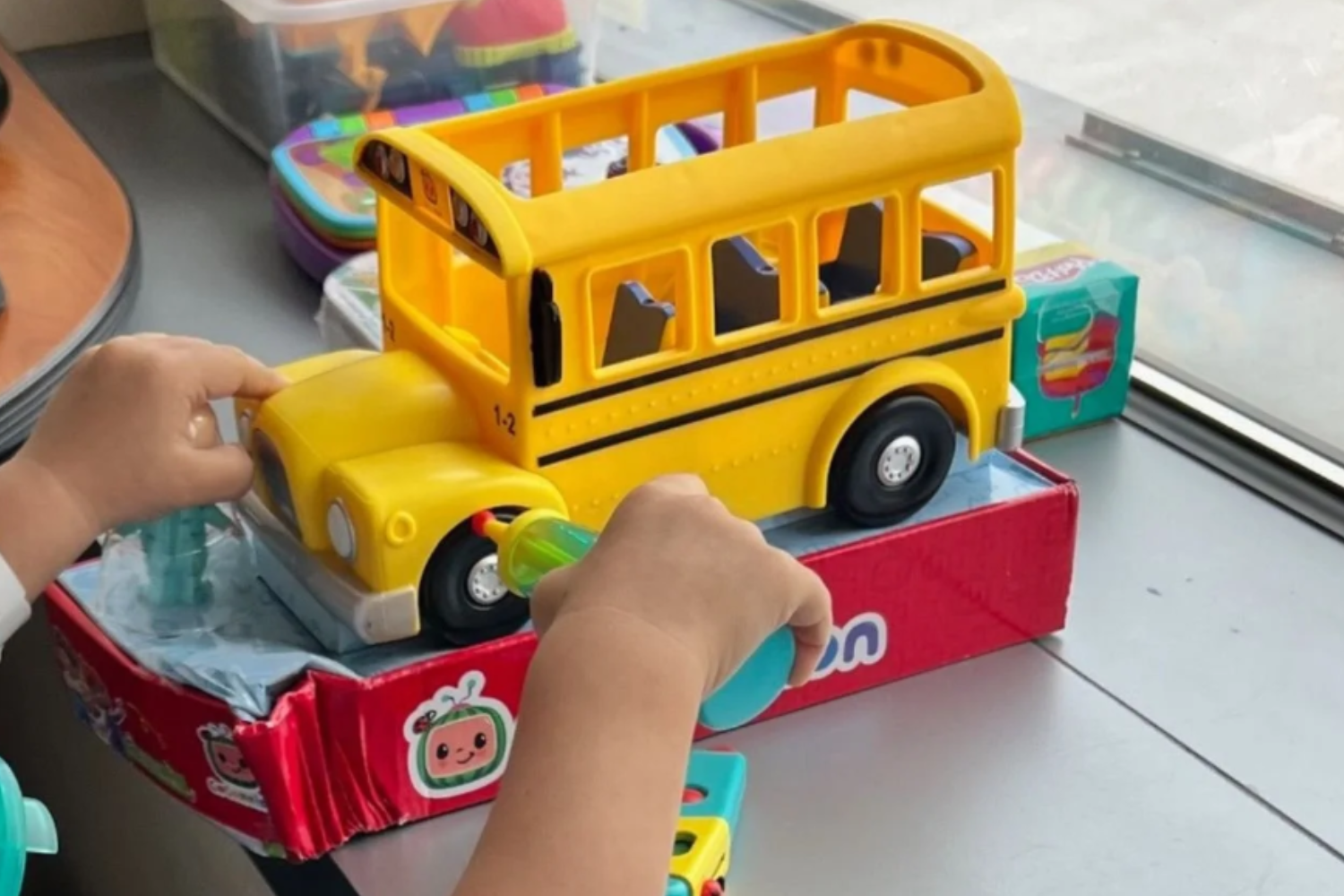
She knelt down. She made eye contact with my son, not with me, and she handed him a small yellow toy. A Cocomelon school bus.
He took it.
He had not eaten in twelve hours and he had not spoken since the doctors left, but he took the bus, and he started rolling its wheels along the bed rail.
I did not understand what I was watching at the time. I understood that the air in the room had shifted. I understood that for the first time since the word leukemia had entered our life, my son was doing something a two-year-old does. He was playing.
It took me months to understand what had actually happened.
The toy was not a gift.
The child life specialist had assessed the room before she walked in. She had assessed my son's age, his level of overwhelm, the time of day, the medications already on board, and the specific kind of fear that takes over a child's body when they are surrounded by strangers in masks. She chose that bus on purpose. The color, the size, the wheels, the familiarity of the brand from a show he watched at home. Every variable was clinical.
The toy was medicine, in the sense that without it he would have had nothing in his hands during the next four hours but the bed rail and the IV line.
““Play is how a child processes a hospital. It is not a break from treatment. It is part of treatment.””
This is what people outside the pediatric hospital world tend not to know. Child life specialists are trained professionals. Many have graduate degrees. They study developmental psychology, medical play, procedural preparation, sibling support, and grief. Their job is to translate a hospital experience into something a child's brain can hold.
The tools of that translation are toys.
A sensory toy during an infusion is not entertainment. It is regulation. It is what keeps a child from associating the chair with terror, so that the next infusion is not worse than this one. An art kit during a long inpatient stay is not a craft project. It is a way for a child to feel some agency over a body that is being acted upon constantly. A familiar object from home, brought into a clinic, is not a comfort item. It is an anchor.
When a hospital toy closet runs out, none of this work stops being needed. It just stops being possible.
Two and a half years later, here is what I know.
My son finished treatment. The yellow Cocomelon bus is in a drawer in his room. It is not a souvenir. It is something he held during procedures I do not have language for, and somehow because he held it, those procedures became survivable.
The drawer also has a stress ball from his port placement, a Slinky from his first chemo infusion, and a folded piece of paper with a heart he drew during a four-hour visit that should have been forty minutes.
These items are not extra. They are not for after the hard work. They are the hard work.
Maxwell's Toy Box exists because hospital toy closets are not luxury inventory. They are a clinical resource. The toys we deliver to our partner hospitals are chosen for the rooms they go into. Sensory toys for clinics. Imaginative play for inpatient stays. Art supplies for the long in-between hours. Comfort items for siblings who are also stuck there.
When you fund a toy through Maxwell's Toy Box, you are funding a tool that a trained professional will place in the hands of a child in the worst hours of their year. That is the work. That is the case for it.
The yellow Cocomelon bus was not a gift.
It was the first day of two and a half years of evidence.
Dina
Mom of Max | Founder, Maxwell’s Toy Shoppe
Childhood Cancer Advocate 💛
Follow Us On Social
Join our movement to support children battling cancer and their families, year-round:
🎁 Donate to deliver toys to children during long cancer treatment days
🧸 Buy a toy from Maxwell’s Toy Shoppe, and 100% of proceeds support children in treatment
🎗️ Join Maxwell’s Circle of Heroes as a monthly donor to ensure families receive ongoing care