Something a Nurse Said to Me This Week
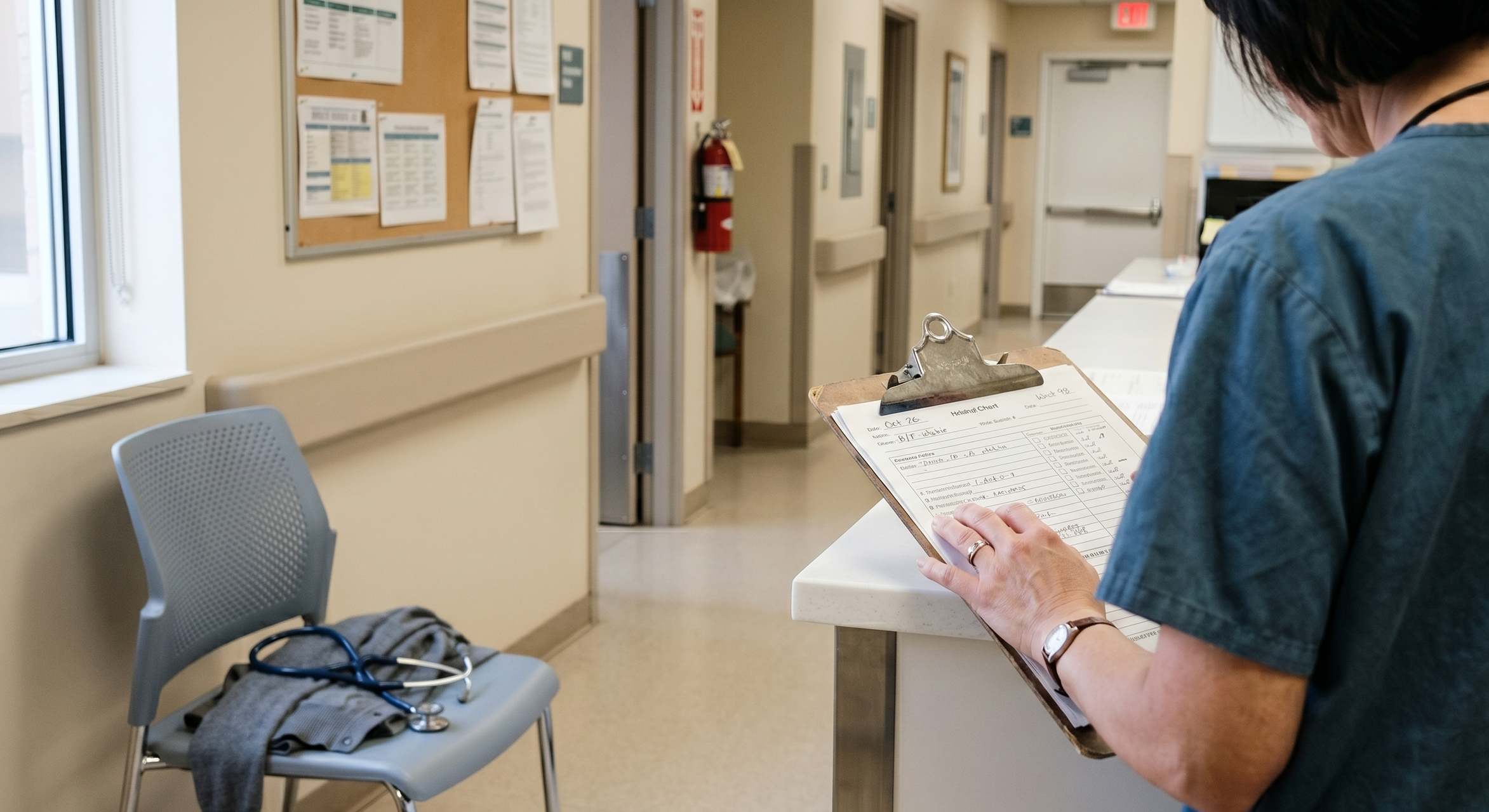
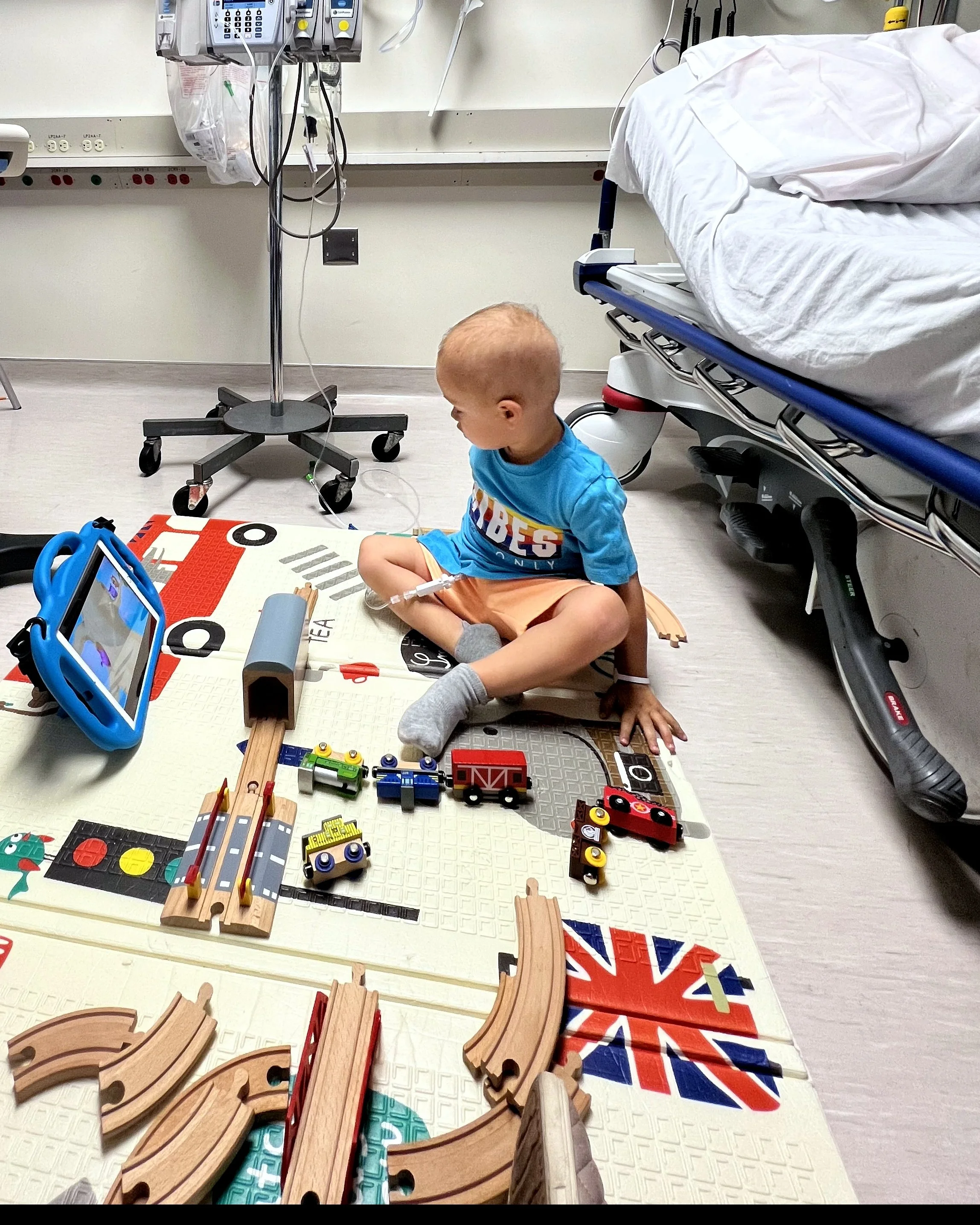
We were halfway through a port flush appointment at Advocate Children's Hospital last Tuesday. My son was wiggling in the chair.
His nurse, who has been with us for most of his treatment, was setting up the saline. She looked up at me, very casually, and said, "You can put the phone down for a second. He likes when you are here."
She said it kindly. She was not scolding me. She was telling me something true.
I put the phone down.
I want to tell you something about that moment. The phone was not actually about email. The phone was about not being present for what I was about to watch. A port access is fast, but it is something. It is a needle into a small chest. A flush of cold saline. The smell of antiseptic. A child trying to be brave.
For four years I have, sometimes, used my phone to step a little bit outside of the room. To be the mom who is also handling logistics. To be the mom who is also responding to the donation portal. To be the mom who is also not, for a second, the mom of a child in cancer treatment.
Our nurse knew that. She did not name it. She said, "He likes when you are here."
I think about her sentence a lot now. It is the gentlest correction I have ever received. There was no shame in it. There was no judgment. There was a person who has spent years watching parents on their phones in this room, and who has seen what it costs the child in the chair.
She gave me my child back, for that ten minutes.
If you are a pediatric oncology nurse reading this, thank you. The smallest sentences you say to the parents in your clinic carry. They land. They become the thing the parent tells everyone else for years.
I am writing this on a Friday morning. My son is at home. The port is flushed. The phone is in the other room.
Dina
Mom of Max | Founder, Maxwell’s Toy Shoppe
Childhood Cancer Advocate 💛
Follow Us On Social
Join our movement to support children battling cancer and their families, year-round:
🎁 Donate to deliver toys to children during long cancer treatment days
🧸 Buy a toy from Maxwell’s Toy Shoppe, and 100% of proceeds support children in treatment
🎗️ Join Maxwell’s Circle of Heroes as a monthly donor to ensure families receive ongoing care