The Morning Crew at Pediatric Oncology: Who Is in the Room Before 8 a.m.
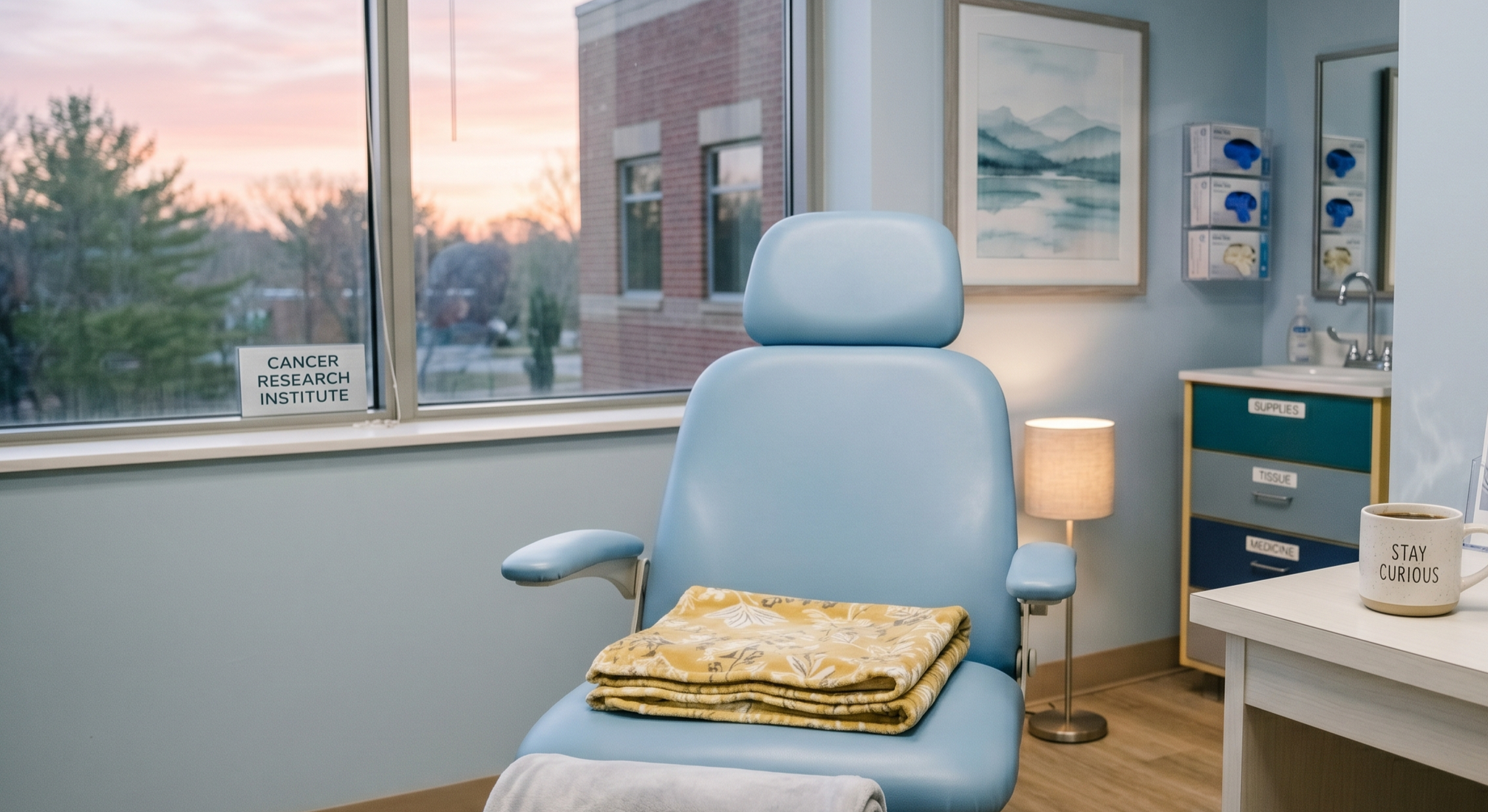
If you have ever walked into a pediatric oncology clinic before 8 a.m., you know the kind of quiet I am talking about.
The waiting room is mostly empty. The chairs are tidied. There is a single low light on at the reception desk. The fish tank is humming. The cleaning staff are finishing up a wipe-down of the chairs from the night before. The first family is checking in. They are usually a parent with a small child on their hip, a hospital bag over one shoulder, and a coffee in the other hand.
I have been one of those parents many times. I have watched the morning crew arrive and set up the day. I want to write about them, because they are the people who hold a pediatric oncology clinic together, and most of them never get named in any of the cancer family memoirs.
The cleaning staff
By the time the first family arrives, the cleaning staff have already been in the building for hours. They have wiped down the chairs. They have re-stocked the bathrooms. They have emptied the bins. They have replaced the paper liners on the exam tables.
Pediatric oncology is a place where infection control matters more than almost anywhere else in a hospital, because the children being treated have immune systems that have been chemically softened. The cleaning crew is the first line of that defense.
They are also, often, the first faces a child sees in the morning. They smile. They say hello. They let a small child wave at them. They are the people whose names parents learn after a year.
The schedulers
Behind the reception desk, the schedulers are reading the day. They know who is coming in, who is running late, who needs labs first and chemo second, who is here for a port flush, who is here for a quick check. They juggle a calendar that includes inpatient transfers, outpatient infusions, lumbar punctures, scans, and family meetings.
They are also the people who call you the day before to remind you that your child is NPO from midnight, that the appointment moved, that the lab opens at 7:30, that bring the comfort items. They have already done five of those calls before the first family arrives.
The lab techs
The lab is often the first clinical stop. A child gets a finger poke, an arm draw, or a port draw. The CBC needs to be back before chemo can be started.
Lab techs in pediatric oncology have a particular skill. They can read a child in about ten seconds. They know which child needs distraction, which child needs the truth told plainly, which child needs the parent to hold their hand a certain way. They can find a vein in a toddler who has been getting blood draws for a year and has learned what is coming.
They are some of the most under-recognized people in the building.
The pharmacy team
Chemotherapy is mixed in a pharmacy on the floor, by a small team of clinical pharmacists in clean rooms with hoods and gowns. The dose is calculated to the child's exact weight, height, and protocol. The pharmacist is the last set of eyes on the dose before it comes out to the nurse.
Most parents will never meet the pharmacist. The pharmacist has met your child's chart, your child's lab values, and your child's protocol. They know your child by their treatment number.
The infusion nurses
By 8 a.m., the infusion nurses are arriving. They are setting up chairs, checking IV pumps, reviewing each child's pre-medications, walking through the order of the day with the charge nurse.
These are the people who will sit with your child for the hours of the infusion. They will explain what they are doing as they do it. They will warm a blanket. They will offer your child a stuffed animal from the cabinet. They will notice when your child looks like they are about to throw up before you do. They will get a basin in front of your child in seven seconds.
These are also the people who will, by the end of the year, know your child's favorite color, your child's pet's name, your child's preferred snack from the cafeteria, the song that calms your child down, and the way your child likes their port accessed ("on three, please" or "don't tell me when").
They are the texture of your year.
The child life specialist
Around 8:30, the child life specialist arrives. They have a cart. Sometimes the cart is restocked from a Maxwell's Toy Box delivery. Sometimes they have a new sensory item to try. They have a list of children in clinic today and they have priorities.
Child life specialists are not nurses. They are not doctors. They are credentialed professionals trained specifically to support children through the emotional and developmental experience of being in a hospital. They use play. They use language. They use distraction. They use teaching dolls and small replicas of medical equipment to help a child make sense of what is going to happen to them.
If you have a child in pediatric oncology and your hospital has a child life specialist, that person is one of the most important members of your care team. They are also the person who will help your child understand a port for the first time, the person who will sit with your child during a lumbar puncture, the person who will help your other children understand what their sibling is going through.
The social worker
Around 9 a.m., the social worker has done their morning rounds. They have checked which families need gas cards, which families are at risk of losing housing during treatment, which families need a referral to a financial counselor, which families need a referral to a school liaison.
Social workers in pediatric oncology hold a piece of the work that nobody else holds. The medical team treats the cancer. The social worker treats the family system. They are the first call when a parent loses a job, when a marriage is straining, when a sibling is acting out at school, when the gas-card budget runs out.
You do not need to wait to be referred to a social worker. You can ask for one. They will say yes.
The doctors
By the time the children are starting their morning, the oncologists have been in rounds. They have reviewed every child's labs from yesterday and overnight. They have made the day's protocol decisions. They have signed off on chemo orders. They will see the children in clinic between procedures.
Pediatric oncologists are some of the most clinically rigorous and emotionally steady people I have ever met. They hold parents through the hardest conversations of their lives. They also celebrate, with you, the morning your child's counts come back where they need to be.
The volunteers and the chaplains and the music therapists and the cafeteria
The morning crew is bigger than this list. There are volunteers reading to siblings in the playroom. There are chaplains rounding gently on inpatient floors. There are music therapists who walk into a chemo room and turn the day with one song. There are cafeteria staff who learn the names of the families who eat breakfast there every morning.
You do not need to know everyone's name. You will, after a while.
Why I wanted to write this
Cancer families have a tendency to write about the disease, the diagnosis, the chemo, the months. We sometimes forget to write about the people. The people are why our family got through this.
If you are a parent reading this in the parking lot of a pediatric oncology clinic on a Monday morning, look around as you walk in. The morning crew has been here for hours. They are ready for you. Your child is in good hands.
A thank-you to the teams at Advocate Children's Hospital Park Ridge, Advocate Children's Hospital Oak Lawn, Ann & Robert H. Lurie Children's Hospital of Chicago, and UChicago Medicine Comer Children's Hospital. Maxwell's Toy Box is honored to partner with you year-round.
Dina
Mom of Max | Founder, Maxwell’s Toy Shoppe
Childhood Cancer Advocate 💛
Follow Us On Social
Join our movement to support children battling cancer and their families, year-round:
🎁 Donate to deliver toys to children during long cancer treatment days
🧸 Buy a toy from Maxwell’s Toy Shoppe, and 100% of proceeds support children in treatment
🎗️ Join Maxwell’s Circle of Heroes as a monthly donor to ensure families receive ongoing care