The Back-to-School Sensory Toolkit: What to Tuck in the Backpack
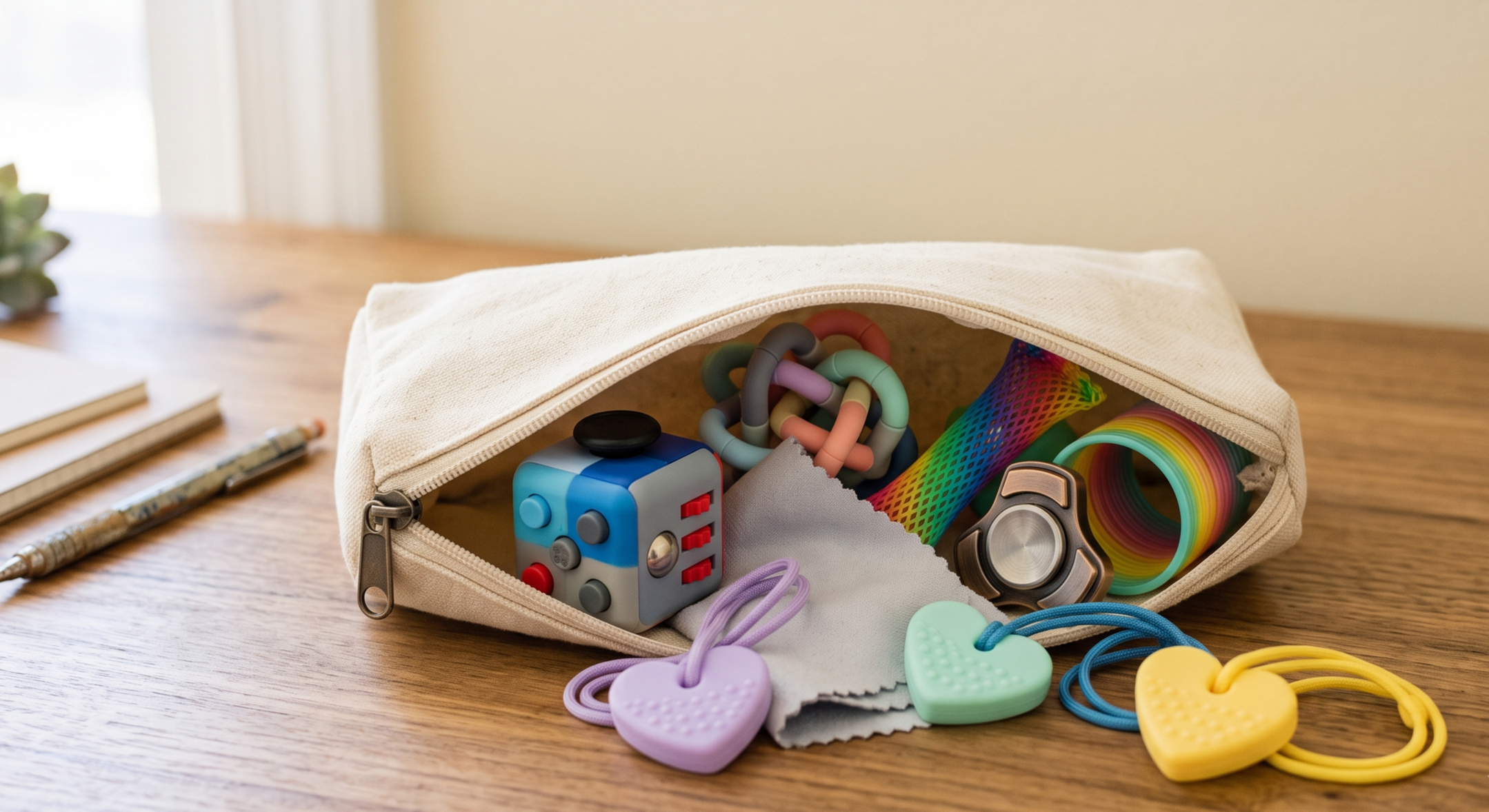
School is sensory-intensive. The fluorescent lights. The cafeteria noise. The recess chaos. The smells of cleaning products. The unfamiliar textures of school supplies. The crowd of classmates.
For a child returning to school after pediatric cancer treatment, or any child whose sensory system needs a little support, a small sensory toolkit tucked in the backpack can make the day easier.
Here are 10 items that work in a school setting. None of them are loud. None of them require batteries. All of them fit in a small pencil case or pouch.
The school-friendly criteria
A back-to-school sensory tool needs to be:
Quiet enough not to distract the class
Small enough to fit in a backpack pocket
Durable enough to survive a school year
Discreet enough not to draw attention
Easy to clean
The 10 items
1. A small textured fidget cube
Multiple surfaces in one small object. Quiet. Discrete in the hand. Excellent for circle time or quiet work periods.
2. A pop-it the size of a keychain
Tiny pop-its that clip onto a backpack or a pencil case. Quieter than the larger ones. Self-regulation in the palm of the hand.
3. A small piece of textured cloth or a sensory ribbon
A 4x4 inch square of silk, velvet, or fleece. Or a sensory ribbon (a thin satin ribbon a child can run between their fingers). Lives in a pocket. Comforts in a moment of overwhelm.
4. A chewable necklace or pencil topper
For kids who self-regulate by chewing, a chewable necklace (Chewelry, Ark) or a chewable pencil topper provides a school-appropriate option. Talk to the teacher in advance.
5. A small smooth stone or worry stone
A polished river stone that fits in a closed hand. Tactile. Soothing. Goes everywhere. Costs almost nothing.
6. A small bottle of unscented hand lotion
Lotion is sensory. The application, the smoothing, the smell-free routine, all regulate. A small travel bottle is also school-appropriate.
7. A coil bracelet or stretchy bracelet
A spiral plastic coil bracelet or a stretchy fabric bracelet. The child can stretch or twist it under the desk during a hard moment.
8. A small piece of putty
A pea-sized piece of therapy putty in a tiny container. The child can squeeze or stretch it discreetly. Replaces the pop-it for quieter moments.
9. A small note from home
Not technically sensory. Still belongs in the toolkit. A small note in the lunchbox or backpack reminding the child that they are loved, that they can do this, that home is here when they get back. Some kids touch the note in their pocket during a hard moment. That contact is its own regulation.
10. A water bottle (with a comfortable straw or spout)
Hydration is regulation. A water bottle the child likes drinking from, kept full, is one of the most underrated sensory tools in a school day.
How to introduce the toolkit to your child
Make the toolkit with your child, not for them. Let them help choose what goes in. Let them practice using each item. Let them know it is there for them whenever they need it.
Tell them what each tool is for. "This one is for when your hands feel itchy and you do not know why. This one is for when the room is too loud. This one is for when you miss me."
Practice taking the kit in and out of the backpack so it feels familiar.
How to talk to the teacher
Give your child's teacher a heads up. Most teachers are supportive when they know what a sensory tool is for. Some helpful framings:
"This is a regulation tool. It helps her focus."
"This is a small comfort item she keeps in her pocket. She does not take it out during instruction."
"This is part of her IEP/504 plan." (If applicable.)
Most teachers welcome the information. A few may be skeptical. A pediatric occupational therapist or your hospital's child life team can write a letter if you need it.
What to do if the toolkit is not enough
Some kids need more sensory support than a small kit provides. If your child is struggling significantly at school, talk to your pediatrician, your occupational therapist (many cancer survivors have one), or the school's special education team about additional support.
A sensory toolkit is a first line. There are many other tools available.
A note for the parent reading this
Building a sensory toolkit for your child is one of the small ways you can send them into the school year more equipped. They will not need it every day. They will be glad it is there on the days they do.
Dina
Mom of Max | Founder, Maxwell’s Toy Shoppe
Childhood Cancer Advocate 💛
Follow Us On Social
Join our movement to support children battling cancer and their families, year-round:
🎁 Donate to deliver toys to children during long cancer treatment days
🧸 Buy a toy from Maxwell’s Toy Shoppe, and 100% of proceeds support children in treatment
🎗️ Join Maxwell’s Circle of Heroes as a monthly donor to ensure families receive ongoing care