The Strange Quiet After Treatment Ends
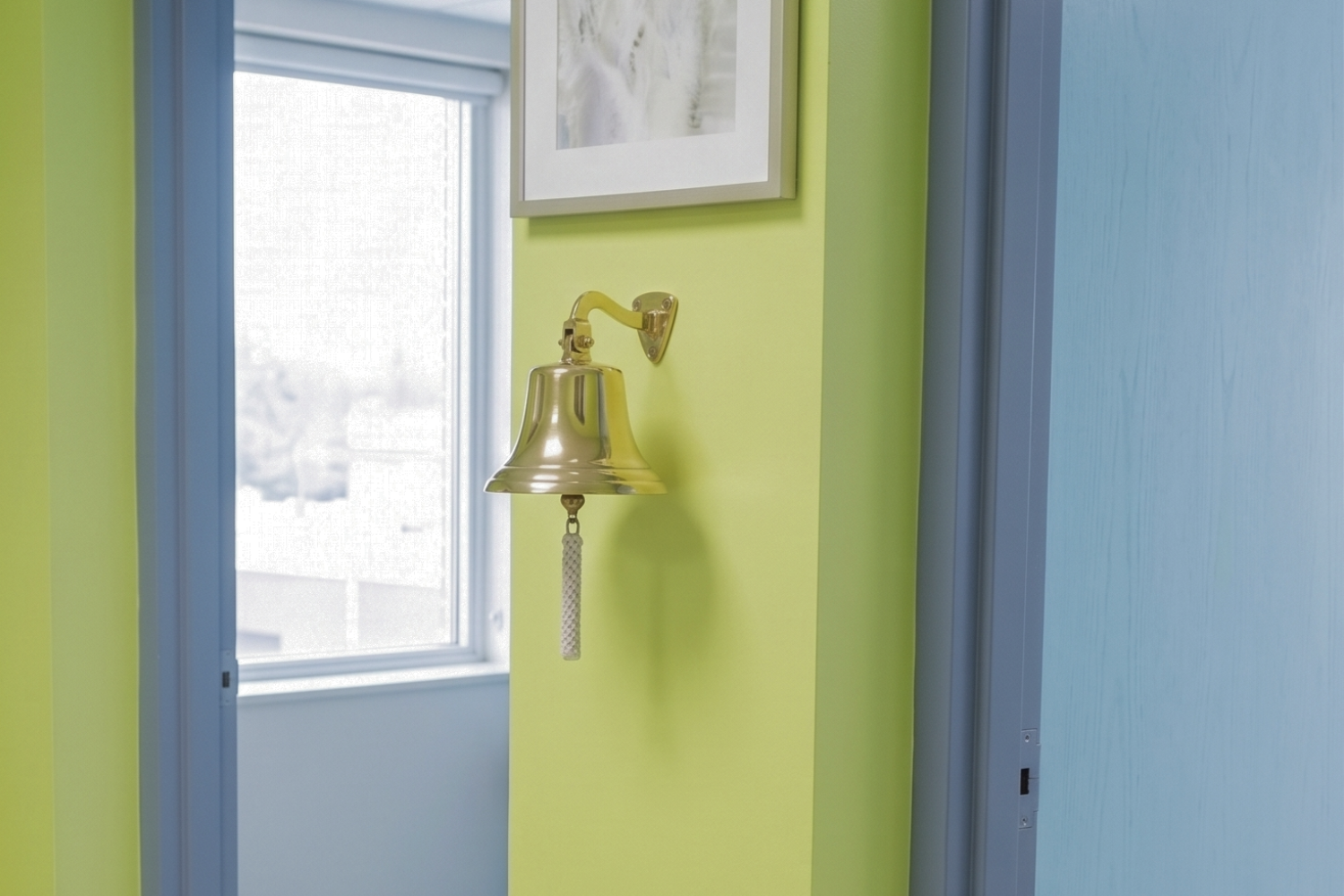
We rang the bell.
There is a tradition at most pediatric oncology clinics. When a child finishes active treatment, they ring a small brass bell mounted on the wall. The bell is for the child, for the clinic, for the team that has been holding you for years. Most families film it. We did.
What nobody films is the parking lot afterward.
I sat in the driver's seat of our car with the engine running and I could not figure out where I was supposed to go. We had been driving to Advocate Children's Hospital three times a week, sometimes four, for two and a half years. The route was muscle memory. Right turn out of the lot, on to the highway, home. I had driven it ten thousand times.
Except now there was no next appointment to come back for. We had just been transferred to the pediatrician's office. The pediatrician we had not seen in two and a half years. The one who, in our minds, belonged to a version of our family that no longer existed.
I put the car in drive and I started crying, and I could not stop, and I did not really understand why.
That was the beginning of the strange quiet.
Treatment did not end. It transformed.
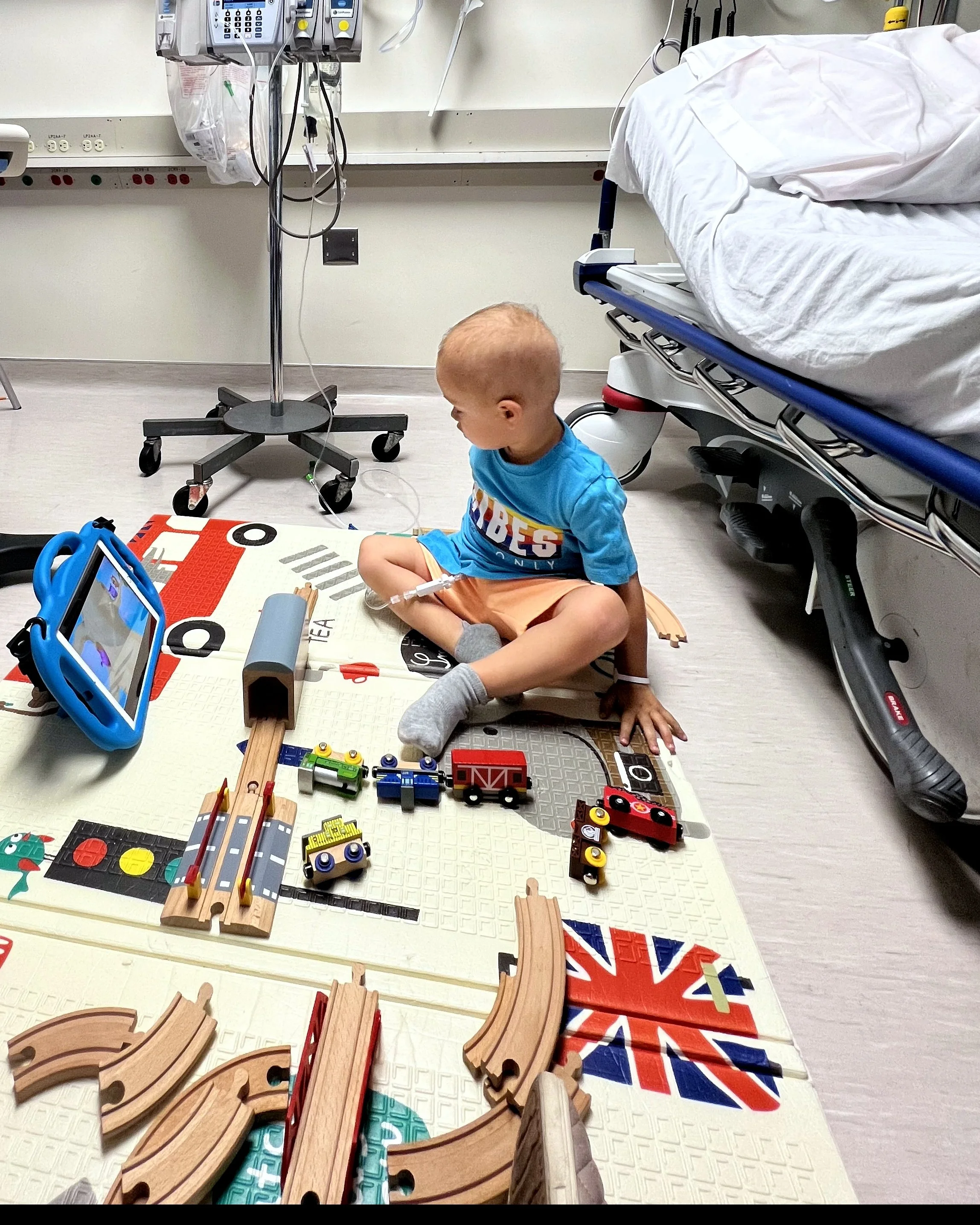
There is no clean finish line. There is a slow handing-off. The clinic that held our family for two and a half years writes a transfer note. Our name comes off the active-treatment list. My son still has monthly appointments, but they are different now. Surveillance. Shorter visits. Smaller team. The conversations move from medication adjustments to growth charts and bloodwork trends.
Our daughter, who is younger and has spent her conscious life in this rhythm, asks why her brother does not go to the hospital as much anymore. I tell her he is doing better. She asks what better means. I do not have a good answer.
I go to my first appointment at the pediatrician's office and I sit in the waiting room with parents who are there for ear infections and well-child visits, and I do not know how to be a person in that room. I forget how to make small talk. I realize I have been speaking in the dialect of pediatric oncology for so long that I do not remember the regular version anymore.
The chemo was keeping him safe. Now nothing is.
This is the part I was least prepared for.
When my son was in active treatment, every bruise had a reason. Every fever had a protocol. The chemotherapy that was hurting him in some ways was also protecting him from the disease, and as long as he was on it, I could trust that the medicine was doing what the medicine was supposed to do. My anxiety had somewhere to go. It went into the schedule, the dose, the bloodwork, the next appointment.
Then he finished treatment.
And I realized that the chemo was the floor I had been standing on without noticing. When you take the floor away, you fall, and you do not have words for falling.
He came in with a bruise on his shin a few weeks after the bell. Just a bruise. The kind any active child gets in a backyard. I looked at it and I felt my body go cold, and I sat down on the floor of the hallway, and I called my husband at work and asked him to come home. The bruise was nothing. The bruise was the kind of bruise a small child gets running through grass. But I had not had to feel that fear at full volume in two and a half years, because the medicine had been holding it down for me, and now the medicine was gone.
Every spot. Every paleness. Every time he naps too long. Every time he does not nap. The hyper-vigilance does not turn off because the appointments stopped. It just stops having anywhere to go.
Fight-or-flight finally turns off. That is when you catch up.
For two and a half years your nervous system has been running an emergency. You have been doing what parents in emergencies do. You have been functional. You have been showing up. You have been packing the hospital bag and answering work emails from the infusion room and explaining things to siblings and making dinner anyway. You are not a person during this time. You are a system.
When treatment ends, the system stops running. It does not get a notice. There is no orientation period. Your nervous system just, at some point, exhales for the first time in years. And in that exhale, all the things you did not let yourself feel during active treatment come up, in the wrong order, at the wrong moments, with no plan.
You will be folding laundry and start crying.
You will be in the grocery store and suddenly remember the night of the diagnosis with a clarity that knocks the wind out of you.
You will watch your child run across the yard and not be able to breathe.
You are not having a breakdown. You are catching up. You are finally, after years, letting yourself feel what you have been watching this whole time.
What I want other parents to know.
If you are a parent who has just finished active treatment, here is what I have learned.
The strange quiet is real. It is not depression, although it can look like depression. It is not ingratitude, although it can feel like ingratitude. It is your body and your mind finally allowing themselves to register what happened.
Be careful with yourself. You spent years in an emergency. The exit from an emergency is not a celebration. It is a slow recalibration that has its own grief inside it.
Stay close to the families who held you during treatment. The cancer community does not stop being your community when the bell rings. The other parents who walked the same hallways are the only people who will know exactly what you mean when you say it is weird to be done.
Find a therapist who has worked with cancer families if you can. Not because there is something wrong with you. Because what you went through was a real thing, and you deserve real support for the part that comes after.
And let yourself be confused for a while. Treatment had a script. The after does not. You are not failing at it. You are writing it.
The bell is on a wall in a clinic in Park Ridge.
We are a few months past the day we rang it. The pediatrician is no longer a stranger. My son is taller. He naps less. He runs more.
I still flinch at bruises.
I still cry in parking lots sometimes.
I still do not have words for what we just lived through.
But I am here. He is here. We are here.
That is the strange quiet. It is not a destination. It is a room you walk into and slowly learn how to live in.
Dina
Mom of Max | Founder, Maxwell’s Toy Shoppe
Childhood Cancer Advocate 💛
Follow Us On Social
Join our movement to support children battling cancer and their families, year-round:
🎁 Donate to deliver toys to children during long cancer treatment days
🧸 Buy a toy from Maxwell’s Toy Shoppe, and 100% of proceeds support children in treatment
🎗️ Join Maxwell’s Circle of Heroes as a monthly donor to ensure families receive ongoing care