Returning to Work During Your Child's Treatment: What We Tried

When my son was diagnosed, my husband and I had to make a lot of decisions quickly. One of the first was about work. Who would continue working. Who would step back. How we would handle the financial reality of the next several years.
Every cancer family makes this decision differently, based on income, jobs, insurance, family support, and the specific demands of the child's treatment. I want to write honestly about what we tried and what we learned, in case it helps another family figuring out their own version.
Our specific situation
Both of us had jobs we cared about. My husband's job carried our family health insurance, which was non-negotiable to keep. My job was flexible and remote. We decided early that I would be the primary caregiver for treatment days, and my husband would continue working close to full-time, with whatever flexibility his employer could offer.
I want to acknowledge upfront that this was a privilege. Many cancer families do not have remote-work options, flexible employers, or two working parents. Our path was not better or worse than anyone else's. It was the one available to us.
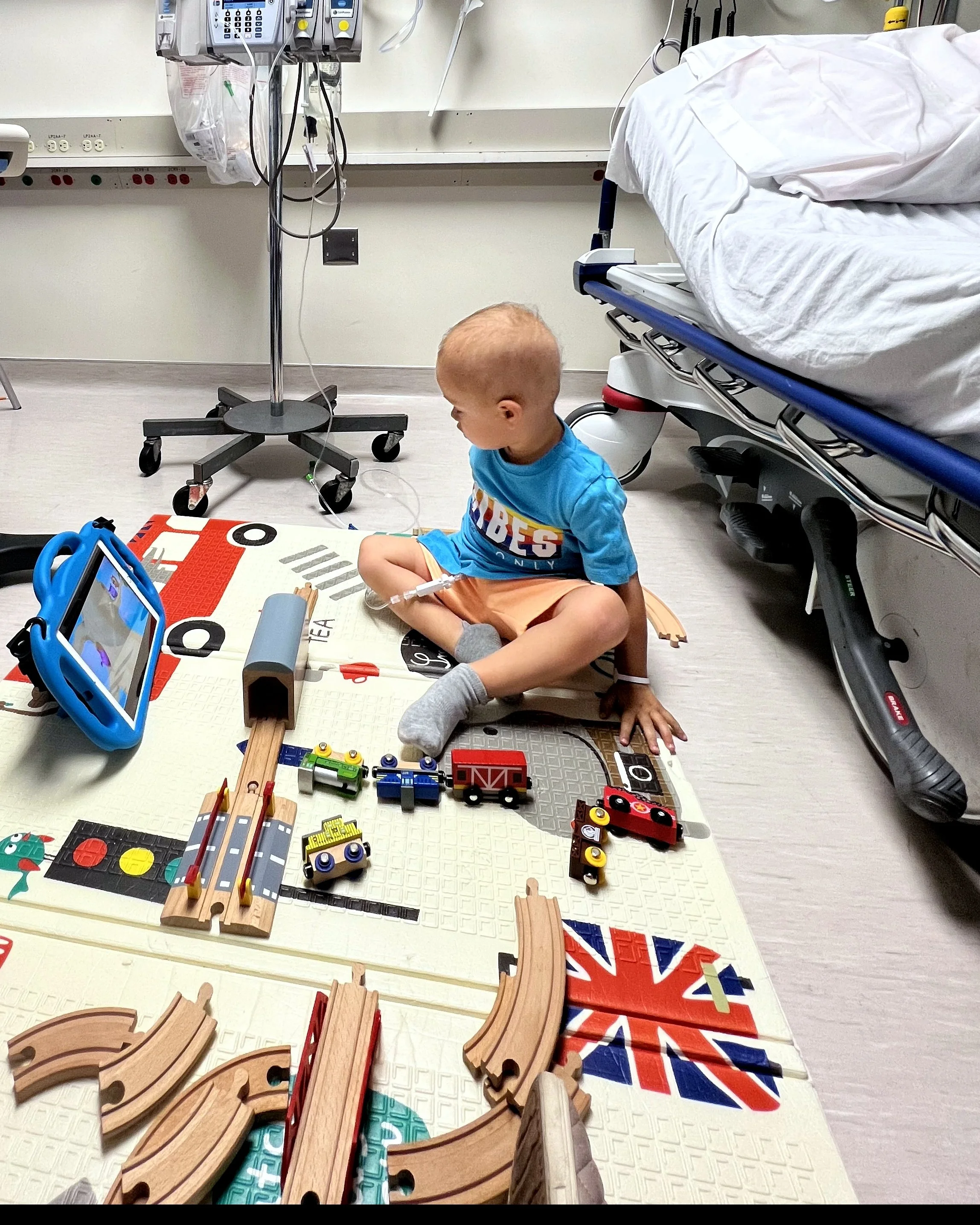
““Play is how a child processes a hospital. It is not a break from treatment. It is part of treatment.””
The early phase: I scaled back, he held steady
For the first four months of treatment, I dropped my work to roughly half-time. I took the early-morning calls. I took the chemo days. I took the inpatient stays.
My husband held his job at close to full hours. He took the late-evening shifts at home. He covered weekends so I could rest. He took on the nighttime hospital company on inpatient weeks.
This division was exhausting for both of us. It was also, for our specific situation, the version that worked. The insurance held. We did not lose the apartment. We had what we needed.
What I learned about working through treatment
Talk to HR earlier than you want to
I waited too long to formally talk to HR about my situation. I was trying to manage everything privately. When I finally had the conversation, HR was kinder and more flexible than I had expected. There were accommodations available I did not know about. There was a leave policy that applied to my situation. I should have talked to them in week one.
Get the paperwork in order
FMLA. Short-term disability. State-specific paid family leave. ADA accommodations. Each of these has its own paperwork. Get them filed early. Your hospital social worker can help if you are confused.
Set a clear out-of-office expectation
I had to learn to put out-of-office responses that said "I am navigating a family medical situation. I will respond when I can. For urgent matters, please contact [colleague]." People accepted this. People accommodated it. The world did not end.
Find one or two trusted colleagues
I told two colleagues the full situation early. They became my workplace allies. They covered for me when I had to leave at noon for an unexpected ER visit. They told me when a meeting was being moved. They held my professional reputation when I could not be present to defend it.
Lower the bar for yourself, on purpose
I produced less during the years of active treatment. I missed deadlines I would not have missed before. I sometimes turned in work that was good enough rather than great. I forgave myself for this. The work was being done by a person who was also keeping a child alive.
Protect the hours that matter most
I learned to protect a few core hours of the workday and let the rest flex. I did my best thinking from 9 to 11 a.m. when I could. The afternoons were for appointments. The evenings were for catching up if needed.
What I learned about my husband working through treatment
The provider role is its own grief
My husband did not get to be at every appointment. He was at his job, holding our insurance and our income, while I was in clinic with our son. That position came with its own grief. He was missing things he wanted to be at. He was performing competence at work while his child was in chemo. He was, in a quiet way, the unrecognized hero of our financial stability.
If you are the cancer parent in the provider role, what you are carrying is real. Please do not let anyone make you feel like the parent who is not at the hospital is doing less. You are doing different.
The workplace check-ins matter
My husband's colleagues and manager were genuinely supportive. They asked about him. They covered for him when he needed to leave for an emergency. They sent a casserole one Sunday from the team. They did not make him explain over and over.
If you employ a cancer parent, what you do for them at work matters as much as what their friends do for them at home.
What we would do differently
I would have asked for help sooner
I tried to handle everything quietly for too long. The first time I told someone at work, with specificity, what we were navigating, the response was nothing but grace. I wish I had told them earlier.
We would have used short-term disability earlier
There was a window during the most intense phase of consolidation chemo where I could have taken a few weeks of short-term disability. I did not. I should have.
We would have hired more help
We could have afforded, in retrospect, to hire a regular cleaner during the most intense phase. We did not. We muddled through. The household chaos compounded our exhaustion.
If you have any margin to hire help (cleaning, meal delivery, dog walking, lawn care) during the heaviest months of treatment, please do. It is one of the most useful investments a cancer family can make.
A note for the cancer parent making this decision
There is no right answer about work during your child's treatment. There is your situation, the resources available to you, and the version that works best for your family.
Whatever you decide, please give yourself grace. The cancer parent who keeps working through treatment is not abandoning their child. The cancer parent who steps back from work is not failing financially. Both are doing what is best for their specific family. Both are doing hard, real, important work.
Dina
Mom of Max | Founder, Maxwell’s Toy Shoppe
Childhood Cancer Advocate 💛
Follow Us On Social
Join our movement to support children battling cancer and their families, year-round:
🎁 Donate to deliver toys to children during long cancer treatment days
🧸 Buy a toy from Maxwell’s Toy Shoppe, and 100% of proceeds support children in treatment
🎗️ Join Maxwell’s Circle of Heroes as a monthly donor to ensure families receive ongoing care