What We Learned About Hospital Social Workers (And the Questions to Ask Them)

If your child is in pediatric cancer treatment, you have a member of your care team who is often the most underutilized person in the building.
The hospital social worker.
If you are early in treatment and you have not yet sat down with a social worker, please ask for one. The social worker is one of the most useful relationships a cancer family can build. We did not understand this fully for the first year. I want other families to understand it sooner.
What hospital social workers actually do
Hospital social workers in pediatric oncology programs are trained professionals whose job is to support the family of a patient. They are not therapists, although they often work closely with the mental health team. They are not nurses, although they understand the medical environment intimately. They are something like family-system case managers, specializing in the practical, emotional, and logistical realities of pediatric medical treatment.
What this looks like in practice is broad. A pediatric oncology social worker might help you with:
Financial counseling and assistance
Insurance navigation and appeals
Transportation help (gas cards, transit assistance, parking validation)
Lodging during long inpatient stays (Ronald McDonald House, hospital lodging, hotel partnerships)
Connection to community organizations like Maxwell's Toy Box
School liaison work and education advocacy
Sibling support and family counseling referrals
Mental health referrals for the patient, parents, or siblings
Bereavement support if needed
End-of-life planning support
Workplace and disability paperwork
Marriage support referrals
Translation services
Help with applications for state and federal assistance programs
If any of this is something your family is navigating, your social worker is the person who can help.
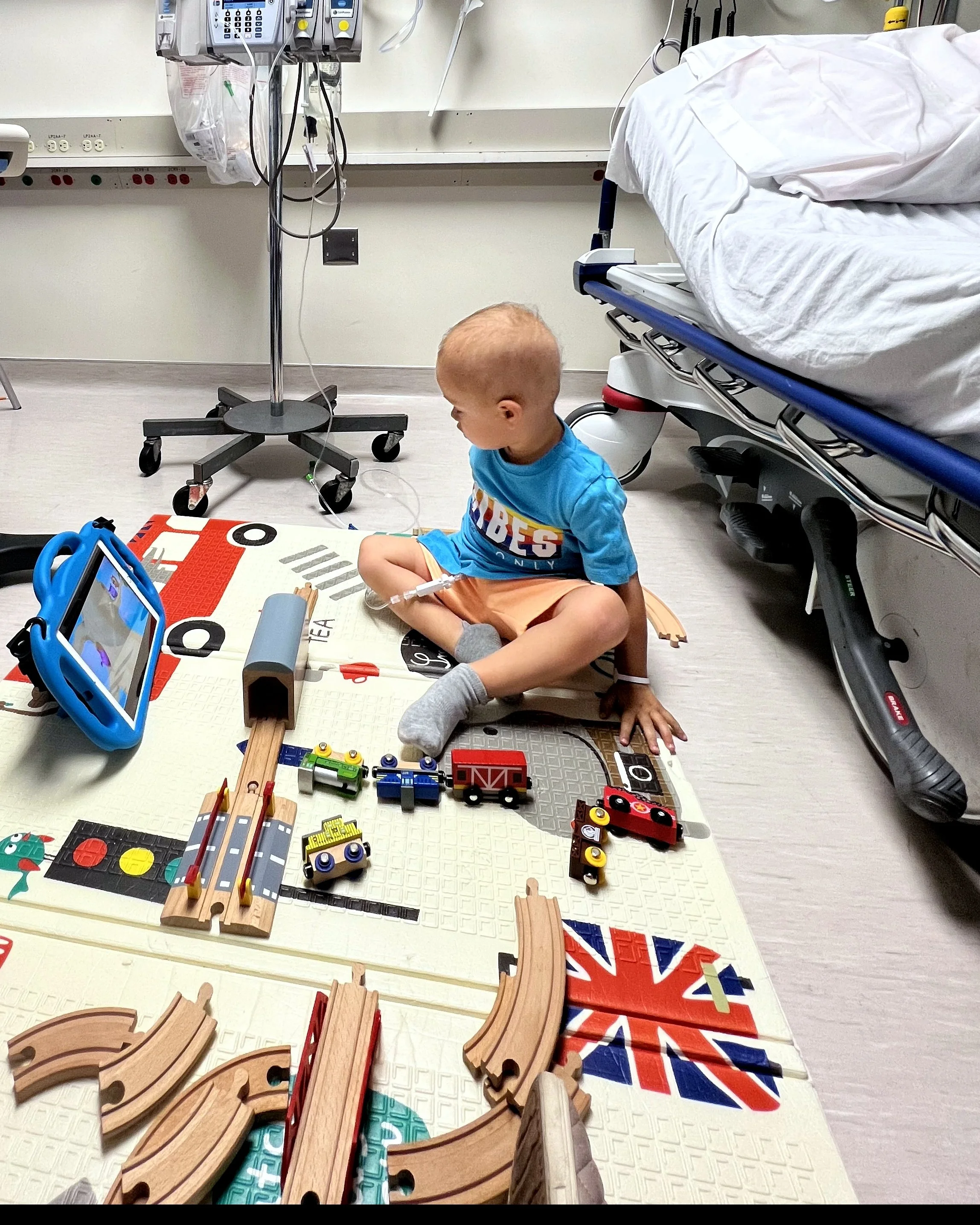
““Play is how a child processes a hospital. It is not a break from treatment. It is part of treatment.””
The questions we wish we had asked sooner
What does your role cover for our family?
Every social work program is structured slightly differently. Ask what your specific social worker can help with. Some are full-time. Some are part-time. Some cover the inpatient unit. Some cover outpatient. Some cover both. Knowing what they can offer helps you ask for the right things.
What financial assistance programs do you recommend we apply for?
Social workers often have a list of community organizations, foundations, and state programs that families in your specific situation can apply to. The list is usually long. They will walk you through it.
How do we navigate insurance for our child's specific protocol?
Pediatric oncology billing is complex. Most pediatric oncology programs have insurance specialists, often working with social workers. They can help with prior authorizations, appeals, and out-of-network coverage.
What community organizations do you partner with?
Ask for the list. Most pediatric oncology programs have a curated set of trusted community partners. This may include organizations like ours (Maxwell's Toy Box) for toys, sensory items, and direct family support; Ronald McDonald House for lodging; foundations that provide direct financial aid; and counseling resources.
What support exists for siblings?
Many programs have sibling-specific resources, support groups, or workshops. Most social workers know about these. Ask.
What support exists for our marriage?
Most pediatric oncology programs have a list of family therapists who specialize in medical family dynamics. Some hospitals offer in-house couples counseling.
What support exists for me, the parent?
Caregiver support is real. Parent support groups, individual therapy, peer mentorship programs that connect you to a parent further along in treatment. Your social worker can connect you to all of these.
What school accommodations can our child qualify for?
Children in pediatric cancer treatment qualify for educational accommodations (often a 504 plan, sometimes an IEP) under federal law. Your social worker can help coordinate with the school district.
What workplace paperwork should we be aware of?
FMLA, short-term disability, state-specific paid family leave. Your social worker has seen the paperwork. They can help you understand what to file and when.
What happens at end-of-treatment for the family?
Some social workers are also involved in the transition to survivorship care. They can help you understand what to expect and what support exists for the post-treatment phase.
What we have learned about working with social workers
Build the relationship early
Do not wait until you are in crisis to meet your social worker. Schedule a meeting in the first month of treatment. Get their email and phone number. Save it somewhere accessible. Reach out with small things before you need them for big things.
Be specific in your asks
Social workers are best at helping when you tell them what you need. "We are struggling with gas costs" is more actionable than "things are hard." "Our marriage is straining" is more actionable than "we need help."
Trust them with the hard stuff
Social workers have heard everything. Marital problems. Money stress. Mental health struggles. Substance use concerns. They will not judge. They are trained to hold the hard things and connect you to help.
Loop them in early on changes
If your job changes, your insurance changes, your housing changes, your family situation changes, tell your social worker. They can often help you stay ahead of issues that would otherwise become bigger.
Thank them
Social workers in pediatric oncology are some of the most underappreciated members of the care team. They hold an enormous amount. A handwritten thank-you note, an end-of-treatment hug, a small holiday card. They remember every one.
A thank-you to the social workers we have known
Our family has worked with social workers at Advocate Children's Hospital in Park Ridge for years. They have helped us through insurance appeals, school paperwork, the connection to our own community partners, and conversations that needed a third trained ear.
If you are a pediatric oncology social worker reading this, thank you. The work you do is some of the most quietly transformative work in medicine. Cancer families remember you.
Dina
Mom of Max | Founder, Maxwell’s Toy Shoppe
Childhood Cancer Advocate 💛
Follow Us On Social
Join our movement to support children battling cancer and their families, year-round:
🎁 Donate to deliver toys to children during long cancer treatment days
🧸 Buy a toy from Maxwell’s Toy Shoppe, and 100% of proceeds support children in treatment
🎗️ Join Maxwell’s Circle of Heroes as a monthly donor to ensure families receive ongoing care