I Counted My Son's Medical Appointments. The Number Wrecked Me.
I counted on a Tuesday.
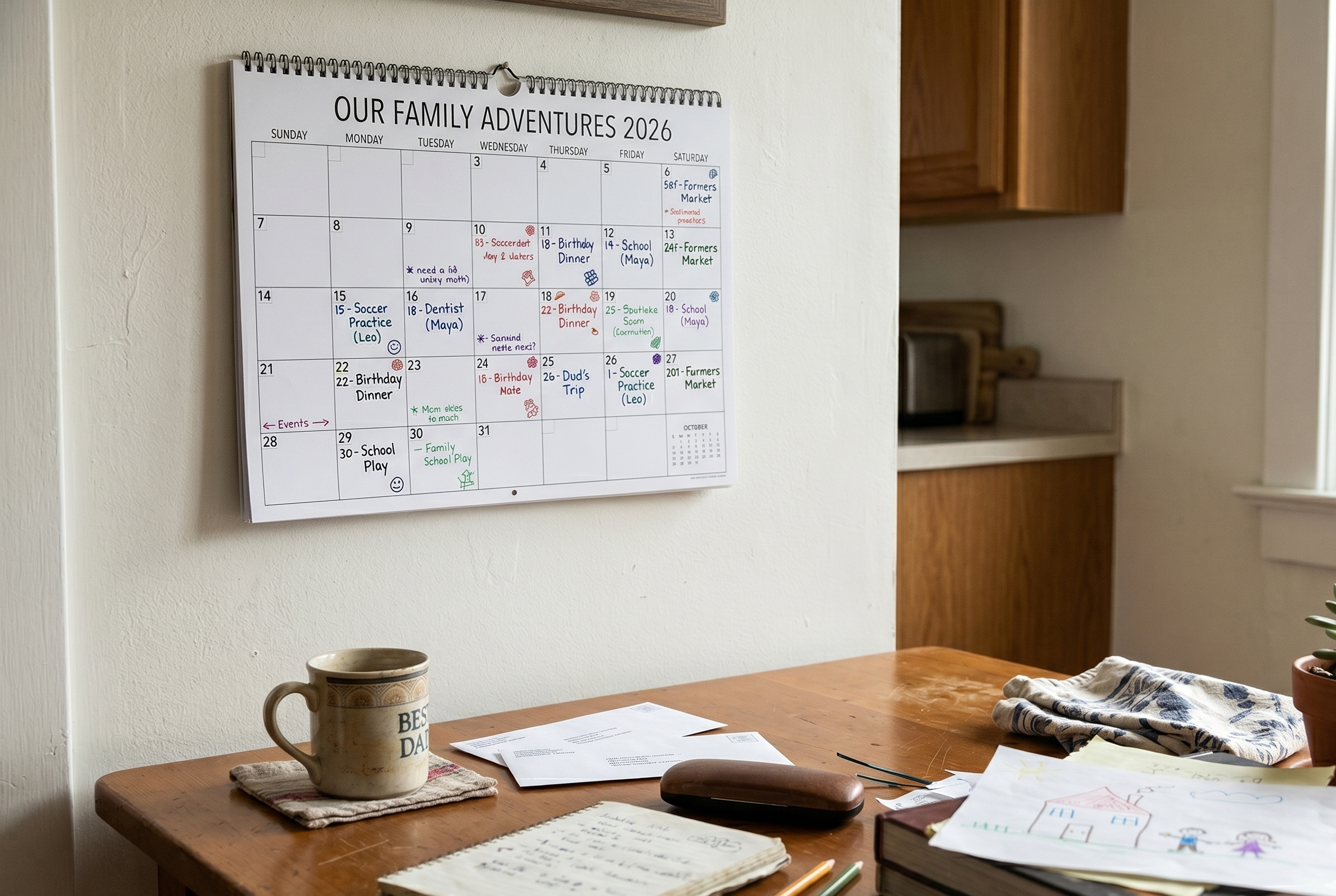
I was sitting at the kitchen table with a cup of coffee that had been cold for an hour, looking at our family calendar. The shared one. The one that used to hold a piano lesson, a dentist appointment, a birthday party.
I scrolled back to the week of his diagnosis. And then I started counting.
I counted clinic appointments. Blood draws. Lumbar punctures. Bone marrow aspirations. Chemo infusions. Inpatient stays, which I counted as one entry each even though some of those stays felt like a season. I counted the unscheduled fever calls that turned into ER visits, and the dose adjustments, and the platelet transfusions, and the port flushes. I counted the fingerprick checks at home that the oncology team needed to see screenshots of.
By the time I got to the end of his first year, I had stopped writing things down and started counting in groups of ten.
The number was somewhere between 80 and 100. I think the truth is closer to 100 once the inpatient stays are added in. I might be undercounting.
I sat there and I looked at the number and I cannot really describe what happened in my body. It was not crying, exactly. It was more like the floor moved a few inches sideways and I had to put my hand down to stay upright.
Here is what nobody tells you when your child is diagnosed.
The medical part of childhood cancer is not a chapter. It is not a season. It is the entire architecture of your life for years.
When my son was first diagnosed with acute lymphoblastic leukemia, someone at the hospital handed me a binder. It had tabs. A calendar template. A page for questions to ask the oncologist. I remember opening it in the Advocate parking lot and thinking, okay, I can manage this if I am organized.
I was so wrong about what organized would have to mean.
Organized would mean a logistics team. A part-time job whose only function was scheduling. Organized would mean rebuilding our entire household around the rhythm of treatment, which is what we ended up doing, the slow way, by failing at it for the first six months.
Eighty to a hundred appointments in twelve months. Sit with the math for a second. That is roughly one medical interaction every four to five days. That is two a week, on average, once you smooth it out. Some weeks are five. Some weeks are seven. Almost no weeks are zero.
And those numbers do not count the time before and after each appointment. The packing. The pre-meds. The forty minutes in the car each way to Advocate Children's Hospital, because traffic does not run on a treatment schedule. The handoff for our other child to whoever could take her that morning. The lunch that has to be packed differently, because some chemo days he could not keep anything down, and some days he wanted exactly one thing, and the wrong snack was a disaster.
This is the part of childhood cancer that does not show up in awareness posts. It does not photograph well. There is no gold ribbon for the calendar.
Two things became true the day I counted.
The first is that I forgive myself, retroactively, for every week I was not the parent I wanted to be. For the dinners I did not make. For the work I missed. For the times I cried in the Advocate parking garage before I went back inside. The number explained things. Anyone holding a number like that is doing the hardest work a parent can do, and you cannot also be holding three other jobs perfectly.
The second is that I started Maxwell's Toy Box to address the part of that number nobody talks about: what a child actually does inside those eighty to one hundred appointments. The hours in the clinic chair. The wait between a blood draw and the lumbar puncture. The forty-minute infusion that turns into a four-hour visit because the platelets came back low. Those hours need something. Not a distraction. Something that helps a child cope. A sensory toy. An art kit. A book a hospital social worker can hand to a sibling who is also stuck there, waiting.
If you are reading this, here is what I want you to know.
If you are a parent reading this and you have not counted yet, you do not have to. The number is what it is. You are doing it.
If you are a friend or family member of a cancer family, here is what to know. When you ask how we are and we say fine, the real answer is that we have been to the hospital three times this week, and we are trying very hard to keep our other child from feeling invisible, and we are tired in a way sleep does not fix. We are not telling you all of that because we do not have the time. We are telling you fine. We mean, we are still here. Please keep checking in.
If you are a donor or supporter of Maxwell's Toy Box, this is the math behind your gift. The toys you fund are not a feel-good extra. They are the items in a child's hands during forty-five of those one hundred appointments. They are the reason a two-year-old can sit through an infusion. They are how a family gets through Tuesday.
I am still sitting at the kitchen table. The coffee is colder now. The number is still on the page.
I do not know what to do with it, exactly. I am sharing it because someone else is doing the same math right now, alone, and I want them to know they are not.
Dina
Mom of Max | Founder, Maxwell’s Toy Shoppe
Childhood Cancer Advocate 💛
Follow Us On Social
Join our movement to support children battling cancer and their families, year-round:
🎁 Donate to deliver toys to children during long cancer treatment days
🧸 Buy a toy from Maxwell’s Toy Shoppe, and 100% of proceeds support children in treatment
🎗️ Join Maxwell’s Circle of Heroes as a monthly donor to ensure families receive ongoing care