

Real stories, big hearts, and why we show up for families every day.
Stories from the Toy Box
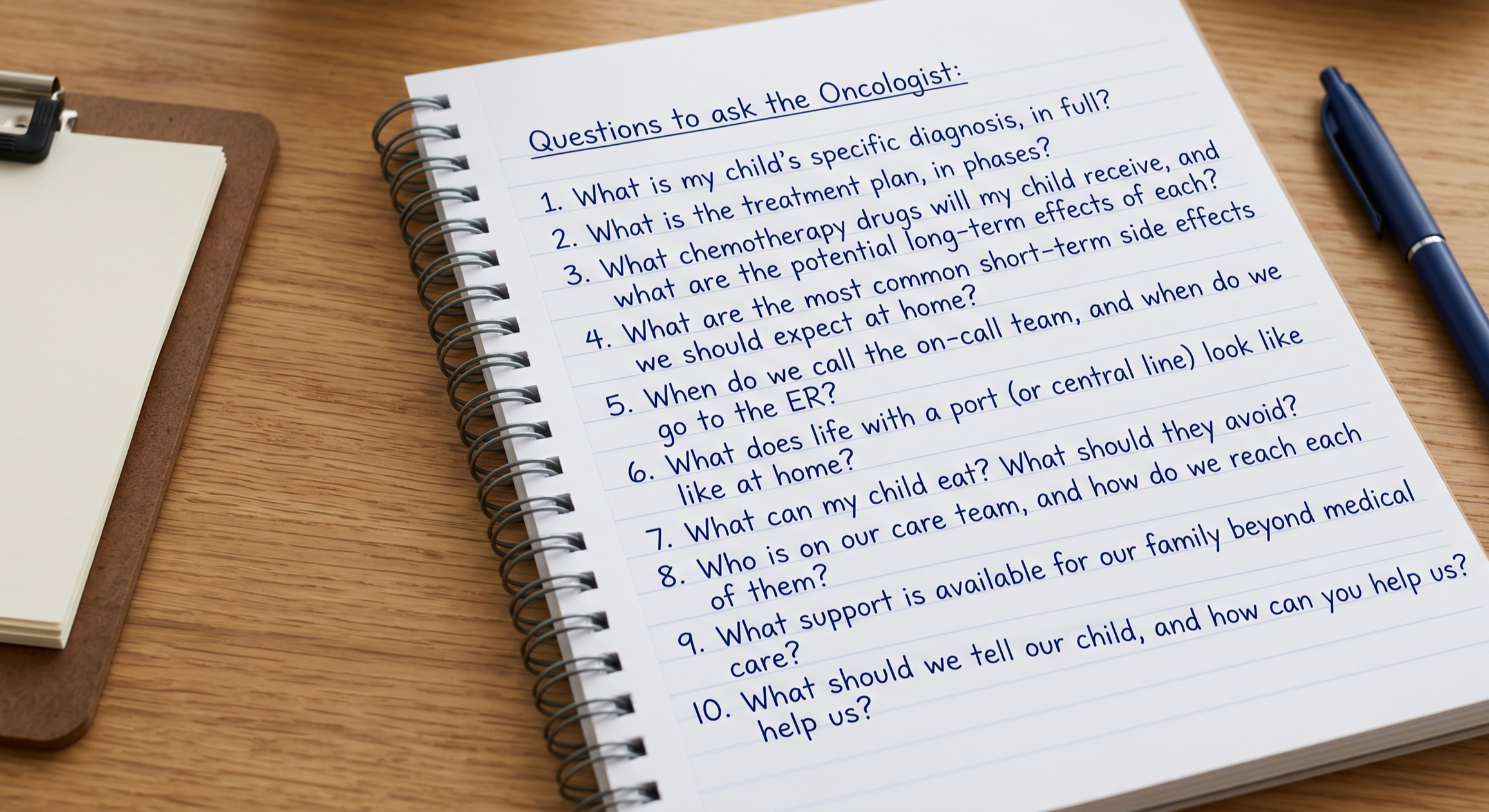
10 Questions to Ask Your Oncologist (A Starter List for Cancer Parents)
The first weeks after a childhood cancer diagnosis can feel like drinking from a firehose.
Suddenly, you're learning a new vocabulary, meeting an entire medical team, making treatment decisions, and trying to absorb information that will shape the next months—or years—of your family's life.
The challenge isn't just understanding what's being said. It's remembering what to ask.
Many parents leave those early appointments only to realize later that the question keeping them awake at night never came up in the room.
That's normal.
In this guide, we're sharing 10 questions every parent should consider bringing to their first oncology appointments—from understanding the diagnosis and treatment plan to knowing when to call the care team, what support services are available, and how to navigate life at home during treatment.
You don't need to know everything right now.
You just need a place to start.
Because asking questions isn't a sign that you're overwhelmed. It's one of the most important ways you'll advocate for your child throughout their cancer journey.

What the Word "Strong" Started to Mean to Me
Cancer parents hear the word "strong" all the time.
It's usually offered with love. A friend sees the hospital visits, the sleepless nights, the impossible decisions, and reaches for the best word they can find.
"You're so strong."
And while the sentiment is deeply appreciated, something interesting can happen after hearing it hundreds of times.
Sometimes, being called strong can feel less like recognition and more like a role you're expected to keep playing.
Because the truth is that cancer parents aren't strong every day. Some days they're exhausted. Some days they're scared. Some days they're crying in the parking lot after an appointment or staring at a calendar they don't know how they'll manage.
In this reflection, we're exploring what the word strong means from the perspective of a cancer parent, why it can feel complicated, and the simple phrases that often provide even greater comfort.
Because sometimes what a parent needs most isn't admiration.
It's permission to be human.

Workplace Support: What Employers Can Offer a Cancer Parent
When a child is diagnosed with cancer, the family's world changes overnight. Work schedules become treatment schedules. Calendar invites become clinic appointments. A routine day can turn into an emergency room visit with a single phone call.
For working parents, the challenge isn't just balancing a career and caregiving—it's trying to do both while navigating one of the most difficult experiences a family can face.
The good news is that employers have the power to make a profound difference.
The most meaningful workplace support isn't usually complicated. It's flexibility. It's understanding. It's a manager who trusts a parent when they say they need to leave for the hospital. It's a team that quietly steps in when coverage is needed. It's an HR partner who helps navigate benefits instead of creating additional stress.
In this guide, we're sharing what cancer parents say helped most—from flexible schedules and insurance continuity to practical gestures of support that made difficult days a little easier.
Because when a workplace supports a parent through childhood cancer, they're not just supporting an employee.
They're helping hold up an entire family.

The Late Effects We Are Learning About (And How We Track Them)
When treatment ends, many parents expect the hardest part to be over.
What surprised us was learning that survivorship comes with its own learning curve.
Shortly after our son completed treatment for leukemia, our oncology team introduced us to a term we would hear often in the years ahead: late effects. These are health conditions that can develop months, years, or even decades after childhood cancer treatment ends. They can affect everything from heart health and growth to learning, fertility, and mental health.
At first, the idea felt overwhelming.
Over time, we've learned that survivorship care isn't about living in fear—it's about staying informed, staying connected to your care team, and catching potential issues early.
In this post, we're sharing a parent's guide to late effects, what survivorship clinic actually does, and the practical systems we've put in place to help us navigate this next chapter with confidence.
Because finishing treatment isn't the end of the story.
It's the beginning of survivorship.

What a $50 Gas Card Actually Buys
On Wednesday, we handed a $50 gas card to a cancer mom on her way to her son's chemotherapy appointment.
She thanked us and said something that has stayed with us ever since:
"I've been doing the math at every gas station for a year. I'm tired of doing the math."
That's what practical support does. It doesn't change a diagnosis, but it can remove one worry from a parent's already overwhelming list.
In this post, we're sharing why something as simple as a gas card can make a meaningful difference for families navigating childhood cancer.
Because sometimes relief looks like a full tank of gas and one less thing to think about.
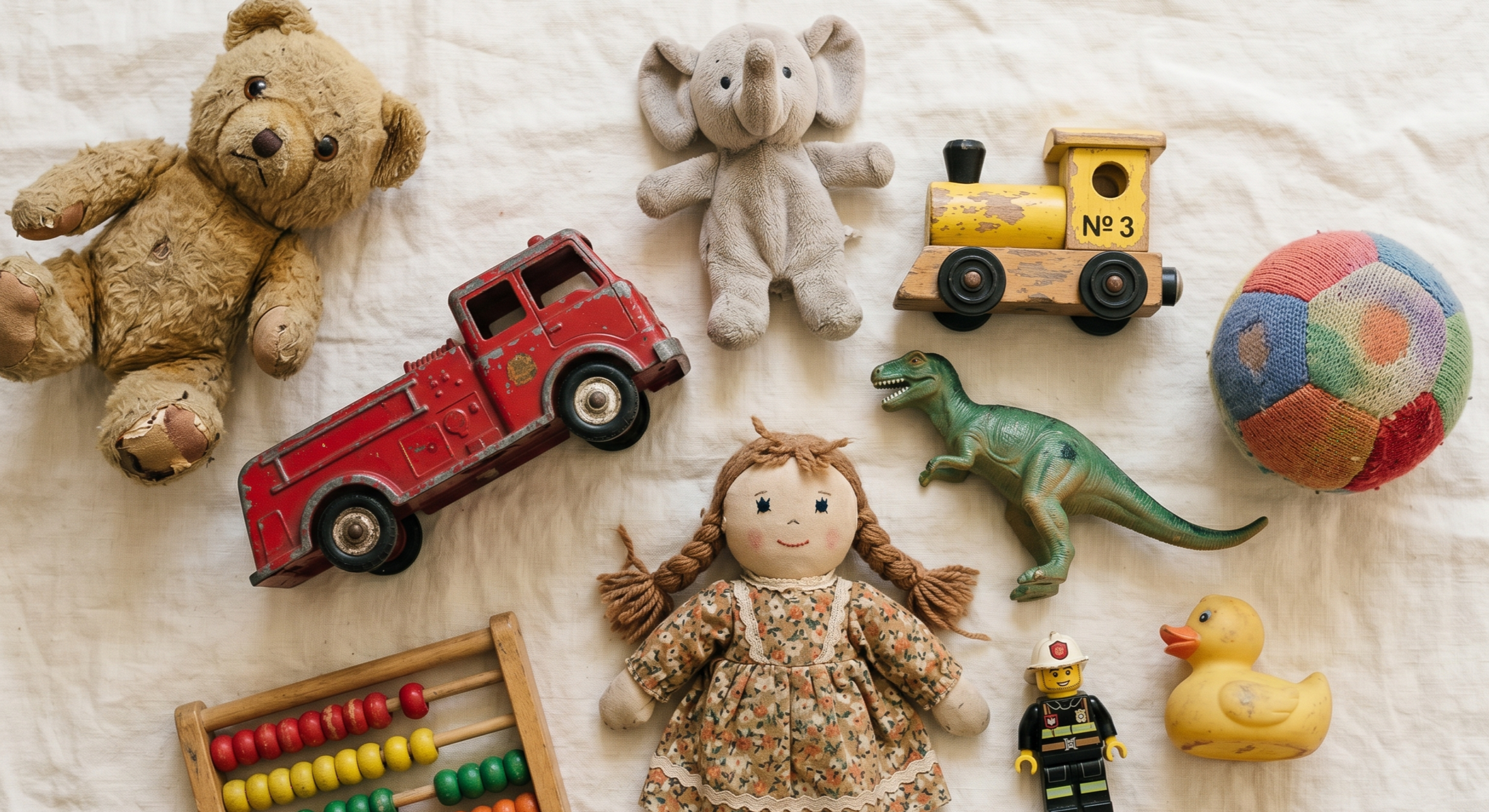
The 10 Toys Our Son Came Back to Again and Again
Over the course of childhood cancer treatment, our son received a lot of toys.
Some came from hospital toy closets. Some arrived in Joy Packages. Some were gifts from family and friends. Others were picked up on a Target run after a particularly hard week.
Most were loved.
A few became indispensable.
These were the toys that lived in the hospital bag, came to every clinic appointment, survived inpatient stays, and somehow made it through years of treatment without losing their place in his heart.
What surprised us most is that they weren't the biggest toys or the most expensive. They were the simple, durable, open-ended toys that gave him comfort, distraction, creativity, and a sense of control during a time when so much felt out of his hands.
A weighted plush. A pop-it. A set of wooden cars. A favorite book read for the hundredth time.
In this post, we're sharing the 10 toys our son returned to again and again throughout treatment, why they mattered, and what they taught us about supporting children through long medical journeys.
Because sometimes the toy that changes everything isn't the one you expect.
It's the one that quietly makes it through every hospital visit, every waiting room, and every hard day right alongside your child.

Marriage During Pediatric Cancer: The Rhythms That Held Us Together
When a child is diagnosed with cancer, every relationship in the family changes—including the marriage at the center of it.
What begins as a partnership built around school schedules, family dinners, and everyday routines can quickly become a relationship driven by clinic appointments, medication schedules, lab results, and hospital stays. Many couples find themselves becoming experts in logistics while struggling to stay connected to each other.
We know that feeling because we've lived it.
Three and a half years of pediatric cancer treatment tested our marriage in ways we never expected. There were seasons when conversations revolved entirely around calendars and care plans. There were days when exhaustion left little room for anything else. And yet, some of the smallest habits became the things that carried us through.
A Sunday morning cup of coffee. A simple text in the middle of the day. A commitment to check in on each other, not just the patient.
In this post, we're sharing the rhythms that helped sustain our marriage during childhood cancer treatment, the lessons we learned about partnership in a crisis, and the reminder we wish every cancer couple could hear: if your relationship feels strained right now, you're not failing. You're navigating one of the hardest challenges a family can face.
Sometimes it's not the grand gestures that keep a marriage afloat.
Sometimes it's twenty quiet minutes at the kitchen table and the decision to keep choosing each other, one day at a time.
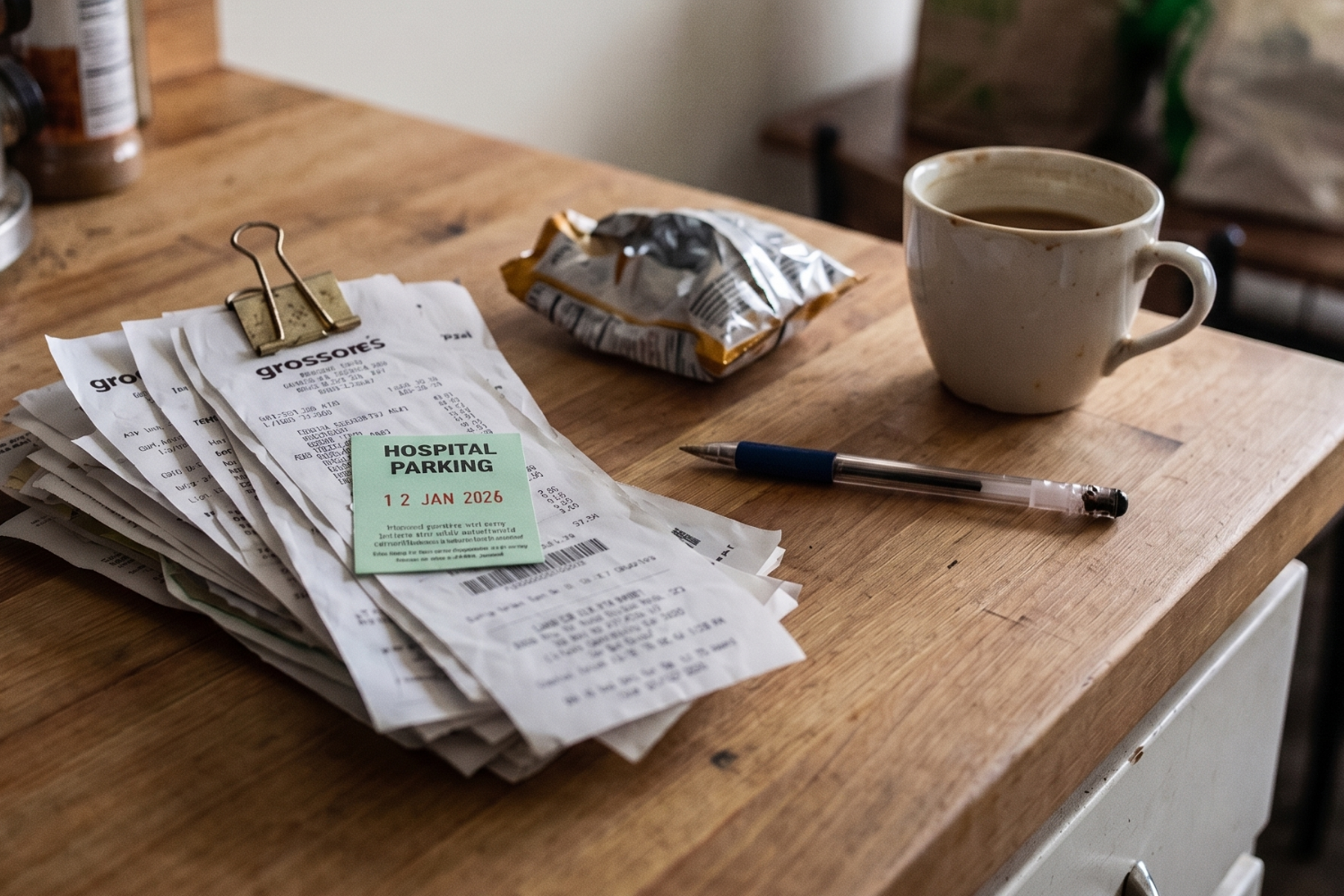
The Gas Card Math: What Three Trips a Week to Advocate Actually Costs
Six months into my son’s leukemia treatment, I began calculating the hidden financial cost of childhood cancer — gas, food, childcare, co-pays, lost income, and the constant travel required for treatment. What seemed like small expenses added up to thousands of dollars over the course of care, revealing the overwhelming financial pressure many pediatric cancer families quietly carry. That experience helped inspire Maxwell’s Toy Box’s direct family assistance program, which provides gas and grocery gift cards to help families manage the everyday costs of getting a child to treatment.
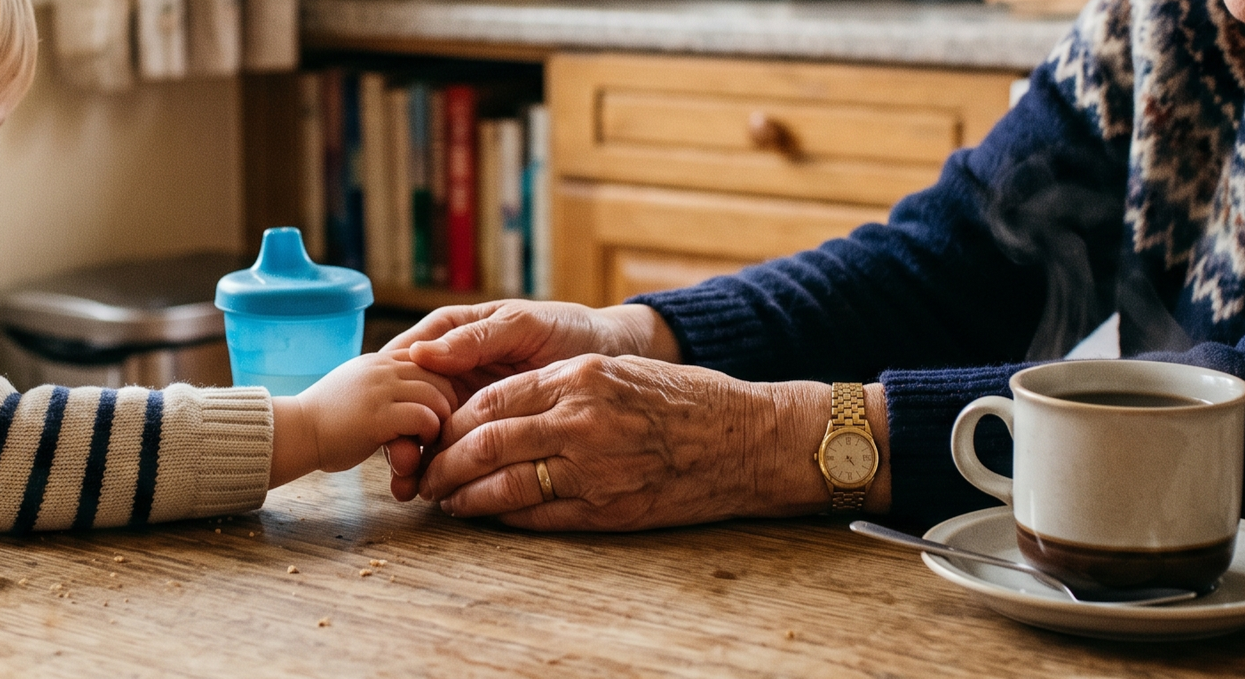
What Grandparents Can Do During Pediatric Cancer: A Loving Guide
The answer is usually simpler—and more important—than you might think.
While grandparents can't take away the diagnosis, they can become one of the strongest sources of support a family has. Whether it's caring for siblings, delivering a meal, sitting beside a parent during a hard week, or simply making a phone call every Sunday, small acts of consistency often make the biggest difference.
One thing we've learned from cancer families is that grandparents don't need perfect words or expert advice. They need presence. They need someone who keeps showing up.
In this guide, we're sharing practical ways grandparents can support a child in treatment, their parents, and siblings, along with the challenges many grandparents face as they navigate their own grief and worry. From household help and hospital visits to long-distance support and emotional encouragement, these are the actions families tell us mattered most.
Because when childhood cancer enters a family, grandparents are not on the sidelines.
They are part of the team.

Our First 4th of July Off Treatment
This is our first Fourth of July off treatment.
I've had the date circled on the calendar for weeks, wondering what it would feel like when it finally arrived. Would it feel triumphant? Emotional? Like a finish line?
The truth is more complicated—and more beautiful—than that.
Childhood cancer has a way of changing how a family experiences holidays. There was the year we stayed home because treatment made crowds too risky. The year we celebrated from the porch. The year my son watched sparklers from a safe distance. And now, the year he's standing in the backyard holding one himself.
Each version looked different.
Each version counted.
In this reflection, I'm sharing what three Fourths of July looked like through childhood cancer treatment, what we've learned about celebrating in the middle of uncertainty, and why "normal" isn't the goal anymore. Presence is.
For families spending today at home, in a hospital room, or somewhere in between, this is a reminder that holidays don't have to look a certain way to matter. The version of the holiday that fits your family's reality today is enough.
Because sometimes resilience isn't found in the fireworks.
It's found in the way a family keeps celebrating, year after year, through every chapter.

Sparklers in the Backyard, Two Years After Diagnosis
Last night, my son stood barefoot in the backyard holding a sparkler.
It wasn't a milestone anyone would put on a medical chart. No scan results. No lab numbers. No treatment update. Just a little boy in pajamas, watching a sparkler burn down to the wire with complete concentration.
But for our family, it meant something.
Last year, he watched from the doorway while we carefully kept our distance because treatment and a weakened immune system made even simple summer traditions feel complicated. The year before that, just months after diagnosis, we spent the holiday indoors, listening to fireworks from a safe distance and doing our best to make the day feel normal.
This year, he was in the grass.
Cancer families become experts at measuring progress differently. Sometimes the victories are not the ones anyone else sees. They are found in ordinary moments—a backyard, a sparkler, a child asking for "one more."
In this post, I'm sharing a small Fourth of July memory and a reminder for every family navigating treatment: there is no right way to celebrate during cancer. The version of the holiday that works this year is enough. The version that worked last year counted too.
Because sometimes healing looks like a sparkler that lasts thirty seconds and a child who wants to do it again.
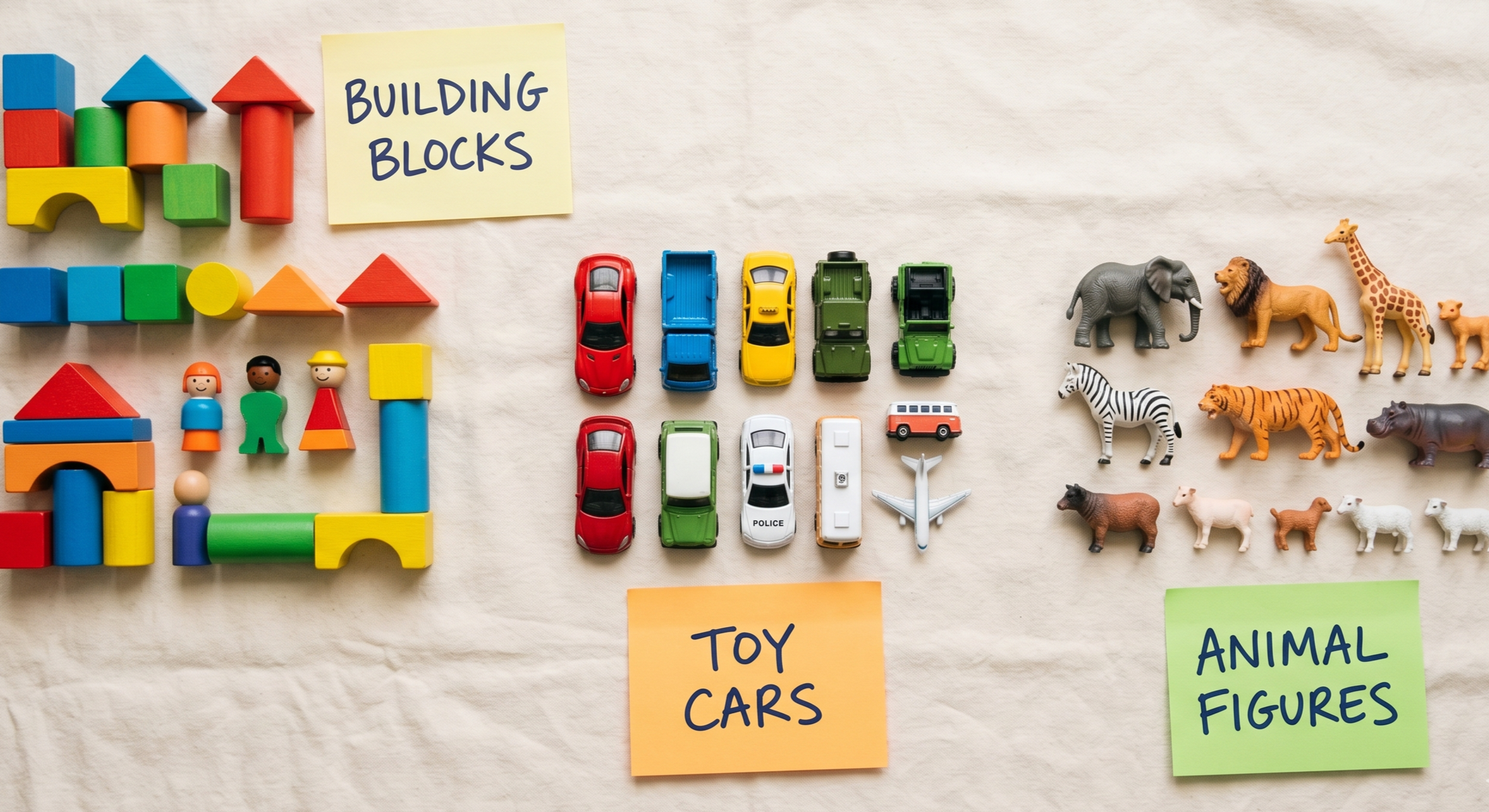
Calm Play, Distraction Play, Recovery Play: Matching the Toy to the Moment
Not every moment in a cancer treatment day calls for the same kind of play.
A child waiting for a port access needs something different than a child settling into a four-hour infusion. A child recovering from a difficult procedure needs something different than a child trying to regulate after days in the hospital.
One of the most valuable lessons we learned from child life specialists is that play has a purpose. The right toy at the right moment can help a child cope, regulate emotions, manage anxiety, and regain a sense of control during treatment.
That's why we think about play in three categories: calm play, distraction play, and recovery play.
Calm play helps a child settle and regulate. Distraction play helps them focus on something other than a difficult procedure. Recovery play helps them process, create, and reconnect with themselves after the hard part is over.
It's a simple framework, but it changes the way you think about the toys in a hospital bag, a clinic waiting room, or a Joy Package.
In this guide, we're sharing how child life specialists use these three modes of play, the types of toys that work best in each situation, and how families can use the same approach at home and during treatment.
Because sometimes the right toy isn't just entertainment.
It's a coping tool.
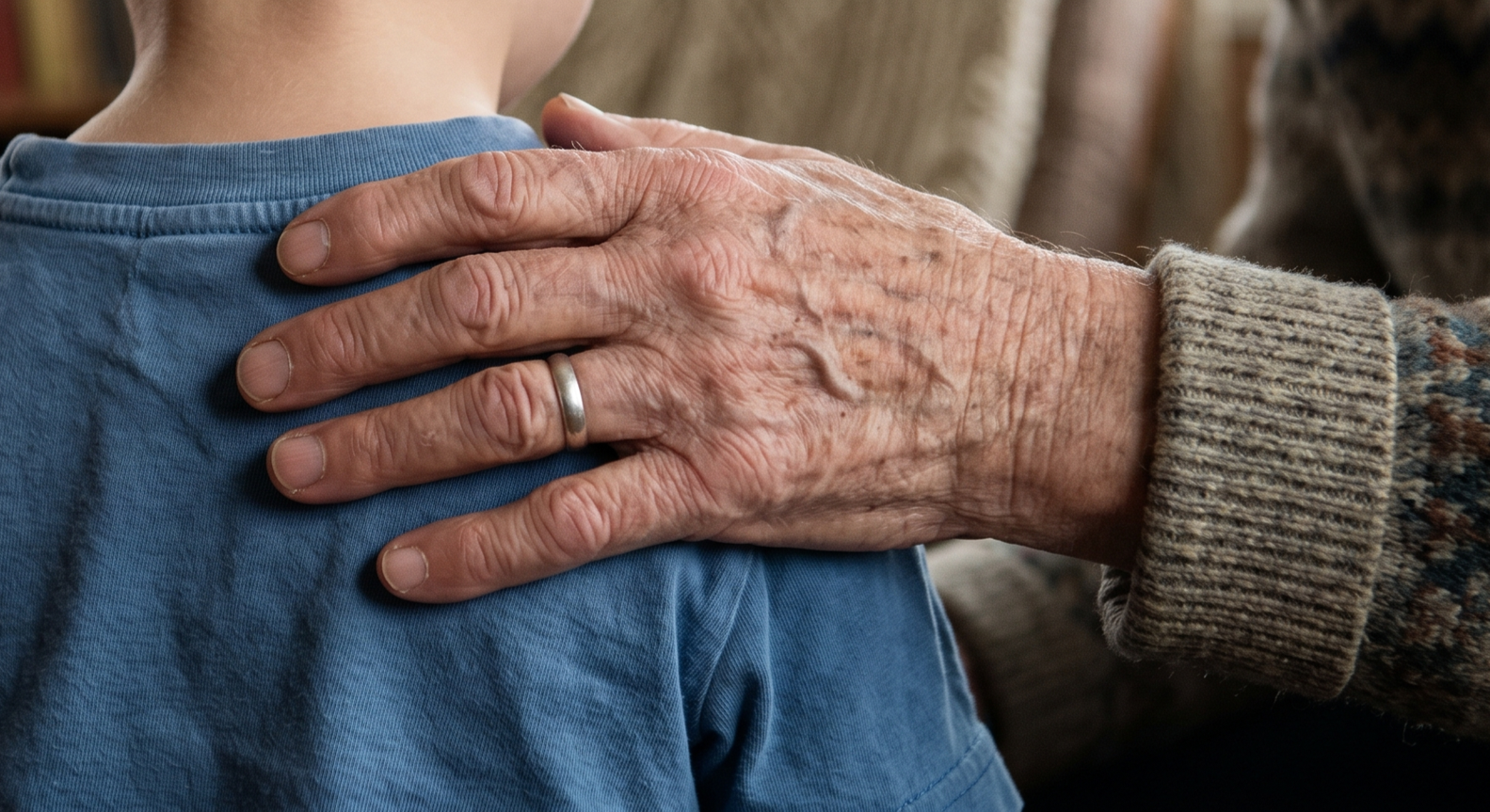
Grandparents During Pediatric Cancer: Love, Grief, and Finding a Role
When a child is diagnosed with cancer, an entire family enters the experience—not just parents and siblings, but grandparents too.
Grandparents often carry a unique kind of heartbreak. They are worried about their grandchild, watching their own child navigate every parent's worst nightmare, and grieving the future they imagined for their family. Yet their role in a cancer journey is rarely talked about.
Over the years, we've seen grandparents become some of the most important members of a family's support system. They are the Tuesday school pickup for a sibling, the freezer stocked with homemade meals, the voice on the phone during a difficult week, and the familiar face in a hospital room when a parent needs a break.
Not every grandparent can be present in the same way. Some live far away. Some face health challenges of their own. But support isn't measured in miles traveled—it's measured in consistency, compassion, and showing up however you can.
In this post, we're exploring the many roles grandparents play during pediatric cancer treatment, the challenges they face, and the simple ways they can help carry a family through one of the hardest seasons of their lives.
Because when childhood cancer affects a family, grandparents matter more than they may realize.

Reading Your Child's CBC: A Plain-Language Guide for Parents
If your child is in cancer treatment, you've probably spent time staring at a CBC report filled with numbers, abbreviations, and highlighted results, wondering what it all means.
You're not alone.
This week's guide breaks down the Complete Blood Count (CBC) in plain language, helping parents understand the numbers their care team watches most closely—including hemoglobin, ANC, and platelets. We'll explain what these blood counts do, why they matter during treatment, and how they often change throughout a chemotherapy cycle.
Because while you don't need to become a medical expert overnight, understanding your child's CBC can help you feel more confident, informed, and prepared for the conversations that happen at every clinic visit.

The Friendships That Grew in Different Shapes During Treatment
One of the unexpected things childhood cancer changes is friendship.
Some friends move closer than you ever imagined. Some show up in small, steady ways that become lifelines. And some relationships shift—not because the love disappears, but because neither person quite knows how to navigate a diagnosis that changed everything.
This week's post is a reflection on how friendships evolve during a child's cancer treatment. It's about the friends who stayed, the friends who struggled, and the grace that often lives in the space between intention and action.
Because when a family walks through childhood cancer, friendships rarely remain unchanged. Sometimes they deepen. Sometimes they grow quieter. Sometimes they find their way back. And often, they teach us something new about love, loyalty, and what it means to truly show up for one another.

How to Be There for a Cancer Dad
When a child is diagnosed with cancer, support often flows toward the mom—and rightfully so. But there is another parent carrying the diagnosis too.
The dad.
He's driving to appointments, managing work schedules, holding the family together, and showing up for the people he loves. Yet many cancer dads go months without someone asking a simple question: "How are you doing?"
This week's post is for the friends, brothers, coworkers, and neighbors who want to support a cancer dad but aren't sure how. From meaningful check-ins to practical ways to help, we're sharing what cancer dads have told us they need most.
Sometimes the most powerful act of support is letting a dad know that someone sees the weight he's carrying—and that he doesn't have to carry it alone.
Done With Treatment, Still Figuring Out What Comes Next
When my son's treatment for acute lymphoblastic leukemia ended, I expected relief to arrive all at once.
I expected a finish line.
Instead, what came next was something quieter.
The appointments became less frequent. The hospital bag stayed home. The words we used began to change—from in treatment to in remission. But our family was still learning how to live in a world that no longer revolved around clinic schedules, lab results, and chemotherapy.
This week's article is about what happens after active treatment ends—the transition many survivor families aren't fully prepared for. It's about rebuilding routines, navigating the unexpected emotions of survivorship, and discovering who your family is when cancer is no longer at the center of every decision.
Because the end of treatment isn't just an ending. It's the beginning of a new chapter, and learning how to live in that chapter takes time.

A Scene From the Parking Garage
Thursday morning. A hospital parking garage. Two families crossing paths on their way into very different days that somehow feel exactly the same.
One parent buckles a child into a car seat after an appointment. Another lifts a small child from a minivan and heads toward the clinic doors. Their eyes meet for a moment. A nod. Nothing more.
But in the world of pediatric cancer, that nod can say a lot.
It says, I see you. It says, I know this road. It says, You are not the only family carrying this today.
This week's article is about the quiet community that exists in hospital hallways, infusion rooms, and parking garages—the unspoken understanding shared between families who may never exchange names but somehow understand each other completely.
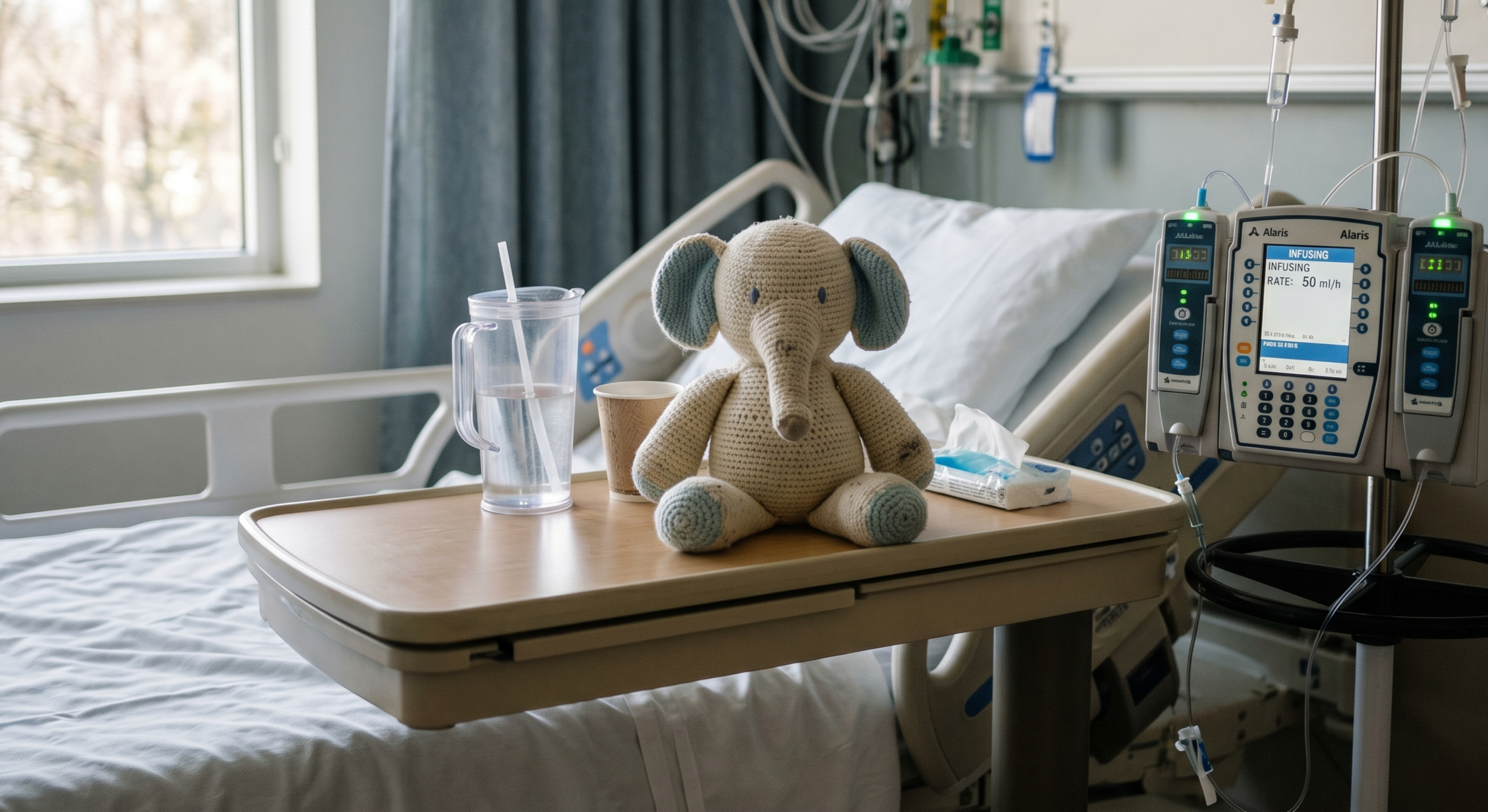
What Child Life Specialists Know About the Science of Toys in Pediatric Cancer
What if toys weren't just a way to pass the time during cancer treatment?
What if they were part of the care itself?
Research—and the child life specialists who use play every day—suggest exactly that. Studies have shown that play-based tools can help reduce anxiety, support coping skills, improve procedural experiences, and even preserve important developmental milestones during treatment.
This week's article explores the science behind therapeutic play and why hospitals invest in toys, sensory tools, books, and creative activities for children with cancer. Because in pediatric oncology, a toy isn't simply a distraction. It's a tool that helps children navigate some of the hardest moments of their lives.
At Maxwell's Toy Box, this belief is at the heart of everything we do: toys aren't extras. They're part of how children heal, cope, learn, and remain kids throughout treatment.

How to Talk to Your Other Children About Their Sibling's Diagnosis
One of the hardest conversations after a childhood cancer diagnosis isn't with a doctor—it's with your other children.
The siblings who notice whispered phone calls. The siblings whose routines suddenly change. The siblings who know something is different, even when no one has explained why.
In this week's article, we share practical, age-appropriate ways to help siblings understand a childhood cancer diagnosis. The goal isn't to have the perfect script. It's to tell the truth, make space for questions and feelings, and remind your children of what remains steady: they are loved, they are safe, and they are still an important part of the family story.
Because when a child is diagnosed with cancer, every member of the family is learning how to navigate a new reality—and siblings deserve support, honesty, and care along the way.